Regular price
From £5.35
Regular price
Sale price
From £5.35

OOLONG TEA · BETWEEN GREEN AND BLACK
Oolong is where the leaf gets interesting.
Silky Milk Oolong, bright citrus and jasmine, orchid-like florals and refined Taiwanese depth. Every cup sits somewhere new between the freshness of green tea and the richness of black.

More tea shelves
Start with creamy Milk Oolong for a mellow first cup, Orange Jasmine for a lively floral lift, or Formosa when you want the pure leaf and a warmer toasted finish.
Choose your next cup
Compare the products below, or use the filters to find your favourites.


Semi-oxidised loose leaf
Oolong sits between green and black tea, partially oxidised to create a spectrum of flavour that neither fully matches. At the lighter end you get buttery, floral notes; push the oxidation further and the cup deepens into honey, stone fruit and toasted grain. This range covers both ends and plenty in between, so there is something here whether you like your tea delicate or full-bodied.
Our oolongs include the creamy, almost caramel sweetness of Quanzhou Milk Oolong, the citrus-blossom lift of Orange Jasmine Oolong, and the honeyed complexity of Oriental Beauty Oolong. Formosa Oolong brings a classic Taiwanese roast character, while Blue Spring Oolong offers a lighter, more refreshing profile with orchid-like florals. For something a bit different, Oolong Mystère Flowering Tea unfurls in your glass.
If you have only tried tea-bag oolong, loose leaf is a step change. The whole leaves open slowly across multiple infusions, each steeping a little different from the last. It rewards patience and a decent teapot. Good for mornings when you want caffeine without the jolt of strong black tea, or afternoons when you fancy something more interesting than a standard brew.
How to choose
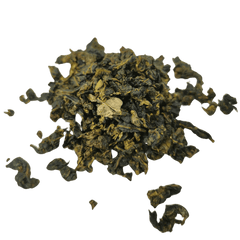
Lighter oolongs like Blue Spring are closer to green tea, with orchid-like florals and soft sweetness. Darker styles like Formosa lean toward black tea with roasted, toasty depth. Check the leaf colour for a clue.
Creamy Milk Oolong suits a quiet afternoon. Oolong Mystère Flowering Tea is made for glass teapots and unhurried moments. Oriental Beauty pairs well with lighter desserts.
All true oolongs contain natural caffeine. If you need caffeine-free, this is not the collection for you.
Good questions
Further reading
It varies widely. Lighter oolongs taste floral and buttery, sometimes with orchid or cream notes. Darker oolongs move toward honey, ripe fruit, roasted grain and a fuller body. The range here covers both.
Use water just off the boil, around 85–95°C. Steep for two to four minutes, then re-steep the same leaves. Many oolongs give three or more good infusions, each slightly different.
Yes. We ship across the UK from Yorkshire. Free UK delivery on orders over £35.
Yes. Oolong is partially oxidised, giving more body and complexity than most green teas but less grassiness. If you find green tea too vegetal, oolong might suit you.
Lighter oolongs are best without. Darker, roasted oolongs can take a splash if you prefer, though most drinkers enjoy them plain to appreciate the nuance.
FIND YOUR OOLONG
Oolong sits between green and black tea, but it is not a compromise. Expect silky texture, fragrant florals, gentle fruit and warm toasted depth.
 Smooth first oolong
Creamy · floral · mellow
A silky, rounded Ti Kuan Yin with gentle caramel-like sweetness—creamy without needing milk.
 Bright and fragrant
Orange · jasmine · silky
Juicy citrus and elegant jasmine lift the oolong’s natural depth into a lively, layered cup.
 Taiwanese single-origin
Smooth · floral · toasted
A rounded aromatic cup with gentle sweetness, warm toasty depth and a clean refined finish.
 Orchid-like florals
Orchid · mallow · silky
Ti Kuan Yin and blue mallow petals make a beautifully composed floral cup that shines in glass.
FOLLOW THE AROMA
How far the leaves are oxidised and how they are finished changes everything from colour to aroma and body.
CREAMY · MELLOW
Milk Oolong has a rounded texture, soft floral lift and gentle caramel-like sweetness all of its own.
FLORAL · ORCHID
Blue Spring brings orchid-like Ti Kuan Yin character together with delicate blue mallow petals.
CITRUS · JASMINE
Orange zest and jasmine add lively fragrance while the oolong base keeps the cup smooth and structured.
TAIWAN · TOASTY
Formosa Oolong balances natural sweetness with a warm toasted depth and crisp, refined finish.
ONE PORTION. MORE THAN ONE CUP.
Oolong leaves are made to open. Start with the product’s suggested temperature and time, then reinfuse the same leaves to discover how their aroma and sweetness change.
Check the individual tea: our lighter styles start at 85°C and Formosa at 90°C.
Give rolled leaves room to unfurl, then remove them cleanly from the cup.
Add a little time to the next infusion and notice the flavour developing.
EASY FIRST OOLONG
Milk Oolong is silky and mellow; Orange Jasmine Oolong is lively, fragrant and familiar for anyone who already enjoys floral tea.
PURE SINGLE-ORIGIN
Premium Taiwanese leaves give a rounded, aromatic cup with natural sweetness, warm toasted depth and a clean finish.
A LITTLE THEATRE
Oolong Mystère is hand-tied around blossoms and made for a glass teapot, gifting and deliberately unhurried afternoons.
OOLONG, EXPLAINED
Oolong is made from the same tea plant as green and black tea, but its oxidation sits somewhere between them. The maker’s choices can produce cups that are green and floral, creamy and silky, fruity, warm or deeply toasted.
There is no single oolong flavour. This shelf ranges from creamy Milk Oolong and orchid-like Blue Spring to citrus-floral Orange Jasmine and warmer, toastier Formosa.
No. Our Quanzhou Milk Oolong is oolong tea—Ti Kuan Yin Super. Its creamy texture and gentle caramel-like sweetness come from the tea itself, and it is best enjoyed without adding milk.
Yes. Every oolong on this shelf naturally contains caffeine and is tagged medium-caffeine. The amount in a cup varies with the leaf, quantity, temperature and brewing time.
Yes. Repeat infusions are one of oolong’s pleasures. Remove the leaves after the first brew, then infuse them again with a little more time and notice how the aroma, sweetness and texture develop.
Use the guide on the individual tea. Quanzhou Milk Oolong and Blue Spring start at 85°C, while Orange Jasmine and Formosa use 90°C. Two minutes is the starting time across these loose-leaf teas.
Quanzhou Milk Oolong is the gentlest starting point if you like soft, creamy flavours. Orange Jasmine Oolong is especially approachable for people who already enjoy citrus or floral teas.
Yes. All Porter Hill teas are vegan. Every product page lists its ingredients clearly, including flowers, fruit or natural flavourings used in a blend.
YOUR NEXT OOLONG
Oolong sits between green and black tea, opening into creamy, floral, citrus-bright and roasted cups with every infusion.
Milk Oolong welcomes beginners; Taiwanese leaves reward the curious.
Whole rolled leaves open gradually and reveal new flavour as you re-brew.
Small-batch packing by our Huddersfield team.