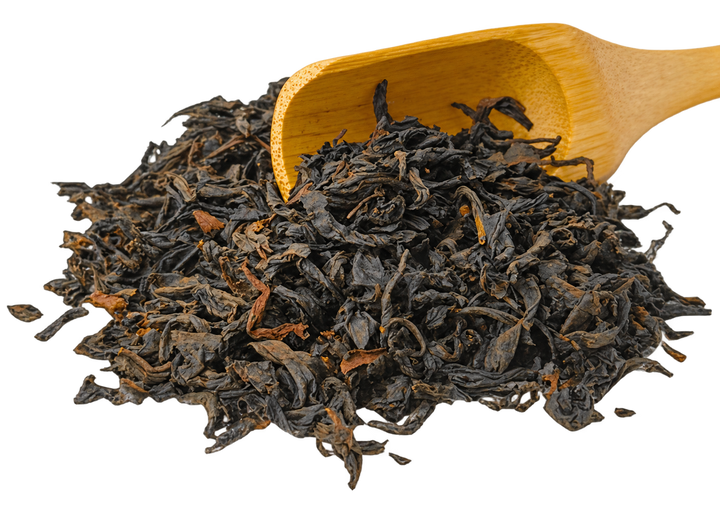
Chinese Green Tea: A Guide to Longjing, Chun Mee and Beyond

Chinese green tea is where tea begins. The drink originated in China over four thousand years ago, and the country still produces more green tea than any other style. If you have ever wondered why one green tea tastes nutty and another tastes grassy, or why some leaves are flat and others rolled into tight pellets, the answer usually comes down to where in China it was grown and how it was shaped in the wok.
The tea in this guide: Organic Dragonwell from £5.95 Shop it →
The short version: Chinese green tea is pan-fired rather than steamed, which gives it a drier, often nuttier character than Japanese greens. The best-known types include Longjing (Dragon Well), Bi Luo Chun, Gunpowder and Chun Mee, each with its own shape, origin story and flavour. Brew at 75 to 85°C for one to three minutes, and you will have a bright, fresh cup without any bitterness.
Below we cover the major styles, what they taste like, how to brew them properly, and which ones suit different moods and palates.
At a glance
- Chinese green tea originated over 4,000 years ago and remains the world's most produced tea type
- Pan-fired processing gives a drier, nuttier character than steamed Japanese greens
- Famous types include Longjing, Bi Luo Chun, Gunpowder and Chun Mee
- Brew at 75 to 85°C for 1 to 3 minutes; shorter and cooler for delicate teas
- All contain natural caffeine, roughly 20 to 35 mg per cup
- Best without milk to taste the clean, vegetal flavours
What makes Chinese green tea different from Japanese green tea?
The key difference is heat. Japanese producers typically steam freshly picked leaves to halt oxidation, which creates grassy, marine, almost seaweed-like notes. Chinese producers pan-fire or roast the leaves in a hot wok, driving off moisture and adding a toasty, sometimes chestnut-like quality. The result is generally drier and less vegetal, with more structure and a cleaner finish.
Shape matters too. Chinese greens come flat, twisted, rolled into pellets or curled like eyebrows depending on the region and tradition. Japanese greens tend towards needle-shaped leaves. Both are made from Camellia sinensis, but the processing creates two quite different drinking experiences. If you enjoy the umami depth of a Sencha or Gyokuro, you might find Chinese greens lighter and crisper; if you find Japanese greens too grassy, Chinese styles often feel more approachable.
Types of Chinese green tea
China has hundreds, possibly thousands, of regional green tea styles. Below are the ones you are most likely to encounter, along with what makes each worth trying.

Longjing (Dragon Well)
Longjing comes from the hills around Hangzhou's West Lake in Zhejiang Province. The flat, jade-green leaves are pressed by hand in a stationary wok, and the flavour is smooth and nutty with a gentle chestnut sweetness and no bitterness when brewed correctly. Often called the king of Chinese green tea, true Xihu Longjing from Dragon Well Village remains one of the most prized teas in the world.

Green Tea
Flat green leaves with chestnut-like nuttiness and gentle sweetness. Start with cooler water for a softer cup.
Have a lookBi Luo Chun (Green Snail Spring)
From Jiangsu Province, Bi Luo Chun consists of tiny, downy spirals harvested early in spring. The young leaves are hand-rolled into tight curls, and the fine white hairs indicate tenderness. Expect floral and fruity notes, sometimes described as apricot blossom, with a pale jade liquor and gentle sweetness. Traditional gardens may be interplanted with fruit trees like peach, plum and loquat, which some say influences the tea's character.
Gunpowder
Named for the tight pellets that resemble old gunpowder grains, this style uses later-harvest leaves rolled into small balls. The flavour is bolder and more brisk than delicate spring teas, with a slightly smoky edge. Gunpowder became popular among Western drinkers in the nineteenth century and remains essential to North African tea culture, where it is brewed strong with fresh mint and plenty of sugar. The rolled shape helps the leaves keep their freshness longer than flat or twisted styles.

Green Tea
Rolled green leaves slowly open in the water, making a bright cup with a crisp finish.
Have a lookChun Mee (Precious Eyebrow)
Chun Mee takes its name from the narrow, curved shape of the finished leaves, which look a bit like delicate eyebrows. It is pan-fired and shaped by hand, producing a fresh, bright cup with a little tang and a dry, clean finish. Less expensive than Longjing but with a similar structured character, Chun Mee makes a good everyday Chinese green for anyone who wants something quick and bracing without ceremony.
Other notable styles
Huangshan Maofeng from Anhui Province has silvery-haired leaves and a soft golden liquor with orchid and chestnut notes. Tai Ping Hou Kui, also from Anhui, uses large leaves pressed into flat bookmark shapes with an orchid aroma. Xinyang Maojian from Henan is needle-shaped with a strong grassy character. Jasmine pearls are young spring buds hand-rolled and scented with night-blooming jasmine over several evenings. Each region has its specialities, shaped by climate, altitude and generations of craft.
How Chinese green tea is made
All green tea starts with freshly picked leaves from the Camellia sinensis plant. Chinese production typically follows these steps:
- Picking: The best teas use one bud plus one or two tender leaves, harvested in early spring when amino acid content peaks.
- Kill-green (sha qing): Leaves are rapidly heated in a wok or drum to deactivate enzymes and prevent oxidation. This preserves the green colour and fresh, vegetal aromas.
- Rolling and shaping: Leaves are rolled, twisted, flattened or curled depending on the style. This step also bruises the leaves slightly, releasing flavour compounds.
- Drying: Final baking removes remaining moisture. For Longjing, leaves are removed after about 70 per cent of their moisture is driven out, then cooled, sorted, reshaped and dried again.
The entire process can take hours of skilled handwork for premium teas, which partly explains why the best Longjing costs thousands of pounds per pound.
How to brew Chinese green tea without bitterness
Green tea turns sharp and astringent when the water is too hot or the steep too long. The table below gives a starting point for the main styles; adjust to taste from there.
| Type | Temperature | Time | Leaf per cup |
|---|---|---|---|
| Longjing | 75–80°C | 2–3 min | 1 tsp (2g) |
| Bi Luo Chun | 70–80°C | 1–2 min | 1 tsp |
| Gunpowder | 80–85°C | 2–3 min | 1 tsp |
| Chun Mee | 80°C | 1 min | 1 tsp |
| Jasmine pearls | 80°C | 2–3 min | 1 tsp |
If you do not have a temperature-controlled kettle, boil the water and let it cool for two to three minutes before pouring. Use fresh, ideally filtered water with low mineral content. Porcelain or glass vessels show the leaves unfurling and do not absorb flavour. Set a timer: even thirty seconds too long can push a delicate tea into bitterness.
Good Chinese green teas can often be infused multiple times. Shorten the second infusion slightly, then progressively lengthen later ones. Each steep reveals different notes.
Common mistakes when brewing Chinese green tea
Using boiling water
Boiling water scorches delicate leaves and releases harsh tannins. Drop the temperature to 75–85°C and the cup will taste sweeter and smoother.
Over-steeping
Leaving the leaves in too long extracts bitterness. One to three minutes is usually enough. If you want a stronger cup, add more leaf rather than more time.
Adding milk
Milk flattens the fresh, bright character you are brewing for. Drink Chinese green tea plain, or with a slice of lemon if you want a bit of zing.
Storing near strong smells
Tea absorbs odours easily. Keep it in an airtight, opaque container away from spices, coffee and anything pungent. A cool cupboard is fine; the fridge is not, unless you enjoy condensation and flavour contamination.
A short history of Chinese green tea
Tea consumption in China is traditionally attributed to the mythological Emperor Shennong, though written records place green tea production at least as far back as the late first millennium BC. Lu Yu's Classic of Tea, written during the Tang dynasty (618–907 AD), codified tea culture and remains one of the most important texts in tea history. By the Ming dynasty (1368–1644), many of the loose-leaf processing methods still used today had been established.
High-end teas like Longjing and Bi Luo Chun were historically tribute gifts to the imperial court and rarely exported. Even now, wealthy Chinese customers may pre-order the best lots months before harvest, with prices reaching thousands of dollars per pound. Early-harvest green tea remains a traditional gift for officials and businesspeople, a mark of respect and taste.

Green Tea
Curved green leaves with a fresh, gently tangy flavour. The name means precious eyebrow; no tweezers required.
Have a lookCaffeine in Chinese green tea
All true tea contains caffeine. A cup of Chinese green tea typically contains 20 to 35 mg of caffeine, compared with around 40 to 70 mg in a cup of black tea and 80 to 100 mg in coffee. Brewing temperature, steep time and leaf quantity all affect the final amount. If you are caffeine-sensitive, try a shorter steep or switch to a caffeine-free herbal tea in the evening.
What about health claims?
Green tea contains catechins and polyphenols, which researchers have studied for various potential effects. However, a 2011 European Commission panel found that most green tea health claims were not supported by sufficient scientific evidence, and subsequent reviews have reached similar conclusions about weight loss, cancer prevention and cardiovascular benefits. Tea is a pleasant drink, not a medicine. If you have health questions, speak to your GP or pharmacist rather than relying on marketing copy.
Which Chinese green tea should you try first?
If you want something approachable and affordable, Chun Mee or Gunpowder make good starting points. Both brew quickly, forgive minor temperature mistakes, and give you a sense of the pan-fired Chinese style. If you are ready to spend a little more, Longjing offers a smoother, nuttier experience that rewards careful brewing. For fragrance lovers, jasmine pearls combine green tea with floral scent in a way that feels special without being fussy.
If you already enjoy Japanese greens like Sencha or Gyokuro, Chinese greens will feel drier and less vegetal. Some people prefer one style; others keep both in the cupboard. There is no wrong answer, only different moods.
What to try next
Our Organic Dragonwell is a good introduction to Longjing style: flat leaves with chestnut nuttiness and gentle sweetness. For something bolder, Organic Osprey Gunpowder has a crisp, brisk character and the rolled leaves slowly unfurl as you watch. If you want to compare several Chinese greens side by side, the Yunnan Tea Adventure Box includes four teas from different Chinese regions in one letterbox-friendly set.
Not sure where to start? The Tea Finder asks a few quick questions and points you towards something you will actually enjoy. Or browse the full green tea collection if you prefer to explore on your own.
We offer free UK delivery on orders over £35. If you are ever in Huddersfield, call into the shop in Byram Arcade and we will put the kettle on.
Frequently asked questions
What is Chinese green tea?
Chinese green tea is tea made from Camellia sinensis leaves that have been pan-fired or roasted to prevent oxidation. It originated in China over four thousand years ago and remains the country's most produced tea type. The pan-firing gives it a drier, often nuttier character than steamed Japanese greens.
What are the main types of Chinese green tea?
The most famous include Longjing (Dragon Well) from Zhejiang, Bi Luo Chun from Jiangsu, Gunpowder from Zhejiang, Chun Mee, Huangshan Maofeng from Anhui, and jasmine-scented greens from Fujian. Each has a distinct shape, origin story and flavour profile, from nutty and smooth to floral and bright.
How do you brew Chinese green tea?
Use water at 75 to 85°C and steep for one to three minutes depending on the style. One teaspoon of leaf per cup is a good starting point. Do not use boiling water, and remove the leaves promptly to avoid bitterness. Good leaves can be re-steeped several times.
Does Chinese green tea have caffeine?
Yes. A typical cup contains around 20 to 35 mg of caffeine, less than black tea or coffee but enough to provide gentle alertness. Shorter steeps and cooler water extract less caffeine. For a caffeine-free evening cup, try a herbal tea instead.
What does Longjing taste like?
Longjing has a smooth, nutty flavour with gentle chestnut sweetness and no bitterness when brewed correctly. The flat jade-green leaves produce a pale golden liquor that feels clean and refreshing. It is often considered the finest Chinese green tea and rewards careful brewing.
Is Chinese green tea good for you?
Green tea contains compounds that researchers have studied, but most health claims lack strong scientific support. A European Commission panel in 2011 found evidence insufficient for most claimed benefits. Tea is a pleasant drink, not a treatment. Speak to a healthcare professional about health questions.
Sources: Wikipedia · Palate Asia · University of Northampton