

Regular price
£19.95
Regular price
Sale price
£19.95

The Porter Hill shelves
Chinese loose leaf tea
Explore Chinese green, black, white and oolong teas. Read each product’s origin record, tasting notes and brewing guide to choose your next leaf.

Explore our curated collection of authentic Chinese teas, from smooth Dragonwell and Keemun to floral Jasmine and rare yellow teas. Pure flavour, rich tradition.
Choose your next cup
Compare the products below, or use the filters to find your favourites.
Authentic leaves, rich tradition
China gave the world tea, and the range of styles from its vast tea-growing regions remains unmatched. From the pine-smoke depth of Lapsang Souchong to the buttery calm of Dragonwell, from creamy Quanzhou Milk Oolong to the gentle sweetness of Badaling Yellow Tea, this collection spans centuries of craft.
Our Chinese teas include greens, whites, oolongs, blacks, pu-erh and yellow tea. You will find jasmine-scented pearls, smooth Keemun, malty Golden Heaven Yunnan, and delicate Pai Mu Tan white. Whether you brew gongfu style in a gaiwan or simply steep in your favourite mug, these teas reward attention. They suit quiet mornings, afternoon pauses, and anyone curious about where tea truly began.
Every order is hand-packed in Yorkshire. The Byram Arcade shop in Huddersfield is always open if you prefer to smell and taste before you buy. Free UK delivery on orders over £35.
How to choose
Greens like Organic Dragonwell are fresh and vegetal. Oolongs sit in the middle with floral or creamy notes. Blacks such as Organic Keemun Panda and Emperor Butterfly Lapsang Souchong offer richer, bolder cups.
White teas like Pai Mu Tan and Snow Yunnan tend to be gentler. If you want a proper morning lift, try Golden Heaven Yunnan or Organic Keemun Panda.
Jasmine Dragon Pearls and Orange Jasmine Oolong suit lovers of fragrant, floral brews. Prefer something savoury or smoky? Emperor Butterfly Lapsang Souchong is the one.
Where to start
 Jasmine Dragon PearlsStart here if you love fragrant, floral teas that unfurl beautifully in the cup.From £6.70
 Organic DragonwellA smooth, nutty green for anyone exploring Chinese tea for the first time.From £5.45
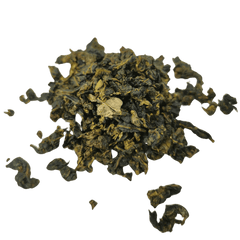 Quanzhou Milk OolongPerfect for oolong newcomers who enjoy naturally creamy, mellow brews.From £5.35
Good questions
Further reading
Chinese tea refers to teas grown and processed in China, the birthplace of tea culture. Major types include green, white, oolong, black, yellow and pu-erh. Each undergoes different levels of oxidation and shaping, producing a huge variety of flavours.
Use water just off the boil for blacks and pu-erh, around 80°C for greens and whites. Steep for two to three minutes, adjusting to taste. Many Chinese teas can be re-infused several times.
Chinese greens are typically pan-fired, giving nutty, toasty notes. Japanese greens are usually steamed, producing a more vegetal, grassy character. Both are delicious, just different traditions.
Keemun and Yunnan blacks can take a splash of milk if you like, though they often shine on their own. Lighter styles like Lychee Congou are best without.
Pu-erh is earthy, smooth and sometimes slightly sweet. Our Pu-erh Mini Tuocha offers an approachable introduction with woody depth.
Loose leaf lets you see whole or large-cut leaves, which tend to release more nuanced flavour. You can also re-steep good loose leaf tea multiple times, making it excellent value.