Tea Smuggling: How Britain's Tea Steal Changed History

By the 1780s, more tea entered Britain illegally than through customs. The leaves in your grandmother's cup might well have been contraband, landed on a dark beach and carried inland by packhorse. Tea smuggling was not a romantic sideline; it was a nationwide industry that at its peak supplied more than 3,000 tonnes a year, compared with 2,000 tonnes imported legally. When people talk about a tea steal, they usually mean nicking someone's last biscuit, but for a century and a half, real theft of the taxman's dues kept Britain caffeinated.
The tea in this guide: Bestsellers Tasting Box from £15.95 Shop it →
The short answer to why anyone bothered: duties on tea reached 119 per cent in the 1750s, more than doubling the price of every legal leaf. Smugglers offered the same tea at half the cost, delivered to your door, sometimes with four months' credit. It took a young Prime Minister and a dramatic tax cut to finally break the trade.
At a glance
- At its height, an estimated 4 to 7.5 million pounds of tea were smuggled into Britain each year, more than legal imports.
- Import duties reached 119 per cent in the 1750s, making smuggled tea half the price of the legal alternative.
- Tea came from continental Europe via the Channel Islands, the Isle of Man, Sweden, Denmark and the Dutch East Indies.
- The brutal Hawkhurst Gang controlled southern England's smuggling routes until public revulsion at their violence brought them down.
- William Pitt the Younger's Commutation Act of 1784 slashed the duty from 119 per cent to 12.5 per cent, ending large-scale tea smuggling almost overnight.
Why was tea smuggled into Britain?
Tea arrived in Britain as a luxury, but by the early 1700s demand had spread far beyond the drawing room. The problem was price. The East India Company held a monopoly on legal imports, and the government piled on duties to fund wars in Spain and elsewhere. By 1711, tea cost 5 shillings per pound, and it only got worse from there.
Smuggling made economic sense for everyone except the Crown. Tea was light, compact and valuable, far easier to hide than barrels of brandy. A fishing boat could carry enough to turn a tidy profit, and the customer at the end paid roughly half what the shop charged for taxed leaves. As historian Helen Doe of the University of Exeter put it, high tariffs on goods people wanted created a business opportunity.
Where did smuggled tea come from?
Not China directly, in most cases. Smugglers bought tea that had already arrived in Europe through rival East India companies: Dutch, Swedish, Danish, French. The Channel Islands and the Isle of Man served as convenient warehouses just off the British coast. Sweden became particularly important because its traders paid for Chinese tea in silver, securing high-quality leaves that were then advertised in Scottish newspapers as 'Gottenburgh Teas'.

The scale of the tea steal
This was not a few opportunistic fishermen. By the late 1700s, more than 3,000 tonnes of smuggled tea entered Britain annually. Between 1772 and 1782, three-quarters of all tea brought to Europe by continental East India companies was re-exported to Britain illegally. The English East India Company auctioned about 6.8 million pounds of legal tea each year for home consumption, while an estimated 4 to 6 million pounds arrived through smuggling.
Entire communities depended on the trade. Landowners financed operations; fishermen crewed boats; local publicans stored parcels in their cellars. In Edinburgh, merchants who bought legally had to travel to London, pay transport costs north, and pay upfront. Smuggled tea arrived at your door, on credit, for half the price. It was not hard to see which option most folk preferred.
The Hawkhurst Gang: when tea smuggling turned brutal
Not all smugglers were lovable rogues. The Hawkhurst Gang, named after a village in Kent, operated more like a modern cartel. From the mid-1760s, they ran heavily armed ships carrying hundreds of chests of tea, with distribution networks stretching far inland.
On 22 September 1747, customs officers intercepted a boat off Dorset carrying two tons of tea wrapped in oilskin. The goods were impounded at the King's Custom House in Poole. Two weeks later, sixty men from the Hawkhurst Gang raided the customs house at midnight with crowbars and pickaxes. They loaded the tea into saddlebags, leaving behind the heavier barrels of brandy and rum. Tea was the prize.
The murders that ended the gang
The violence that followed shocked even a society accustomed to rough justice. A shoemaker named Daniel Chater had been given a small bag of tea by gang leader John Diamond during the harvest. When Diamond was arrested, Chater was summoned to identify him. On Valentine's Day 1748, Chater and an elderly customs officer named William Galley set out for Chichester. They stopped at the White Hart Inn, where the landlady, whose sons were smugglers, summoned gang members.
What happened next was brutal. Galley and Chater were plied with drink, flogged, tied beneath a horse, and whipped through villages on a fifteen-mile ride. Galley was buried alive in a foxhole used to store tea. Chater was beaten, mutilated, and dropped head-first into a well after an attempted hanging failed.
The brutality turned local opinion against the gang. Authorities offered large rewards, and eleven ringleaders were captured and executed. Their bodies were displayed in chains until they rotted, as a warning. Tea smuggling continued for decades, but the great organised gangs never recovered their grip.

Letterbox gift
Five of our best-selling loose leaf teas in one letterbox box, from a malty breakfast brew to a caffeine-free bedtime cup.
Have a lookTea smuggling and the Yorkshire coast
The southern coast gets most of the attention, but Yorkshire had its own role in the trade. The long coastline, quiet coves, and proximity to Scotland (where Gottenburgh Teas were openly advertised) made it useful territory. After the Napoleonic Wars, the Coast Blockade patrolled from Kent to Sussex, and between October 1823 and October 1824, officers seized 1,263 pounds of tea among mixed contraband.
By then, the great tea-smuggling era was over. Spirits dominated the seized goods: 18,000 gallons in that same year. But tea still appeared, a reminder that old habits die hard when there is money to be made.
The Commutation Act of 1784: the tax cut that changed everything
William Pitt the Younger became Prime Minister in 1783, aged just twenty-four. He understood that punishing smugglers was not working; the real problem was the tax itself. The following year, the Commutation Act slashed the tea duty from 119 per cent to 12.5 per cent.
The effect was immediate. Legal tea became affordable for most households. Smugglers lost their price advantage overnight. Tea duties had generated ten per cent of government revenues, enough to pay for the Royal Navy, but Pitt gambled that higher volumes of legal trade would make up the difference. He was right. Smuggling shifted to spirits and wine, but the great British tea steal was over.
| Year | Tea duty | Result |
|---|---|---|
| 1711 | High (war financing) | Smuggling begins in earnest |
| 1745 | Slashed by Henry Pelham | Legal imports more than double |
| 1750s | 119% | Smuggling peaks; gangs dominate |
| 1784 | 12.5% | Smuggling collapses; legal tea wins |
Common myths about tea smuggling
Was tea smuggling punishable by death?
Sometimes, but not always. The maximum penalty for resisting arrest with firearms was death. Experienced seafarers caught smuggling faced five years' service in the Royal Navy. A conviction for murder, like those handed to the Hawkhurst Gang, certainly led to the gallows. But the image of every tea smuggler swinging from a gibbet is more dramatic than accurate.
Did respectable people really buy smuggled tea?
Absolutely. The Rev. James Woodforde recorded in his diary on 29 March 1777 that a smuggler named Andrews brought him a bag of Hyson Tea at eleven o'clock at night, whistling under the parlour window. Woodforde gave him gin and paid for the tea. Vicars, merchants, and ordinary householders all took part, if only as customers.

Black Tea
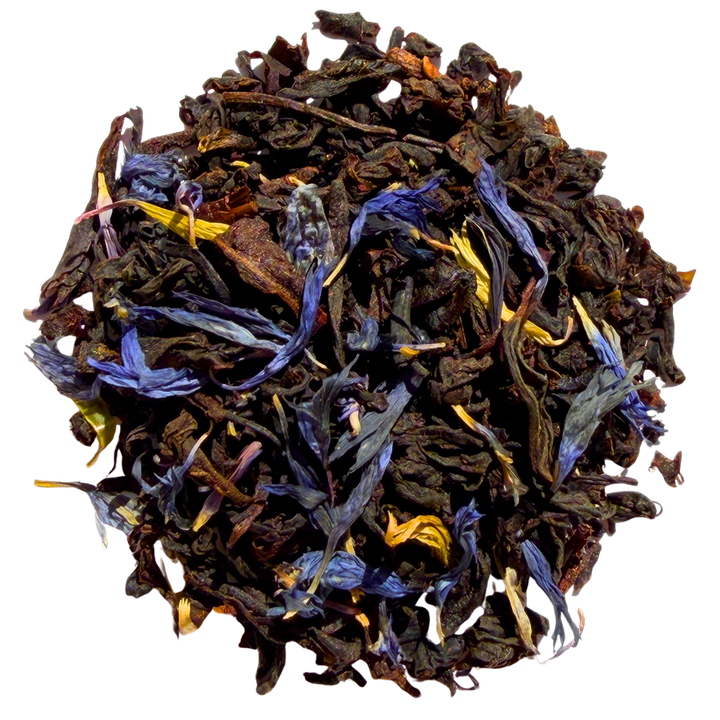
Bergamot and vanilla soften into a fragrant black tea blend. Yorkshire fog you can see through.
Have a lookAdulteration: the other tea crime
Smuggled tea was not always pure. Unscrupulous dealers mixed genuine leaves with elder, hawthorn and ash buds, or re-dried previously brewed leaves. This concoction was sold as 'British tea'. A 1725 Act banned mixing tea with other leaves; a 1777 law banned the sale and manufacture of British tea entirely. Some adulterants included copper compounds to restore colour, a practice that was genuinely dangerous.
What to try next
If all this history has you reaching for the kettle, Yorkshire Fog Earl Grey softens bergamot with vanilla into a fragrant black tea, a proper Yorkshire twist on a classic. Our Bestsellers Tasting Box lets you try five loose-leaf teas side by side, from a malty morning cup to a caffeine-free evening option. For a full-bodied brew that takes milk well, browse the breakfast teas collection. Not sure where to start? Try the Tea Finder.
Browse the full loose-leaf tea range online, with free UK delivery on orders over £35. Or call into the shop in Byram Arcade, Huddersfield, and see the teas for yourself. The kettle's always on.
Frequently asked questions
Why was tea so expensive in the eighteenth century?
Tea carried both the East India Company's import monopoly and heavy government duties. By the 1750s, duties reached 119 per cent, more than doubling the price of every legal leaf. Smugglers offered the same tea at roughly half the cost, which is why so many people bought from them.
How much tea was smuggled into Britain?
At its peak, an estimated 4 to 7.5 million pounds of tea were smuggled into Britain each year, more than the legal imports. By the late 1700s, over 3,000 tonnes arrived illegally compared with 2,000 tonnes through customs.
Did the Commutation Act end tea smuggling completely?
It ended large-scale tea smuggling almost overnight by cutting the duty from 119 per cent to 12.5 per cent. Some tea still appeared among mixed contraband in later decades, but the great eighteenth-century trade was over. Smugglers shifted their attention to spirits and wine.
What was the Hawkhurst Gang?
The Hawkhurst Gang was a violent smuggling organisation based in Kent that controlled much of southern England's tea trade in the mid-1700s. Their brutal murder of a customs officer and a witness turned public opinion against them, leading to the capture and execution of eleven ringleaders.
Was stealing tea punishable by death?
The death penalty applied to those who resisted arrest with firearms, not to smuggling itself. Experienced sailors faced five years' service in the Royal Navy. The violence of gangs like the Hawkhurst brought murder charges, which did carry the death penalty.
Where did smuggled tea come from?
Most smuggled tea came from continental Europe, purchased from Dutch, Swedish, Danish and French East India companies. The Channel Islands and the Isle of Man served as convenient staging posts. Swedish tea, bought with silver from China, was advertised in Scottish newspapers as Gottenburgh Teas.
Sources: BBC News · UK Tea & Infusions Association · NPR · Cornell University Press · Boston Tea Party Ships & Museum