Black Tea: The Complete Guide to Types, Taste and Brewing

Black tea is the backbone of the British tea break. It fills more mugs than any other style, takes milk without complaint, and ranges from the malty punch of an Assam to the smoky mystery of Lapsang Souchong. If you have ever wondered what separates Darjeeling from Ceylon, how much caffeine sits in your morning cup, or why the Chinese call black tea 'red tea', this is the guide that answers it all.
The tea in this guide: Bukhial Assam TGFOP from £4.80 Shop it
In short: black tea comes from the Camellia sinensis plant, fully oxidised to develop a stronger, darker flavour than green, white or oolong tea. It brews best at around 95°C for three to five minutes, contains caffeine, and pairs beautifully with a splash of milk and a digestive biscuit.
At a glance
- Black tea is fully oxidised, giving it a bolder flavour than green or white tea
- Major producers: China, India, Sri Lanka, Kenya, Nepal, Taiwan
- Caffeine: the amount varies with the tea, brewing and serving size
- Brew at 90 to 98°C for 3 to 5 minutes
- Classic types include Assam, Darjeeling, Ceylon, Keemun, Earl Grey and Lapsang Souchong
- Takes milk well; lemon works too, but not both together
What is black tea?
Black tea starts life as a leaf on the Camellia sinensis plant, the same shrub that gives us green, white, oolong and pu-erh tea. The difference lies in processing. After picking, black tea leaves are withered, rolled, fully oxidised and dried. That oxidation step is the key: enzymes in the leaf react with oxygen, turning the leaves dark and developing the rich, robust flavour you taste in the cup.
In China, where black tea first appeared, it is called hóngchá, meaning 'red tea', because the brewed liquor glows coppery red rather than pitch black. The Western name stuck because we looked at the dry leaf instead of the cup. Either way, it is the most popular tea style in the UK and across much of the world.
How black tea is made
Every black tea follows a similar path from bush to mug, though the details vary by region and producer.
- Picking: Leaves are harvested, often by hand. More mature leaves are usually selected for black tea.
- Withering: Fresh leaves are spread on racks or troughs and left to dry for several hours, reducing moisture and making them pliable.
- Rolling: The leaves are rolled in drums or by hand, breaking cell walls and triggering oxidation.
- Oxidation: Rolled leaves rest under controlled temperature and humidity while enzymes work. This is sometimes called 'fermentation', though no actual fermentation occurs.
- Drying: Heat stops oxidation and locks in flavour. Some teas are fired further for a smoky or roasted character.
- Sorting: Finished leaves are graded by size: whole leaf, broken leaf, fannings and dust.
CTC (cut, tear, curl) processing is common for tea bags, producing small uniform granules that brew quickly and strongly. Orthodox processing keeps leaves more intact, often yielding subtler, more complex cups.

Types of black tea
Black tea is not one flavour. It is a family, and the members have quite different personalities. Here are the styles you will meet most often.
Assam black tea
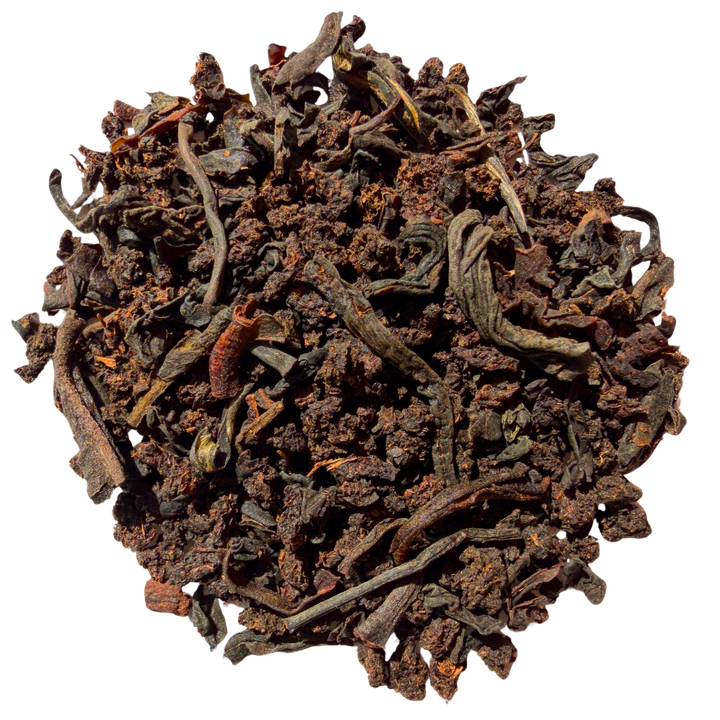
Grown in the Brahmaputra Valley of northeastern India, Assam is rich, malty and full-bodied, with earthy, sometimes peaty notes. It forms the backbone of most English Breakfast blends and takes milk like a champion. If you want a proper morning mash that wakes you up and stands up to toast, Assam is your tea.

Black Tea
A malty Assam with plenty of body and a gently peaty finish. Happy with a splash of milk.
Have a lookDarjeeling black tea
From the foothills of the Himalayas, Darjeeling is often called the 'champagne of teas'. First flush Darjeeling can be delicate, floral and almost muscatel in character, while second flush brings more body and fruit. It is unusually nuanced for a black tea and best enjoyed without milk so you can taste the subtleties.
Ceylon black tea
Sri Lanka produces bright, brisk teas with citrus and spice notes. High-grown Ceylons from places like Nuwara Eliya are lighter and more aromatic; low-grown teas are fuller and bolder. Ceylon is versatile: good plain, good with milk, good iced on a warm day.

Black Tea
Lumbini black tea with a rich body and layers of fruit flavour. A little different with each sip.
Have a lookEarl Grey black tea
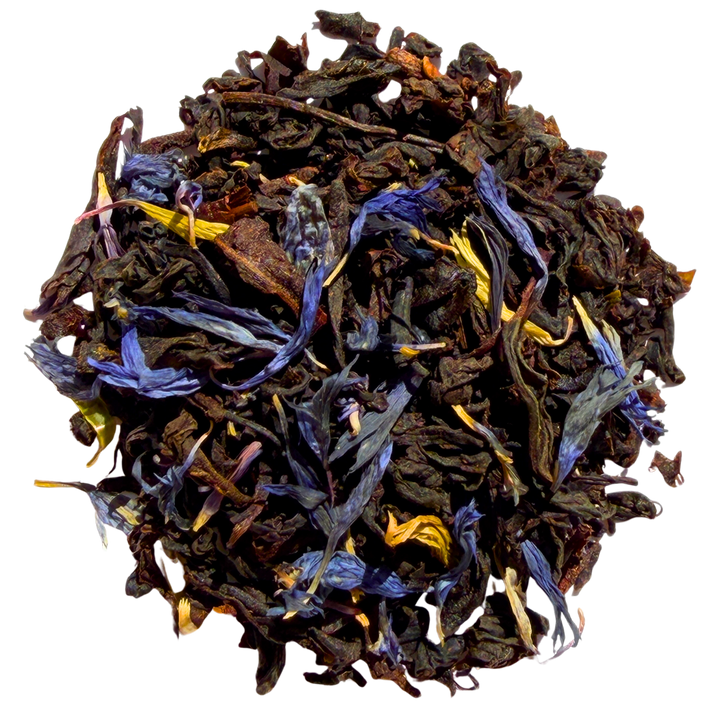
A flavoured black tea scented with bergamot, a citrus fruit grown mainly in Calabria. The base tea varies, from light China black to sturdy Assam. Earl Grey is fragrant and refreshing, traditionally taken without milk, though a splash works if you prefer. Our Classic Earl Grey combines brisk black tea with fragrant bergamot citrus.
Lapsang Souchong black tea
Smoked over pinewood fires in Fujian, China, Lapsang Souchong tastes like a campfire in a cup. It is bold, polarising and brilliant with bacon sandwiches. Not for the faint-hearted, but once you love it, you never look back.
Keemun black tea
A Chinese black tea from Anhui province, Keemun has a smooth, slightly wine-like character with hints of cocoa and stone fruit. It is less malty than Assam, less smoky than Lapsang, and makes a sophisticated afternoon cup.
Orange Pekoe
Despite the name, Orange Pekoe is a leaf grade, not a flavour. It refers to whole, unbroken leaves of a particular size. You will see it on Ceylon and other black teas. No oranges involved, just a confusing bit of tea jargon.
Black tea caffeine: how much is in a cup?
Black tea contains caffeine, but the amount varies from cup to cup. As a general illustration, the FDA lists 71 mg in 12 US fl oz (about 355 ml) of black tea. It also notes that specific products and serving sizes vary. This is not a measurement of Porter Hill tea.
Tea colour alone is not a reliable caffeine guide. A study of 20 commercial tea products found no consistent caffeine ranking among white, green and black teas in its samples. Brewing time also affected the results.
For a caffeine-free choice, explore our caffeine-free teas and tisanes. Decaffeinated tea still contains some caffeine.
For more detail, see our guide to how much caffeine in tea.
How to brew black tea
Good black tea deserves good brewing. Here is the method that works for most styles.
- Start with fresh, cold water. Fill the kettle rather than reboiling stale water.
- Warm your pot or mug with a splash of hot water, then tip it out.
- Add one teaspoon of loose leaf tea per cup (about 2 to 3 g per 250 ml).
- Pour water at 90 to 98°C. For most kettles, let it sit for 30 seconds after boiling.
- Steep for 3 to 5 minutes. Whole-leaf teas and those served with milk often benefit from 4 to 5 minutes; delicate Darjeeling and broken-leaf teas may need only 3.
- Strain and serve. Add milk if you like, but taste it plain first to learn what the tea offers.
Leaving tea to stew makes it bitter. If you want a stronger cup, add more leaf rather than more time.
Common mistakes with black tea
Even the simplest brew can go wrong. These are the pitfalls we see most often.
- Boiling water straight onto delicate teas: Fine Darjeeling or golden-tipped Assam can turn harsh. Let the kettle rest a moment.
- Steeping too long: Tannins build up and the cup turns dry and astringent. Set a timer.
- Using too little leaf: A weak brew is nobody's friend. One teaspoon per cup, or weigh it if you are precise.
- Drowning it in milk: A splash rounds the cup; a flood hides the flavour you paid for.
- Stale water: Flat, reboiled water makes flat tea. Fresh kettle each time.
A short history of black tea
Black tea originated in China, likely in the Wuyi Mountains of Fujian province during the 17th century. Legend has it that soldiers passing through delayed processing, causing the leaves to oxidise more than intended. The result was a darker, more robust tea that held its flavour over long journeys.
That durability made black tea ideal for export. By the mid-17th century it had reached English coffee houses, and by the 1700s it was the drink of the upper classes, softened with milk and sugar. Compressed black tea bricks even served as currency in Mongolia, Tibet and Siberia into the 19th century.
Today, black tea is grown across the globe: China, India, Sri Lanka, Kenya, Nepal, Taiwan and beyond. Each region puts its own stamp on the leaf, shaped by soil, altitude, climate and craft.

Black Tea
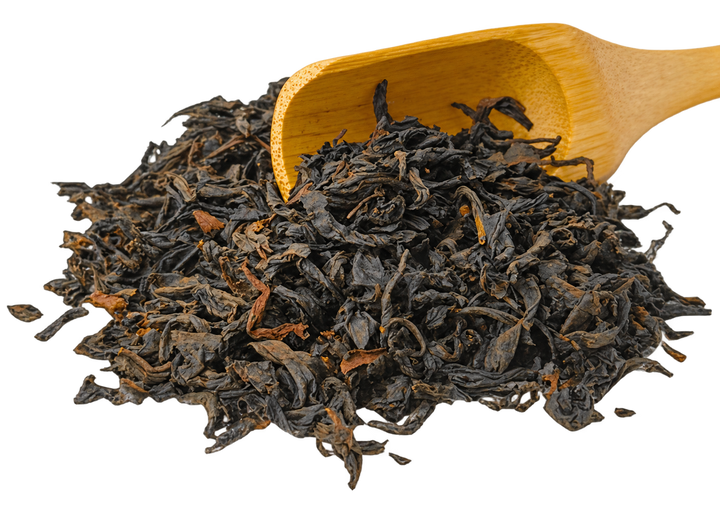
A full-bodied, malty breakfast blend that takes milk well. Kettle on, toast in.
Have a lookLoose leaf black tea vs tea bags
Tea bags are convenient. Loose leaf is better. That is the short version.
Tea bags typically contain fannings or dust, the smallest grades of processed leaf. They brew quickly and produce a strong, one-dimensional cup. Loose leaf tea uses larger, often whole leaves that unfurl as they steep, releasing more nuanced flavours and aromas.
Loose leaf also lets you adjust strength more easily, gives you a clearer view of what you are drinking, and creates less waste if you compost the spent leaves. It takes a little more time, but the cup rewards you for it.
What to try next
If you are new to loose leaf black tea, start with something familiar but better. English Breakfast is a full-bodied, malty blend that takes milk well and suits any time of day. For a single-origin taste of Assam, Bukhial Assam TGFOP brings malty depth and a gently peaty finish.
Curious about Ceylon? Lumbini Ceylon FBOPFEXS has a rich body and layers of fruit flavour. For something altogether different, Golden Heaven Yunnan offers cocoa-like depth and natural sweetness from China's southwest.
Not sure where to start? The Breakfast Tea Tasting Box lets you compare five strong loose leaf black teas side by side, and the Tea Finder can point you in the right direction.
Free Standard UK delivery is available from £35; delivery options and charges are confirmed at checkout. If you are near Huddersfield, call into the shop in Byram Arcade and we will help you find a black tea that suits your mug.
Frequently asked questions
What is black tea?
Black tea is tea made from fully oxidised leaves of the Camellia sinensis plant. Oxidation gives it a darker colour and stronger, more robust flavour than green, white or oolong tea. It is the most popular tea style in the UK and forms the base of blends like English Breakfast and Earl Grey.
How much caffeine does black tea have?
There is no single figure for every black tea. The tea itself, brewing and serving size affect the amount in your cup. Published general figures are not measurements of our teas; see the caffeine section above for a sourced illustration.
What are the main types of black tea?
Major types include Assam (malty, full-bodied), Darjeeling (delicate, floral), Ceylon (bright, brisk), Earl Grey (bergamot-scented), Lapsang Souchong (smoky), and Keemun (smooth, wine-like). Each has a distinct character shaped by its origin and processing.
Is Earl Grey a black tea?
Yes. Earl Grey is black tea flavoured with bergamot oil. The base tea varies by producer, from light Chinese black to sturdy Assam. The bergamot gives it a distinctive citrus fragrance.
Should you drink black tea with milk?
It depends on the tea and your taste. Full-bodied Assam and English Breakfast take milk well. Delicate Darjeeling and smoky Lapsang Souchong are often better plain. Try it without milk first, then add a splash if you prefer a softer cup.
Is black tea good for you?
Black tea is a drink, not a medicine. It contains caffeine and polyphenols, and some studies have looked at associations with blood pressure and heart health, but evidence is mixed and no specific health benefits are well established. If you have questions about caffeine or your health, speak to your GP or pharmacist.
Sources: Wikipedia · WebMD · FDA: beverage caffeine guidance · Chin et al.: caffeine content of brewed teas