How Much Caffeine in Tea? A Cup-by-Cup Chart for Every Type

You are staring at the kettle at half past nine, wondering whether that second cup of tea will keep you awake until midnight. The short answer: an average cup of black tea contains around 40 to 50 mg of caffeine, roughly half what you would get from a mug of filter coffee. But the longer answer depends on what tea you are drinking, how much leaf you use, and how long you let it brew. This guide gives you the numbers for every common type of tea, the factors that shift them, and a few surprises along the way.
The tea in this guide: Bukhial Assam TGFOP from £4.80 Shop it →
Caffeine in tea is a question people ask us almost every day in the shop. Some want more of it, some want none, and plenty just want to know whether their afternoon Darjeeling will stop them sleeping. Let's get specific.
At a glance
- Black tea: roughly 40 to 55 mg per 250 ml cup
- Green tea: around 20 to 45 mg per cup
- White tea: generally 15 to 30 mg per cup
- Oolong tea: about 30 to 40 mg per cup
- Matcha: 35 to 70 mg per serving (depends on how much powder you use)
- Herbal teas (chamomile, rooibos, peppermint): zero caffeine
How much caffeine is in a cup of tea?
The caffeine content in tea varies more than most people expect. According to Mayo Clinic data, an 8 oz (237 ml) cup of brewed black tea contains about 48 mg of caffeine, while the same size cup of brewed green tea has around 29 mg. Other sources report slightly higher or lower figures because so many variables affect the final number.
Tea leaves themselves contain roughly 3 to 4 percent caffeine by dry weight, which is actually more concentrated than coffee beans at around 1 to 2.6 percent. The reason coffee ends up stronger in the cup is that brewing typically uses more coffee per serving, hotter water, and longer extraction.
Caffeine chart: tea type by type
This table gives you a practical reference for common tea types. The ranges reflect real variation between different teas, brewing methods and cup sizes. Figures are based on a standard 250 ml cup brewed for three to five minutes.
| Tea type | Caffeine per cup (approx) | Notes |
|---|---|---|
| Black tea | 40–55 mg | Assam and breakfast blends often at the higher end |
| Green tea | 20–45 mg | Japanese greens sometimes higher than Chinese |
| White tea | 15–30 mg | Often the lowest of true teas |
| Oolong tea | 30–40 mg | Varies with oxidation level |
| Matcha | 35–70 mg | You consume the whole leaf; half teaspoon typical |
| Pu-erh tea | 30–50 mg | Fermented; caffeine varies with age |
| Decaf black tea | 2–5 mg | Not completely caffeine-free |
| Herbal tea | 0 mg | Chamomile, rooibos, peppermint, fruit teas |

How much caffeine in black tea?
Black tea is fully oxidised, which gives it that rich amber colour and malty or brisk character. A standard cup contains around 40 to 55 mg of caffeine. EUFIC reports black tea at about 22 mg per 100 ml, which works out to roughly 55 mg per 250 ml cup.
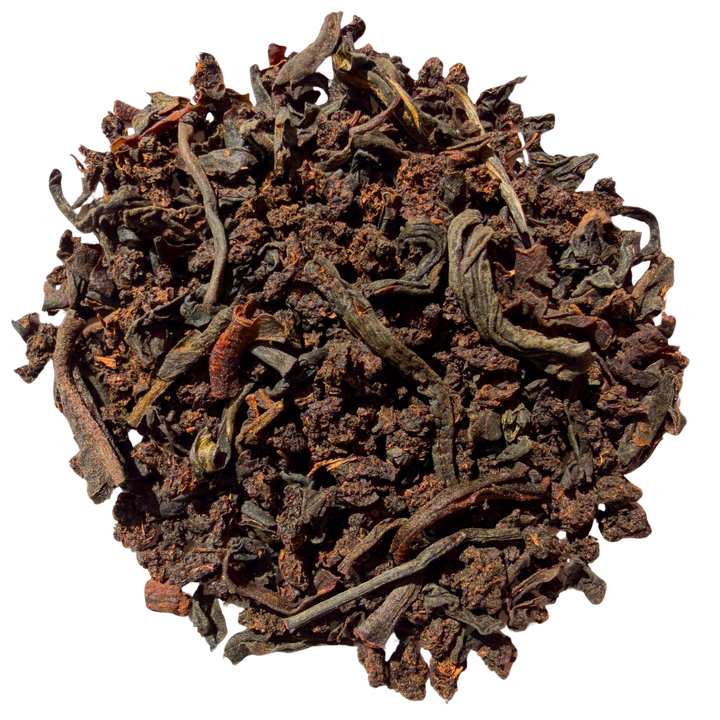
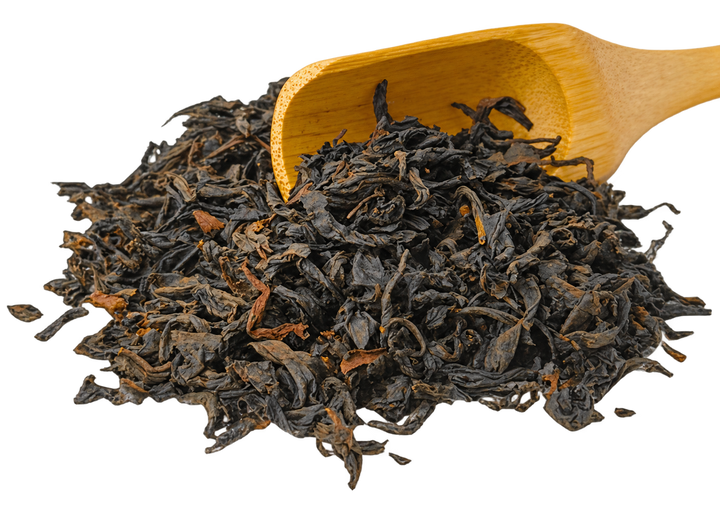
Strong breakfast teas like Bukhial Assam tend to sit at the higher end because the leaf is robust and designed to be brewed firmly. Lighter black teas such as a second-flush Darjeeling may come in slightly lower. If you want a proper morning wake-up, a malty Assam brewed for four minutes will do the job.

Black Tea
A malty Assam with plenty of body and a gently peaty finish. Happy with a splash of milk.
Have a lookHow much caffeine in green tea?
Green tea is unoxidised, giving it a lighter, often grassier flavour. Caffeine levels typically range from 20 to 45 mg per cup. Mayo Clinic puts brewed green tea at about 29 mg per 8 oz cup, while other analyses show figures up to 45 mg depending on the tea and brewing method.
Japanese green teas like sencha and gyokuro are often shaded before harvest, which increases both caffeine and L-theanine. Chinese green teas such as Dragonwell are usually grown in full sun and tend to be slightly lower in caffeine. If you want more detail, we have a full guide on caffeine in green tea.
How much caffeine in matcha?
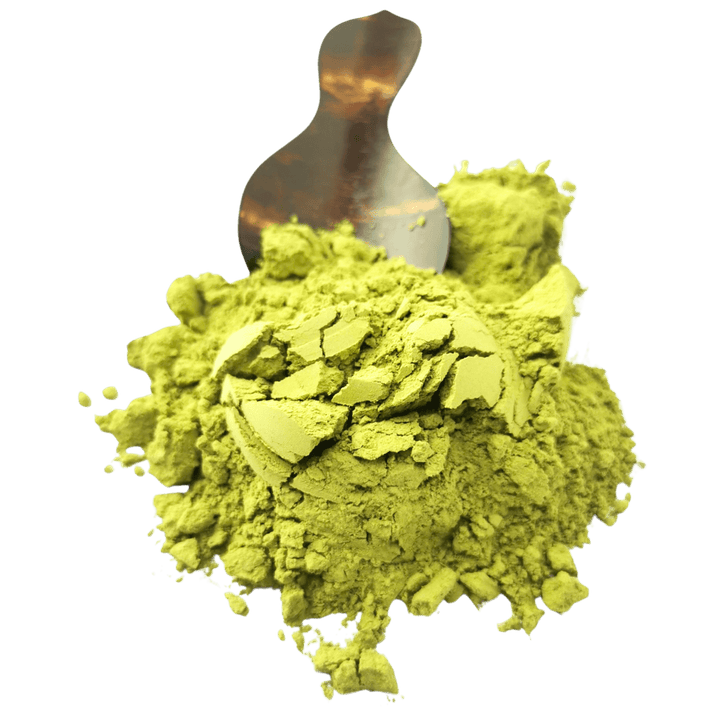
Matcha is powdered green tea, and because you whisk the whole leaf into the water rather than steeping and removing it, you consume all the caffeine present. A half-teaspoon serving (about 1 g) contains roughly 35 mg of caffeine, though some analyses report up to 70 mg for a full teaspoon serving. Healthline cites research showing matcha at 18.9 to 44.4 mg per gram of powder.
This puts matcha somewhere between a cup of green tea and a shot of espresso, depending on how much powder you use. The caffeine tends to hit more gradually than coffee because of the L-theanine present, which is why some people describe matcha as focused energy rather than a jittery spike. See our comparison of matcha vs coffee if you are weighing up the switch.
How much caffeine is in a chai tea latte?
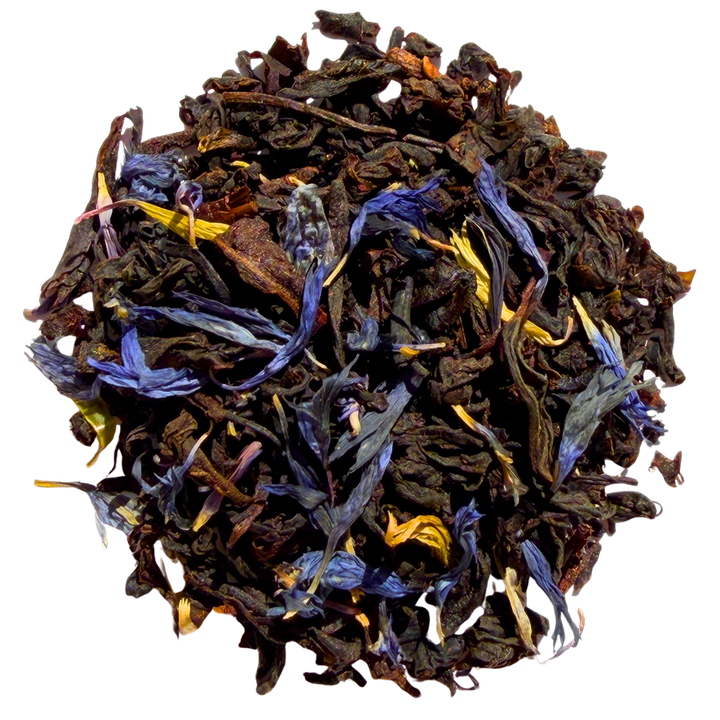
Chai is a spiced tea, traditionally made with black tea, milk, and warming spices like cinnamon, cardamom and ginger. The caffeine comes from the black tea base, so a chai latte made with a single shot of brewed chai concentrate contains roughly 25 to 50 mg of caffeine. Coffee-shop versions vary wildly depending on the concentrate used and the ratio to milk.
If you make chai at home with loose leaf black tea, the caffeine will be similar to any black tea brewed the same way. A milky chai brewed for three minutes will be at the lower end; a strong masala chai simmered for ten minutes will extract more.
Tea vs coffee caffeine: how do they compare?
Coffee generally contains more caffeine per cup than tea. An 8 oz cup of brewed filter coffee has around 90 to 100 mg of caffeine according to Mayo Clinic, compared to about 48 mg for black tea. A single espresso shot has roughly 63 mg, but most coffee-shop drinks use a double shot.
The table below puts the main drinks side by side:
| Drink | Typical serving | Caffeine (approx) |
|---|---|---|
| Filter coffee | 237 ml | 90–100 mg |
| Espresso | 30 ml (single shot) | 63 mg |
| Instant coffee | 237 ml | 60–65 mg |
| Black tea | 237 ml | 40–55 mg |
| Green tea | 237 ml | 20–45 mg |
| Cola | 355 ml can | 33–37 mg |
| Energy drink | 250 ml | 75–80 mg |
If you are trying to cut back on caffeine but still want something to wrap your hands around in the morning, switching from coffee to black tea roughly halves your intake. Switching to green tea brings it down further. And if you need a proper evening drink, our caffeine-free collection has rooibos, chamomile, fruit teas and more.

Letterbox gift
Five caffeine-free herbal teas for evenings, after dinner or all day: mint, chamomile, fruit and ginger.
Have a lookWhat affects caffeine in your cup?
The number on any chart is an average. What ends up in your actual mug depends on several factors:
Brewing time
Longer steeping extracts more caffeine. A 2024 study found that brewing black tea at 100°C for 30 minutes extracted almost three times as much caffeine as a normal three-minute brew. Nobody makes tea that way, but it shows how much time matters. If you want less caffeine, steep for one to two minutes instead of four or five.
Water temperature
Hotter water pulls out caffeine faster. Black tea brewed at a rolling boil will have more caffeine than the same tea brewed at 80°C. Green tea is usually brewed cooler anyway, which partly explains its lower caffeine levels.
Leaf size and style
Broken leaves, like those in most tea bags, release caffeine more quickly than whole leaves. A fine-cut Assam in a tea bag will give up its caffeine faster than a large-leaf oolong. BBC Good Food notes that tea bags provide a standard amount of leaf while loose-leaf tea lets you control the quantity.
Amount of leaf
More tea means more caffeine. If you heap a tablespoon of loose leaf into a mug instead of a teaspoon, you will get a stronger cup with more caffeine. This is obvious but worth remembering when comparing your brew to published averages.
Common caffeine myths
Myth: green tea has no caffeine
Green tea contains less caffeine than black tea on average, but it is not caffeine-free. A cup of green tea still has 20 to 45 mg, which is enough to affect sensitive people or disrupt sleep if you drink it late in the evening.
Myth: white tea is always the lowest
White tea is often said to be the lowest-caffeine true tea, and many white teas are indeed gentle. But some white teas, particularly those made from young buds, can contain as much caffeine as green tea. The processing matters as much as the leaf type.
Myth: decaf means zero caffeine
Decaffeinated tea still contains a small amount of caffeine, typically 2 to 5 mg per cup. The decaffeination process removes most of it, not all. If you need to avoid caffeine completely, herbal teas like rooibos, chamomile or peppermint are the only truly caffeine-free options. Our guide to decaf tea and caffeine goes into more detail.
How much caffeine is safe?
For most healthy adults, up to 400 mg of caffeine per day is generally considered safe according to both the Mayo Clinic and the European Food Safety Authority. That is roughly seven to eight cups of black tea or four cups of filter coffee.
People who are pregnant or breastfeeding should limit caffeine to 200 mg per day. Children and teenagers are advised by health authorities to avoid caffeine, especially from energy drinks. If you experience headaches, restlessness or sleep problems, you may be sensitive and should consider cutting back. As always, talk to your GP, pharmacist or midwife if you have questions about caffeine and your health.
What to try next
If you want a properly caffeinated morning tea, Bukhial Assam is malty, takes milk well, and will get you moving. For something aromatic with moderate caffeine, Margaret's Hope Darjeeling is a second-flush tea with muscatel notes and enough body to feel satisfying.
If you are cutting back, our Caffeine-Free Tasting Box lets you compare five herbal teas including chamomile, mint, fruit and ginger. And if you are not sure where to start, try the Tea Finder and we will point you in the right direction.

Black Tea
Margaret's Hope Darjeeling 2nd Flush TGFOP
Second-flush Darjeeling with fragrant muscatel notes. Take a moment over this one.
Have a lookOrder loose leaf online with free UK delivery on orders over £35, or call into the shop in Byram Arcade, Huddersfield. The kettle is always on.
Frequently asked questions
How much caffeine is in a cup of tea compared to coffee?
A cup of black tea contains around 40 to 55 mg of caffeine, while a cup of filter coffee has roughly 90 to 100 mg. Tea has about half the caffeine of coffee on average, though exact amounts vary with brewing method and serving size.
How much caffeine in matcha?
Matcha contains approximately 35 to 70 mg of caffeine per serving, depending on how much powder you use. A half-teaspoon serving has around 35 mg, while a full teaspoon may reach 70 mg. You consume the whole leaf, so caffeine levels are higher than steeped green tea.
How much caffeine in green tea?
Green tea typically contains 20 to 45 mg of caffeine per cup, making it lower than black tea but not caffeine-free. Japanese varieties like sencha tend to be at the higher end, while Chinese greens like Dragonwell are often lighter.
How much caffeine is in a chai latte?
A chai latte made with black tea concentrate contains roughly 25 to 50 mg of caffeine per serving. The exact amount depends on how strong the chai concentrate is and the ratio of tea to milk. Homemade chai will have similar caffeine to regular black tea.
Does herbal tea have caffeine?
True herbal teas like chamomile, rooibos, peppermint and fruit infusions contain no caffeine because they are not made from the tea plant. However, blends labelled herbal that include green or black tea will contain caffeine. Check the ingredients if you need to avoid it completely.
Is decaf tea completely caffeine-free?
No. Decaffeinated tea still contains around 2 to 5 mg of caffeine per cup. The process removes most caffeine but not all of it. If you need zero caffeine, choose herbal teas like rooibos, chamomile or peppermint instead.
Sources: Mayo Clinic · Healthline · EUFIC · BBC Good Food · CSPI