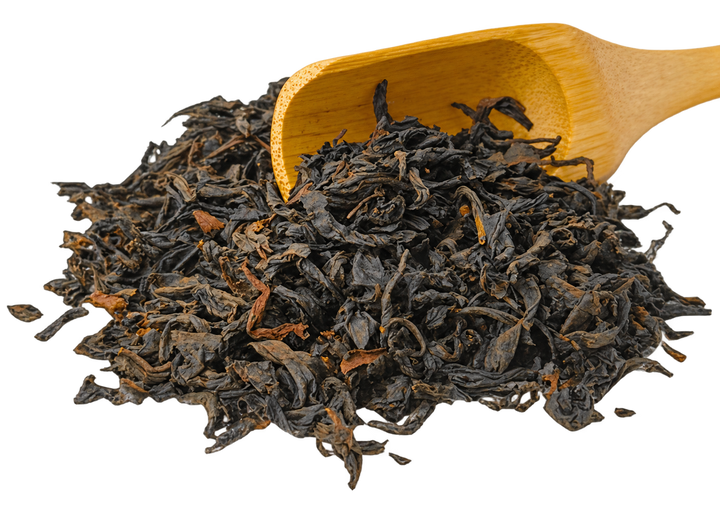
Loose Leaf Tea for Beginners: Why, What Kit and Five Teas to Try

Loose leaf tea looks complicated until you realise most of the fuss is optional. You need a mug, something to hold the leaves, and a rough idea of how long to let it sit. That is genuinely it. The rest, the gongfu ceremonies, the temperature-controlled kettles, the wall of Japanese cultivar names, can wait until you are curious. Or forever, if you prefer.
The tea in this guide: Stainless Steel Basket Infuser with Lid from £6.00 Shop it →
The short answer for anyone wondering where to begin: pick a tea that sounds like something you already drink, use about a teaspoon per cup, pour on water that suits the tea, wait a few minutes, then take the leaves out. You will make a decent cup on your first go and a better one by the third.
This guide covers the kit that actually matters, how to brew without overthinking, and five loose leaf teas that make sense as a starting point. No test at the end.
At a glance
- Use about one teaspoon of loose leaf tea per 240ml cup. Rolled or ball-shaped teas need less because they unfurl.
- Black and herbal teas take freshly boiled water. Green and white teas need cooler water, around 70 to 80°C.
- A roomy basket infuser beats a small tea ball. Leaves need space to open.
- Most loose leaf teas can be re-steeped two to five times, so one measure goes further than you might expect.
- Start with a style close to what you already enjoy: breakfast tea for milk drinkers, Earl Grey for citrus fans, rooibos for caffeine-free.
Why bother with loose leaf tea?
Standard teabags usually contain tea dust and fannings, the small particles left after whole leaves are graded. They brew quickly because they have more surface area, but that same speed can make the cup one-dimensional and tannic. Loose leaf tea uses larger pieces or whole leaves, which release flavour more gradually and often produce a more complex cup.
There is a practical upside too. A whole tea leaf expands to roughly five times its dry volume when hydrated. That expansion releases essential oils and aromatic compounds that dust cannot hold onto. Whether you taste the difference depends on the tea and your palate, but most people notice something.
Loose leaf also tends to be cheaper per cup once you stop paying for individual sachets and packaging. And many teas can be re-steeped two to five times, which stretches the value further.

What kit do I actually need?
Three things: a mug, a basket infuser, and a timer (your phone is fine). That is the whole list for making a proper cup.
Why a basket infuser, not a tea ball?
Small ball infusers cramp the leaves. Tea needs room to move and unfurl, and a tiny mesh ball does not give it that. A basket infuser, the kind that sits inside your mug with a handle or rim, lets the leaves float freely in the water. The confined space of a tea ball restricts leaf expansion and compromises taste.
Our stainless steel basket infuser has a lid that keeps the heat in while brewing, then flips over to catch the drips when you lift the basket out. It is six pounds, or two for ten if you want a spare for the office.

Teaware
Stainless Steel Basket Infuser with Lid
A deep stainless-steel basket gives loose leaves room to open. The lid keeps the heat in, then catches the drips. £6 each, or two for £10.
Have a lookDo I need a teapot?
Not to start. Brewing directly in a mug with a basket infuser is simpler and means one less thing to wash. If you later want to make tea for two or three people, a teapot with a built-in strainer or infuser basket is useful, but it is not essential kit for your first few months. For Japanese green teas, which are steamed rather than pan-fired, many tea enthusiasts recommend using a teapot with a fine-mesh strainer, such as an authentic Tokoname kyusu, to catch the finer particles.
What about temperature-controlled kettles?
Helpful for green tea, but not necessary. If you want cooler water for green or white tea, boil the kettle and let it sit for a few minutes, or add a splash of cold water to the mug before you pour. You will get the hang of it quickly.
How to brew loose leaf tea: a simple method
- Measure the tea. Use about one level-to-rounded teaspoon per 240ml cup. For rolled or ball-shaped teas that unfurl, use a little less.
- Heat the water. Freshly boiled for black, herbal and rooibos. Let it cool to around 70 to 80°C for green and white teas.
- Pour and time. Start the timer when the water hits the leaves. Follow the time on the pack first, then adjust next time if it is too weak or too strong.
- Lift out the leaves. Remove the infuser when the tea tastes right. Leaving the leaves in will make the cup bitter.
- Re-steep if you like. Most loose leaf teas handle a second or third infusion. Add a bit more time each round.
Brewing times and temperatures at a glance
| Tea type | Water temperature | Steeping time | Caffeine (approx.) |
|---|---|---|---|
| Black tea | 100°C (freshly boiled) | 3 to 5 minutes | 40 to 70mg per cup |
| Green tea | 70 to 80°C | 2 to 3 minutes | 25 to 45mg per cup |
| White tea | 70 to 80°C | 2 to 3 minutes | 15 to 30mg per cup |
| Oolong tea | 85 to 95°C | 3 to 5 minutes | 25 to 45mg per cup |
| Herbal / Rooibos | 100°C (freshly boiled) | 5 to 7 minutes | Caffeine-free |
Caffeine figures are approximate and vary by tea, leaf size and brewing time. Black tea generally contains around 40 to 70mg per eight-ounce cup, with green and oolong lower and white tea lower still.
One common mistake to avoid
Loose leaf tea looks like it needs more than it does. A heaped tablespoon instead of a teaspoon will give you something strong enough to stand a spoon in. Start with less. You can always add more next time, but you cannot un-brew a cup that tastes like tannin and regret.
The other common error is treating green tea like black tea: boiling water, five minutes, walk away. Green tea is more sensitive. Too hot or too long and it turns bitter and grassy in the wrong way. Check the instructions, drop the temperature, shorten the time.
Five loose leaf teas to try first
These are not the most exciting teas we sell, but they are reliable, forgiving to brew, and close enough to familiar flavours that you will not feel lost. Think of them as base camp before you head up the mountain.
1. English Breakfast (if you take milk)
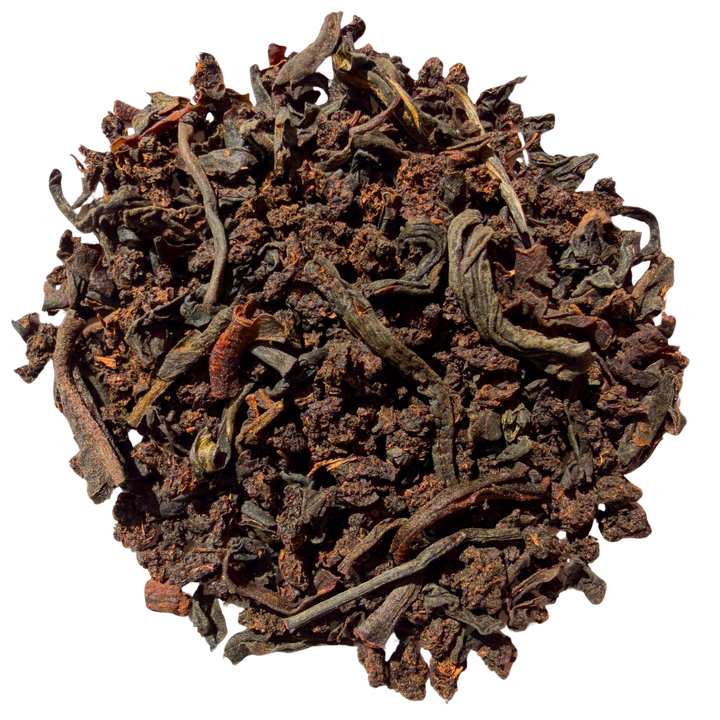
English Breakfast is a full-bodied, malty black tea that takes milk well. If your normal cuppa is a builder's brew, this is the natural step up. Brew with freshly boiled water for two to three minutes, add milk as usual. It is hard to get wrong.
2. Classic Earl Grey (if you like citrus)
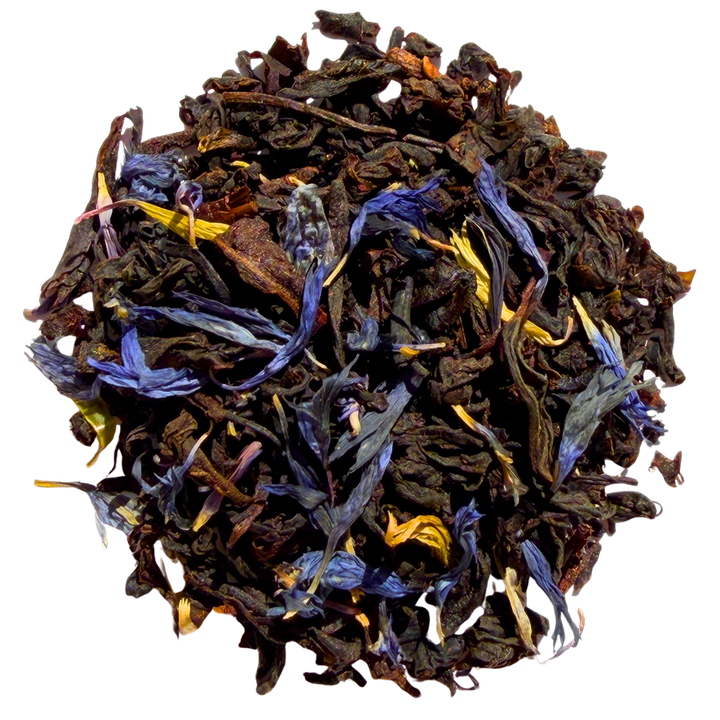
Classic Earl Grey keeps the black tea structure but adds bergamot's bright citrus scent. Ours uses Sri Lankan black tea, cornflower petals and natural bergamot flavouring. It takes a splash of milk, though drinking it plain makes the citrus clearer. A good choice if you already like citrus notes in drinks.

Black Tea
Black tea with fragrant bergamot citrus. A bright, familiar cup for your afternoon break.
Have a look3. Rooibos (if you want no caffeine)
Rooibos is a South African red bush, naturally caffeine-free and gently sweet. It brews easily with boiling water and a longer steep, and it can take milk if you want it. It does not taste like black tea, so do not expect that, but it is rounded and approachable.
4. Decaf English Breakfast (if you want less caffeine but still want tea)
Decaf English Breakfast is a medium-bodied decaf black tea with soft floral notes. It is decaffeinated rather than completely caffeine-free, so it may still contain a small amount, but it is a good option for evenings or anyone cutting back.
5. Cream Earl Grey (if you want something a bit softer)
Cream Earl Grey softens the bergamot with a creamy, vanilla-like sweetness. It is gentler on its own or with a splash of milk, and it feels like a small treat without being dessert tea. A nice one for the afternoon.
Loose leaf vs tea bags: is it really better?
Better is doing a lot of work in that question. Loose leaf tea generally uses larger, less processed leaves, which can produce a more nuanced cup. Loose leaves provide more surface area for water to extract flavour, and they tend to contain more antioxidants and essential oils than pre-bagged tea.
But a teabag at 7am when you are half asleep is still tea. Loose leaf is not a moral position. It is just a different way of making the same drink, with a bit more control over the result and, usually, better raw materials. Try it, see if you like it, and if the teabag wins on a Tuesday morning, that is fine too.
What to try next
Once you have made a few cups and know what you would change, you can start exploring. If you liked English Breakfast but want something darker and more robust, Irish Breakfast brings a stout-like richness that works beautifully with milk. If you enjoyed Earl Grey, the Earl Grey Tasting Box lets you compare five different takes on it, from the classic to creamy, zesty and malty versions.
If you want to try several styles side by side without committing to full pouches, our Bestsellers Tasting Box includes five of our most popular loose leaf teas in a letterbox-friendly box. It is an easy, low-risk way to find your favourite.

Letterbox gift
Five of our best-selling loose leaf teas in one letterbox box, from a malty breakfast brew to a caffeine-free bedtime cup.
Have a lookIf you are still not sure where to start, try the Tea Finder on the site. Answer a few questions and it will suggest something that fits.
For deeper timings and temperatures, use our loose leaf brewing guide. And if you want to know how to make loose leaf tea when you have forgotten your infuser, we have a guide for that too.
We offer free UK delivery on orders over £35. You are also welcome to call into the shop in Byram Arcade, Huddersfield, if you want to see the teas in person and ask questions. The kettle is usually on.
Frequently asked questions
How much loose leaf tea do I need per cup?
A level-to-rounded teaspoon per 240ml cup is a good starting point for most teas. Rolled or ball-shaped teas that unfurl as they brew need a bit less. If your cup is weak, add more leaf next time. If it is too strong, use less or shorten the brewing time.
What is the best loose leaf tea for beginners?
Start with something close to what you already drink. If you take milk, English Breakfast is the natural choice. If you like citrus, try Earl Grey. If you want no caffeine, rooibos is forgiving and easy to brew. The best tea is the one you will actually enjoy drinking.
How do I choose tea?
Think about what you already like. Do you take milk? Want something bright and citrusy? Prefer to avoid caffeine? Start there. You do not need to learn the difference between oolong and sencha on day one. Pick one tea, make a few cups, and notice what you would change.
Can I use a tea ball infuser for loose leaf tea?
Small ball infusers do not give the leaves enough room to open properly, which can compromise the flavour. A roomy basket infuser is better. It sits in your mug, gives the leaves space to move, and lifts out cleanly when the tea is ready.
Do I need different water temperatures for different teas?
Yes. Black, herbal and rooibos teas brew well with freshly boiled water. Green and white teas need cooler water, usually around 70 to 80°C, and shorter brewing times. Check the instructions on the pack before you pour.
What is the difference between decaf tea and caffeine-free tea?
Decaf tea is made from real tea leaves with most caffeine removed, but it can still contain a small amount. Caffeine-free infusions, such as rooibos, peppermint or chamomile, contain no tea leaves at all and are naturally caffeine-free from the start.