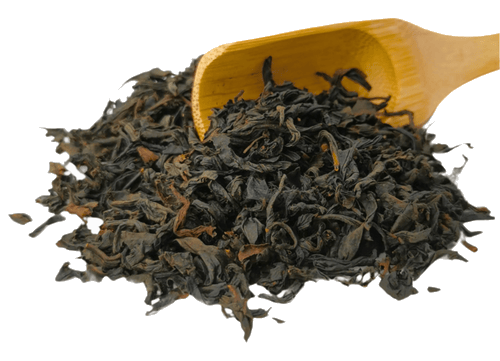
Black Forest Gateaux Tea: Taste, Ingredients and Brewing

Black Forest Gateaux tea borrows the cake’s cocoa-and-red-fruit idea, but it still brews like black tea: aromatic, brisk and dry rather than creamy or sugary. Porter Hill’s blend combines black tea with cocoa beans, tart fruit ingredients, petals and natural flavours. It is the sort of cup to choose when you fancy something pudding-like without actually drinking hot chocolate.
The tea in this guide: English Breakfast from £3.20 Shop it →
At a glance
- Base: caffeinated black tea
- Character: cocoa depth, red-fruit aroma and a clean tea finish
- Ingredients: black tea, pomegranate, cherry stems, moringa, cocoa beans, cranberry, cornflower and safflower petals, and natural flavours
- Start with: 2.5 g per 250 ml, 100°C water, 2 minutes
- Milk: taste it plain first; a small splash is optional
- Not in the declaration: cake, cream, whole cherries or kirsch
What is Black Forest Gateaux tea?
It is a flavoured loose-leaf black tea, not a liquid gateau. The name sets the direction: dark cocoa beside red-fruit character. The black-tea base provides body and a little astringency, while the other ingredients and natural flavours build the dessert association.
That distinction matters when you are choosing. This cup is unsweetened unless you add sugar, and it has the cleaner finish of tea rather than the richness of chocolate, cream or syrup. If you want a conventional black tea with no added flavours, English Breakfast is the plainer comparison.
What is actually in the blend?
The current retail declaration lists black tea, pomegranate, cherry stems, moringa, cocoa beans, cranberry, cornflower and safflower petals, and natural flavours.
“Cherry-rich” is tasting language on the product record. The formal list names cherry stems, not whole or freeze-dried cherries, and it does not identify the source or composition of the natural flavours. We therefore would not claim that visible cherry fruit supplies the cup’s cherry note. Cocoa beans are listed, but the record does not state their percentage or origin.
The declared recipe also contains no cake, cream or kirsch. Anyone checking for an allergy, dietary requirement or a particular flavouring source should ask us to confirm the current pack specification rather than infer it from the dessert name.

What does it taste like?
Expect black-tea depth first, then cocoa-like richness and a brighter fruit-and-flower lift. The product describes it as chocolatey and cherry-rich; the ingredient list supports cocoa beans and several tart fruit components, while the precise natural-flavour recipe remains undisclosed.
It is a better fit for someone who enjoys flavoured black tea than for somebody expecting a sweet cherry cordial. It should still taste recognisably of tea. If you prefer coffee and cocoa beside the tea base, compare the Tiramisu blend. For chocolate with a cooling herbal edge, see the Mint Choc Chip blend.
How to brew Black Forest Gateaux tea
The current retail method is 2.5 g — roughly one teaspoon — per 250 ml, with freshly boiled 100°C water for 2 minutes.
- Stir or gently turn the pouch before measuring so the smaller fruit, cocoa and petal pieces are not left at the bottom.
- Put 2.5 g into a roomy basket infuser.
- Add 250 ml of freshly boiled water.
- Steep for 2 minutes, then strain completely.
- Taste before adding milk or sweetener.
The draft wholesale listing says 3 minutes, but it is not a customer-facing retail page. Treat 2 minutes as the verified retail starting point. If the cup feels too light, add 30 seconds next time. If it becomes dry or tannic, shorten the brew or use a little more leaf instead of leaving the same leaves in for much longer.
| If your cup is… | Change this next time | Why |
|---|---|---|
| Too light | Use 3 g, or add 30 seconds | More leaf builds flavour without relying on a long, drying steep |
| Too dry | Stop at 90 seconds to 2 minutes | The black-tea base releases more astringency as time increases |
| Too perfumed | Use a little less leaf | This reduces the whole blend, including the natural flavouring |
| Missing cocoa depth | Gently remix the pouch before measuring | Small cocoa and fruit pieces can settle during handling |
Milk, sweetness and an iced version
Try the first cup plain. The retail page says it is best without milk, while the current product taxonomy calls milk optional. Both can be true in practice: plain keeps the fruit brighter; a small splash rounds the black tea and leans further into the dessert idea. Too much milk can flatten the fruit and cocoa contrast.
There is no added sweetener in the declared recipe. If you want a more cake-like impression, add a little sugar only after tasting. The blend’s aroma can suggest sweetness even when the liquor itself is dry.
For one iced glass, brew 5 g in 150 ml of boiling water for 2 minutes, strain, then pour over a full glass of ice and top with cold water. This keeps the tea brisk without stewing it. Add a slice of orange only if you want an extra citrus note; orange is not part of the declared blend.

Does it contain caffeine?
Yes. Black tea naturally contains caffeine, and this is not a decaffeinated product. Porter Hill does not have a laboratory result for caffeine per cup, so “contains caffeine” is the useful answer; the separate high-caffeine catalogue tag is not a measured figure. If caffeine affects your sleep, choose an earlier cup or a genuinely caffeine-free fruit or herbal infusion.
Which pack should you choose?
The retail product currently has 50 g, 100 g, 250 g, 500 g and 1 kg choices. At the stated 2.5 g service, that is approximately:
- 50 g: 20 cups — sensible for a first try
- 100 g: 40 cups
- 250 g: 100 cups
- 500 g: 200 cups
- 1 kg: 400 cups
These are planning figures, not a promise: a heaped teaspoon and an iced concentrate use more. All five current retail variants are available for sale, although the smallest pack uses Shopify’s continue-selling policy rather than a positive stock count.

Flavoured black tea
Black tea, cocoa beans and red-fruit character in five current pack sizes.
Choose a packWho will enjoy it — and who may not?
Choose Black Forest Gateaux if you like flavoured black teas, cocoa-and-fruit combinations and a dry cup with a pudding-like aroma. It works well after lunch or with a plain shortbread, where the biscuit supplies the sweetness and butter that are absent from the infusion.
Skip it if you want real cherry pieces, a creamy drink, a caffeine-free evening cup or a plain origin tea. Browse the black tea collection if you would rather compare it with unflavoured and other flavoured black teas.
Frequently asked questions
Is Black Forest Gateaux tea sweet?
It has a dessert-like aroma, but the declared recipe contains no sugar or sweetener. Brewed plain, it is still a dry black tea. Add sweetness only after tasting.
Does it contain actual cherries?
The ingredient list names cherry stems, not whole cherry fruit. It also lists pomegranate, cranberry and natural flavours. The current record does not explain which component supplies each part of the cherry-rich aroma.
Can I add milk?
Yes, but try it plain first. A small splash can soften the black tea; too much may hide the fruit and cocoa contrast.
Is it caffeine-free?
No. Its black-tea base naturally contains caffeine. No measured amount per cup is available.
Is this the same as hot chocolate?
No. It is an unsweetened black-tea infusion containing cocoa beans, not a milk-based chocolate drink.
Product limits: ingredients, packs, service, taxonomy and availability come from the current Porter Hill retail and draft wholesale records checked on 29 September 2026. The records do not state ingredient percentages, tea origin or grade, cocoa specification, natural-flavour composition, allergen status or measured caffeine.