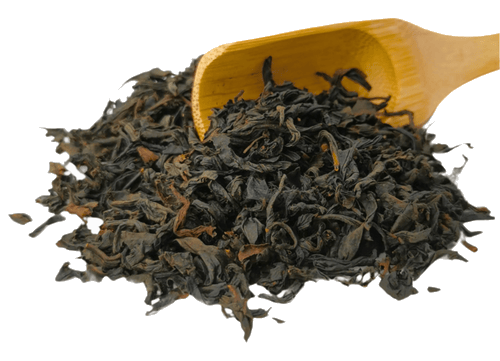
Lapsang Souchong: The Smoky Tea Guide, History and Cooking Uses

Lapsang souchong is the tea that smells like you have left the tin open next to a bonfire. Some people take one sniff and fall in love; others back away slowly. There is no middle ground. If you have ever wondered what this smoky black tea actually is, where the smoke comes from, and whether you can do anything with it besides drink it, you are in the right place.
The tea in this guide: Emperor Butterfly Lapsang Souchong from £6.15 Shop it →
The short answer: lapsang souchong is a black tea from China's Fujian province, dried over smouldering pinewood fires. The smoke is not a flavouring sprayed on afterwards. It is baked into the leaf during production, which is why proper lapsang tastes of pine resin and campfire rather than liquid smoke from a bottle.
Below you will find the history, the production process, exact brewing numbers, food pairing ideas, and a few ways to cook with it. Kettle on.
At a glance
- What it is: black tea smoke-dried over pinewood, from Fujian, China
- Taste: pine smoke, malt, dried longan, warming finish
- Caffeine: moderate, similar to other black teas
- Brew: 3 g per 250 ml, 95°C water, 3 minutes
- Food pairings: cured meats, aged cheese, smoked fish, dark chocolate
- Cooking uses: rubs, marinades, smoking salt, poaching liquid
What is lapsang souchong tea?
Lapsang souchong is a Chinese black tea made from Camellia sinensis leaves that have been withered, rolled, oxidised and then dried in the smoke of burning pine. In Mandarin the tea is called Zhengshan Xiaozhong (正山小種), meaning 'proper mountain small varietal', as noted by Wikipedia.
The authentic version comes from the Wuyi Mountains in Fujian province, a UNESCO World Heritage Site famous for both oolong and black teas. Tea from this region has been traded internationally for centuries, though the smoking process may have been an accident turned tradition.
The history of lapsang souchong
There are two competing origin stories, and nobody can prove which is true. The most commonly cited date is 1646, during the Qing dynasty, when soldiers passing through Fujian allegedly delayed tea production. Farmers, desperate to dry their leaves quickly before they spoiled, placed them over pine fires. The resulting smoky tea was shipped to Dutch traders, who liked it enough to order more, as Wikipedia's lapsang souchong article notes.
An alternative account places the invention during the Taiping Rebellion (1850–1864), when tea processing was again disrupted. Either way, the smoke was originally a practical solution to preservation, not a flavour choice. That European merchants found it compelling enough to keep buying is the reason we still drink it today.
A small historical footnote: during the Boston Tea Party in 1773, 35 chests of souchong tea were among those dumped into the harbour. Whether any of it was smoked is not recorded, but it does suggest the style was already travelling widely by then.

What does lapsang souchong taste like?
The aroma hits first: pine smoke, woodfire, something almost meaty. The taste is gentler than the smell suggests, with a full body, notes of dried longan, a touch of malt, and a warming, resinous finish. Some describe it as reminiscent of peated whisky or smoked paprika.
Intensity varies enormously between producers. Taiwanese versions, sometimes called tarry lapsang souchong, tend to be heavier on the smoke. Authentic Zhengshan Xiaozhong from the Wuyi Mountains can be more balanced, with the underlying tea character still present. Cheaper versions from outside the region often compensate with aggressive smoking, which can tip into ashiness.
According to research cited by Wikipedia, the two most abundant aroma compounds are longifolene and α-terpineol, with some compounds originating solely from the pine smoke itself.

Black Tea
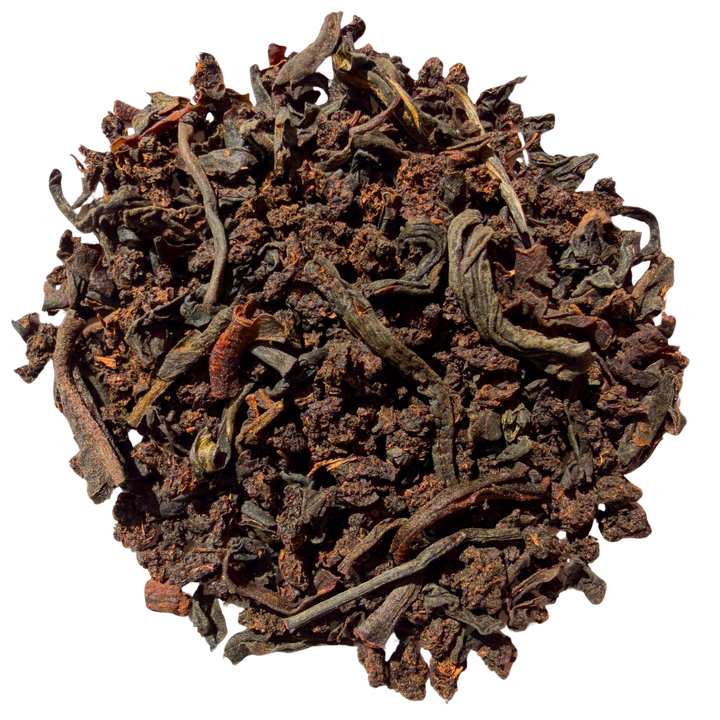
Emperor Butterfly Lapsang Souchong
Pine smoke, a rich black tea base and a long finish. One for the campfire enthusiasts.
Have a lookHow lapsang souchong is made
The production process sets lapsang apart from every other black tea. Here is how the traditional Zhengshan Xiaozhong method works:
- Withering: freshly picked leaves are spread on bamboo mats in a smokehouse, where they begin to lose moisture.
- Rolling: the softened leaves are rolled to break cell walls and start oxidation.
- Oxidation: leaves oxidise for 5 to 6 hours, developing the black tea character.
- Pan-firing: heat stops the oxidation.
- Second rolling: the leaves are shaped again.
- Smoke-drying: leaves are placed in bamboo baskets over smouldering pinewood, typically Pinus taiwanensis, for 8 to 12 hours.
The intensity of smoke depends on the duration of smoking and how far the leaves sit from the heat source. Cedar and cypress may occasionally be used, but pine is traditional. The German Wikipedia entry notes that the tea is roasted in a pan, rolled, oxidized, and then smoked again to completion in bamboo baskets over pine or spruce wood.
How to brew lapsang souchong
Lapsang is forgiving but rewards a bit of care. The table below gives you a starting point for two methods:
| Method | Leaf | Water | Temperature | Time |
|---|---|---|---|---|
| Mug or pot | 3 g | 250 ml | 95°C | 3 minutes |
| Gaiwan (multiple infusions) | 3 g | 100 ml | 95°C | 20 seconds, +5–10 seconds each steep |
If you find your cup too smoky, shorten the time by 30 seconds or use slightly less leaf. If it tastes thin but not harsh, add more leaf rather than extending the steep. Over-brewing can make the smoke taste ashy rather than resinous.
Water quality matters. Very hard water can make the smoke taste drier and ashier, while softer water tends to produce a rounder, warmer cup. If your tap water is hard, try filtered water or shorten your brew by 15 to 25 seconds.
A second infusion is worth trying. Use freshly boiled water, start at 3 minutes again, and expect a lighter, slightly sweeter cup with less smoke. The German Wikipedia notes that lapsang souchong does not become bitter even with longer steeping times, making it suitable for use in a samovar.
Common mistakes when brewing smoked tea
Using boiling water straight from the kettle
Let it cool for 30 seconds to reach 95°C. Boiling water can extract harsh, bitter compounds faster than you want.
Steeping too long to 'get more flavour'
With lapsang, longer steeps often mean more ash and less pine. Add leaf, not time.
Storing it next to your delicate teas
The aroma travels. Keep lapsang in a sealed tin or a separate shelf unless you want your jasmine to taste like a campsite.
Food pairings for lapsang souchong
Lapsang's savoury, smoky character makes it a natural match for foods you would pair with whisky or smoked meat. Here are our suggestions:
- Breakfast: smoked salmon and scrambled eggs, or a full English with proper bacon
- Cheese: aged cheddar, smoked Applewood, or a creamy blue
- Dessert: dark chocolate, salted caramel, or anything with toasted nuts
- Savoury: slow-cooked pork, barbecued brisket, or a mushroom and lentil stew
Cooking with lapsang souchong
Lapsang is not just for drinking. The German Wikipedia entry notes it can be used as a flavouring ingredient during cooking to add a spicy, smoky note. Here are some ideas:
Lapsang-smoked salt
Steep 2 tablespoons of lapsang in 100 ml of just-boiled water for 10 minutes. Strain, then dissolve 100 g of flaky sea salt into the warm tea. Spread on a baking tray and dry in a low oven (100°C) for an hour or two, stirring occasionally. Use on eggs, avocado toast or grilled fish.
Tea-rubbed pork or salmon
Grind 1 tablespoon of dry lapsang leaves with 1 tablespoon of brown sugar, 1 teaspoon of salt and half a teaspoon of black pepper. Rub onto pork belly or salmon fillets before roasting.
Poaching liquid
Add 2 tablespoons of lapsang to a simmering poaching liquid for eggs or chicken. The smoke infuses gently without overwhelming.
Tea-smoked duck or tofu
Line a wok with foil, add rice, sugar and dry lapsang leaves, set a rack above, and smoke duck breasts or firm tofu for 10 to 15 minutes. A stovetop method that gives proper smokehouse flavour without the smokehouse.

Black Tea
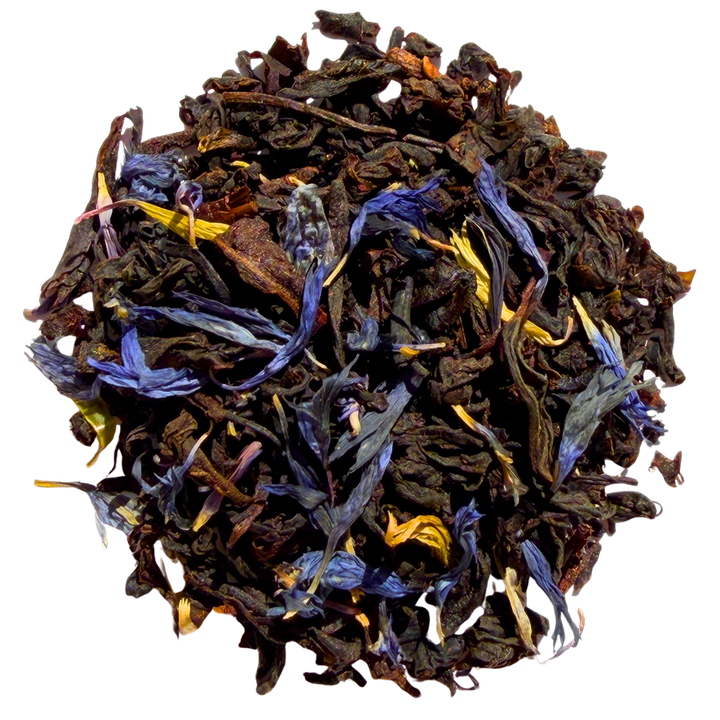
A blend of smoky Lapsang and malty black teas, with a finish that stays with you.
Have a lookLapsang souchong vs Russian Caravan
Russian Caravan is a blend, not a single-origin tea. The classic recipe is approximately 60% Keemun, 20% lapsang souchong, with the remainder roasted oolong, according to Wikipedia. The result is gentler: you get a hint of smoke woven into a malty, rounded black tea base, rather than smoke as the headline act.
Choose lapsang when you want campfire. Choose Russian Caravan when you want smoke as a background note. If you want malt and body with no smoke at all, Bukhial Assam is the one.
Does lapsang souchong contain caffeine?
Yes. Lapsang is a black tea, so it contains caffeine at levels similar to other black teas. The exact amount depends on how much leaf you use, water temperature and steeping time, but expect a moderate caffeine kick. If you need to avoid caffeine entirely, this is not the tea for you. Our caffeine-free collection has plenty of herbal options.
A note on Winston Churchill's favourite tea
You will sometimes read that Winston Churchill considered lapsang souchong his favourite tea, a preference he supposedly developed while smoking cigars during his military service in Cuba. The German Wikipedia mentions this claim, though primary sources are thin on the ground. It makes a good story, and the pairing of smoky tea with a cigar does have a certain logic.
Slightly more verifiable: Patrick Stewart reportedly wanted Captain Picard to drink lapsang souchong in Star Trek: The Next Generation, but it was changed to Earl Grey. The universe took a different path.
What to try next
If you are curious about lapsang souchong, Emperor Butterfly Lapsang Souchong is our full-smoke version: pine, malt and campfire, no apologies. Start with the smallest pouch if you are not sure.
For a gentler introduction, Russian Caravan gives you smoke as part of a blend rather than the whole show. If you want strong black tea with no smoke at all, Bukhial Assam is malty, full-bodied and happy with milk.
The Breakfast Tea Tasting Box includes five strong loose leaf teas to compare side by side, from smooth to smoky. Or try the Tea Finder if you want us to point you in a direction.

Letterbox gift
Five strong loose leaf breakfast teas that all take milk, from a smooth English Breakfast to a smoky Huddersfield blend.
Have a lookWe ship loose leaf tea across the UK with free delivery on orders over £35. You can also call into the shop in Byram Arcade, Huddersfield, if you want to smell the tea before you commit. With lapsang, that is a sensible idea.
Frequently asked questions
What does lapsang souchong taste like?
Pine smoke is the dominant note, backed by malt, a hint of dried longan and a warming, resinous finish. The intensity varies by producer, from gently woody to full bonfire. The aroma is stronger than the taste, so do not let the first sniff put you off if you are curious.
Is lapsang souchong black tea?
Yes. Lapsang souchong is made from fully oxidised black tea leaves, then smoke-dried over pinewood. It has the caffeine content and body of other black teas, with the addition of that distinctive smoky character from the drying process.
Can you buy lapsang souchong tea bags?
You can, though loose leaf gives you more control over strength and allows multiple infusions. We sell Emperor Butterfly Lapsang Souchong as loose leaf in pouches starting at 50 g, which makes about 20 cups.
Is decaf lapsang souchong available?
Decaffeinated lapsang exists but is rare. The decaffeination process can strip some of the smoky intensity. If you want an evening drink without caffeine, you might be better with a herbal tea from our Caffeine-Free Tasting Box rather than a compromised lapsang.
How should I store lapsang souchong?
Keep it in an airtight container, away from light, heat and other teas. The aroma is strong enough to migrate through paper bags and into neighbouring tins. A separate shelf or a sealed jar is your friend.
Can I cook with lapsang souchong?
Absolutely. Use it to make smoked salt, rub it onto meat or fish before roasting, add it to poaching liquid, or use the dry leaves in stovetop smoking. The smoky flavour works anywhere you might use smoked paprika or bacon.
Sources: Wikipedia · German Wikipedia