Raspberry Leaf Tea in Pregnancy: What the Evidence Says

If you've searched for raspberry leaf tea in pregnancy, you've probably read that it 'tones the uterus', 'shortens labour' or 'makes contractions more efficient'. The claims sound reassuring. The problem is that the research behind them is limited, mixed and often inconclusive. A 2024 statement from the UK's Committee on Toxicity concluded the risk was low but came with high uncertainty, and no official health-based guidance value exists for raspberry leaf during pregnancy.
The tea in this guide: Raspberry Leaf Tea from £3.70 Shop it →
So what can we actually say? Raspberry leaf tea is a mild, earthy, caffeine-free herbal infusion made from dried raspberry leaves, not the fruit. It has been consumed for centuries, midwives have recommended it for generations, and many people drink it in late pregnancy. But whether it genuinely affects labour outcomes is a question the science hasn't answered yet. Speak to your midwife, obstetrician or GP before you brew a cup.
At a glance
- Made from raspberry leaves, not fruit; naturally caffeine-free
- Tastes mild, earthy and gently leafy with hay-like notes
- Contains a compound called fragarine, thought to affect smooth muscle
- No clear evidence it shortens labour or improves outcomes
- NHS advises no more than four cups of herbal tea a day in pregnancy
- Always speak to your midwife or GP before using it
What is raspberry leaf tea?
Raspberry leaf is the dried leaf of the red raspberry plant, Rubus idaeus, native to Europe, North America and temperate Asia. Commercial cultivation is concentrated in Bulgaria, Macedonia and Romania. The leaves have been used medicinally in Europe since at least the sixth century, originally as an astringent mouthwash, for menstrual cramps and even as a treatment for conjunctivitis.
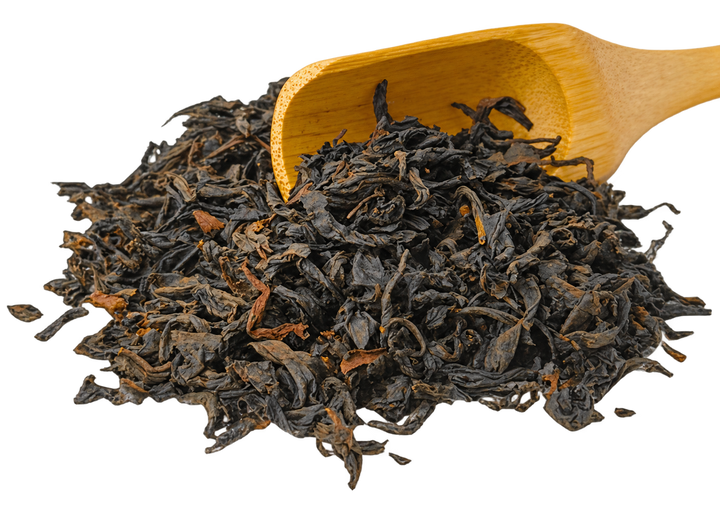
Despite the name, raspberry leaf tea tastes nothing like raspberry fruit. It brews a pale greenish-gold cup with a mild, earthy flavour, hay-like notes and a dry finish. If you're hoping for something pink and jammy, you'll be disappointed. It's a quiet, leafy cup, not a sweet one.

What is fragarine?
Fragarine is a plant compound found in raspberry leaves. It's often mentioned in marketing material as the active ingredient that 'tones' the uterus and prepares it for labour. The human evidence for this effect is limited.
Animal studies have found that raspberry leaf extracts can both stimulate and relax smooth muscle, depending on the preparation, dose and species tested. That sounds contradictory because it is. The Committee on Toxicity noted this as a major uncertainty: effects vary according to whether extracts were tested in the lab or in living animals, and it's unclear how those results translate to humans.
In short, fragarine exists, but what it actually does in a pregnant human body is far from settled science.
What does the research actually say about raspberry leaf tea and pregnancy?
The strongest evidence we have comes from two Australian studies. A 2001 double-blind, randomised, placebo-controlled trial gave 192 low-risk first-time mothers either 2.4 g of raspberry leaf extract daily (as two 1.2 g tablets) from 32 weeks' gestation, or a placebo. The researchers found no significant differences in maternal blood loss, blood pressure, Apgar scores, meconium-stained fluid or birth weight. No directly attributed adverse effects were found, except possible constipation in four participants.
An earlier 1999 cohort study compared 57 raspberry leaf users with 51 controls and also reported no clear adverse effects. Some smaller studies have suggested possible differences, like a shorter pushing phase or fewer forceps deliveries, but researchers couldn't determine whether the tea actually caused those outcomes.
A 2022 survey involving just 121 participants was among the most recent studies available online. A 2023 review found no positive effects on labour and suggested raspberry leaf 'can negatively affect cervical ripening'. The evidence is thin, small-scale and often contradictory.
Does raspberry leaf tea induce labour?
There is no strong evidence that raspberry leaf tea induces labour or speeds cervical dilation. The idea that it kickstarts contractions is a myth, or at best an unproven theory. It may cause uterine changes, but whether those translate into a faster or easier birth is unclear. Many providers recommend avoiding it before 36 to 37 weeks because of theoretical concerns about preterm contractions.

Herbal Tea
Raspberry leaves make a mild, earthy herbal tea. Leafy in flavour, rather than berry-sweet.
Have a lookWhat does the NHS say about raspberry leaf tea in pregnancy?
The NHS advises that research on herbal teas in pregnancy is limited. Their general guidance is to drink no more than four cups of herbal tea a day. Raspberry leaf falls into the category of herbal products that need an individual conversation with your midwife, obstetrician or GP, particularly if you have a medical condition, take medicines or have been told your pregnancy needs additional monitoring.
The European Medicines Agency's herbal committee (HMPC) concluded that evidence for efficacy and safety during pregnancy and lactation was lacking, and raspberry leaf could not be recommended for pregnant or lactating women or people under 18. That's not the same as saying it's dangerous, but it does mean the official bodies haven't signed off on it.
When to start raspberry leaf tea in pregnancy
This is a question for your maternity team, not the internet. Some sources suggest starting from 32 weeks, others from 36 to 37 weeks. The 2001 trial used 32 weeks as the starting point. But the right answer depends on your individual pregnancy, medical history and what your midwife or obstetrician advises.
If your maternity team says raspberry leaf is suitable for you, choose it because you enjoy the flavour or fancy trying it, not because a retailer or forum has promised a medical result.
How much raspberry leaf tea can you drink?
The NHS advises no more than four cups of herbal tea a day during pregnancy. Online suggestions vary wildly: some recommend one to two cups daily, others suggest building up to several cups by the third trimester. The Food Standards Agency noted that combined third-trimester consumption from tea, tablets and tinctures could reach up to 12.4 g of raspberry leaf per day, which is four to five times higher than the dose tested in the clinical trial.
More isn't necessarily better, and with uncertain evidence, sticking to modest amounts seems sensible.
| Form | Typical suggested daily amount | Notes |
|---|---|---|
| Tea | 1 to 4 cups | NHS advises max 4 cups of herbal tea/day |
| Tablets | 900 to 2,400 mg | Reported online suggestions |
| Tincture | 16 to 24 ml | Much less common |
Raspberry leaf tea: forms and how to brew it
Raspberry leaf comes as loose leaf tea, teabags, tablets and occasionally tinctures. If you're choosing tea, look for 100% raspberry leaf, not raspberry-flavoured tea (which is usually fruit pieces and flavouring with no actual raspberry leaf in sight).
Brewing loose leaf raspberry leaf tea
- Use one teaspoon of dried raspberry leaf per cup (roughly 2 g).
- Pour freshly boiled water over the leaves.
- Steep for 2 to 10 minutes, depending on how strong you like it. Start with 2 to 3 minutes and taste.
- Strain and drink plain. Honey or lemon are optional.
A longer steep makes it drier and more tannic rather than stronger in flavour. It's best without milk, which would muddy the gentle leafy taste.
Common myths and mistakes
Myth: raspberry leaf tea tastes like raspberries
It doesn't. It's the dried leaf, not the fruit. Expect a mild, earthy, hay-like cup. If you want berry flavour, you need a fruit blend like Raspberry Lemon Verbena, which contains actual raspberry pieces and lemon herbs.
Myth: it guarantees an easier labour
The evidence simply isn't there. Some people swear by it, others notice nothing. Anecdote isn't the same as evidence, and your experience may differ from someone else's.
Mistake: starting too early or drinking too much
Many providers advise avoiding raspberry leaf in the first trimester because of theoretical concerns about uterine stimulation. Drinking large quantities without medical guidance isn't sensible when the safety research is limited.

Letterbox gift
Five caffeine-free herbal teas for evenings, after dinner or all day: mint, chamomile, fruit and ginger.
Have a lookPotential side effects
Reported side effects include increased Braxton Hicks contractions, changes to bowel movements, mild diuretic effects and intestinal irritation. The 2001 trial reported possible constipation in four participants. Some case reports suggest possible effects on blood glucose, which may be relevant if you have gestational diabetes.
If you notice anything unusual, stop drinking it and speak to your midwife or GP.
What to try next
If raspberry leaf isn't for you, or you fancy something with actual flavour, there are plenty of caffeine-free options. Lemon & Ginger Tea is bright and warming with no caffeine. Organic Lemon Balm Tea has a soft citrus scent and a gentle character. For something fruity, Raspberry Lemon Verbena gives you real berry notes with lemon herbs, though do check with your maternity team first.
The Caffeine-Free Tasting Box lets you try five herbal teas side by side, and the Tea Finder can help if you're not sure where to start.
You'll find Raspberry Leaf Tea on the site in various pack sizes. A 50 g pack is a sensible starting point if your midwife has said it's suitable for you, or if you simply want to learn the flavour.
Order loose leaf tea online or visit the shop
We pack and dispatch from Byram Arcade in Huddersfield, with free UK delivery on orders over £35. You're also welcome to call into the shop and pick out a pack in person. The kettle's always on.
Frequently asked questions
Does raspberry leaf tea induce labour?
No clear evidence shows that raspberry leaf tea induces labour. A 2023 review found no positive effects on labour progress and suggested it may negatively affect cervical ripening. Speak to your midwife or obstetrician rather than relying on anecdotal claims from forums or product packaging.
When should I start drinking raspberry leaf tea in pregnancy?
That's a question for your maternity team. Some sources suggest 32 weeks, others 36 to 37 weeks. Many providers advise avoiding it in the first trimester. Your midwife or obstetrician can give you advice based on your individual pregnancy and medical history.
Is raspberry leaf tea safe during pregnancy?
The UK's Committee on Toxicity concluded the risk was low but with high uncertainty. The NHS recommends no more than four cups of herbal tea daily in pregnancy and advises speaking to your midwife or GP about herbal products, especially if you have medical conditions or take medicines.
What does raspberry leaf tea taste like?
Raspberry leaf tea is mild, earthy and gently leafy with hay-like notes and a dry finish. It tastes nothing like raspberry fruit. If you want berry flavour, try a fruit blend like Raspberry Lemon Verbena instead.
What is fragarine in raspberry leaf?
Fragarine is a plant compound found in raspberry leaves, often claimed to 'tone' the uterus. Animal studies show mixed results, with raspberry leaf extracts both stimulating and relaxing smooth muscle. What fragarine actually does in pregnant humans is not well understood.
Can I drink raspberry leaf tea if I'm not pregnant?
Yes. Raspberry leaf is a mild, naturally caffeine-free herbal tea that anyone can enjoy. Choose it for the flavour rather than any claimed benefit. It makes a pleasant, quiet cup on a wet afternoon.
Sources: Food Standards Agency · Committee on Toxicity · The Bump · Romper