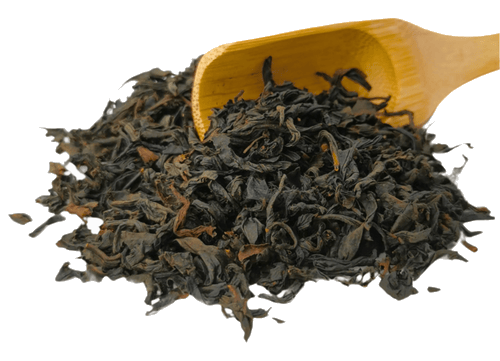
Earl Grey Caffeine: How Much Is in Your Cup and What Affects It

A cup of Earl Grey contains roughly 40 to 70 mg of caffeine, about half what you'd get from a mug of filter coffee. That's the short answer. The longer one involves the tea itself, how you brew it, and if you're using loose leaf or bags. If you're trying to work out whether Earl Grey fits your afternoon, your sleep schedule or your caffeine limit, read on.
The tea in this guide: Classic Earl Grey from £3.50 Shop it →
Earl Grey is black tea flavoured with bergamot oil, and the caffeine comes entirely from the tea leaves, not the bergamot. Bergamot is a bitter citrus fruit grown almost entirely in southern Italy, and its oil contains no caffeine at all. So whatever Earl Grey you drink, the caffeine story is really a black tea story.
At a glance
- Earl Grey contains roughly 40 to 70 mg caffeine per 240 ml cup
- Filter coffee contains around 80 to 140 mg per cup
- Bergamot oil adds no caffeine
- Longer steeping and hotter water release more caffeine
- EFSA guidance: up to 400 mg caffeine per day for healthy adults
- Decaf and rooibos versions exist for evenings or caffeine-sensitive drinkers
How much caffeine is in Earl Grey tea?
Most sources put Earl Grey at 40 to 70 mg per 240 ml cup, though some manufacturers report figures up to 85 mg depending on the base tea and brewing method. WebMD lists black tea at 40 to 120 mg per 8 ounces, which shows how wide the range can be. Health.com puts one cup of black tea at around 47 mg of caffeine, a little more than half the caffeine in one cup of coffee.
The variation isn't random. It depends on the tea leaves, how finely they're cut, water temperature, and how long you steep. A quick two-minute brew will deliver less caffeine than a five-minute one. Tea bags, which often contain smaller, more broken leaf, tend to extract faster and can push caffeine content higher.

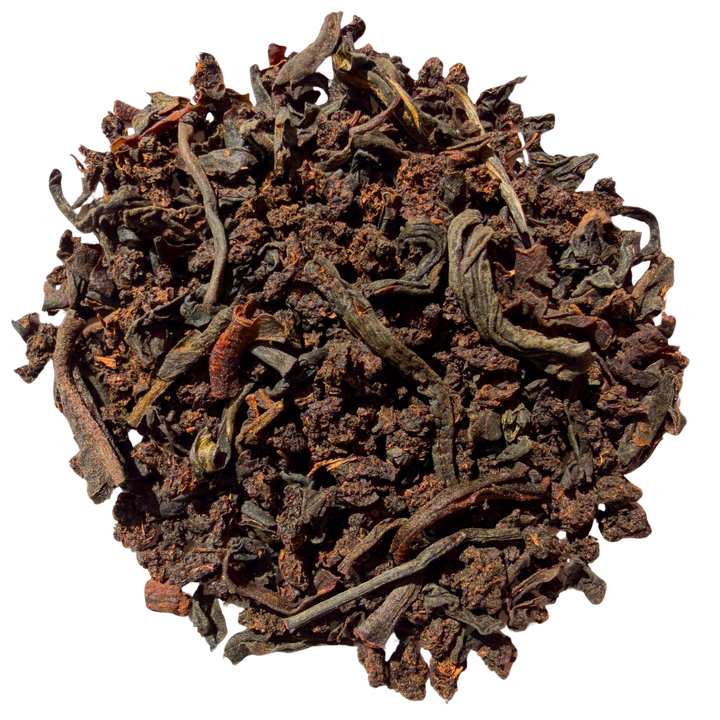
Black Tea
Black tea with fragrant bergamot citrus. A bright, familiar cup for your afternoon break.
Have a lookEarl Grey vs English Breakfast: which has more caffeine?
They're broadly similar. Both are black teas made from Camellia sinensis, and both sit in the 40 to 70 mg range per cup. The difference comes down to the base tea: a maltier Assam-based blend might extract slightly differently than a lighter Ceylon, but we're talking small margins.
If you're choosing between the two based on caffeine, don't. Pick the one you enjoy drinking. The caffeine will be close enough that it won't make or break your afternoon.
| Tea type | Caffeine per 240 ml | Notes |
|---|---|---|
| Earl Grey | 40–70 mg | Black tea with bergamot |
| English Breakfast | 45–55 mg | Black tea, often Assam-based |
| Green tea | 25–45 mg | Shorter steep, lower temp |
| Filter coffee | 80–140 mg | Varies by bean and method |

What affects the amount of caffeine in Earl Grey?
Several things, and you control most of them.
Steeping time
The longer the leaves sit in hot water, the more caffeine ends up in your cup. Steeping time is one of the most important factors in determining caffeine content. A three-minute steep will give you less than a five-minute one. If you're sensitive to caffeine in the evenings, pull your infuser earlier rather than later.
Water temperature
Boiling water extracts caffeine faster than cooler water. Most black teas, including Earl Grey, are brewed at 95 to 100°C. If you want slightly less caffeine, you could try a slightly lower temperature, though you'll also get a lighter flavour.
Leaf size and grade
Fine-cut tea in bags releases caffeine quickly because there's more surface area in contact with the water. Whole-leaf loose tea extracts more slowly. A fine-cut tea brewed for five minutes delivers more caffeine than whole-leaf brewed for three.
The base tea
Earl Grey can be built on different black teas. A robust Assam base might extract slightly differently than a lighter Ceylon or Keemun. The varietal, harvest time and processing all play a part, though the differences are usually modest.
Is Earl Grey a strong tea?
That depends what you mean by strong. If you mean caffeine, it's moderate: less than coffee, more than green tea. If you mean flavour, it varies enormously by blend.
A classic Earl Grey built on a lighter black tea will taste bright and bergamot-forward, almost delicate. A maltier version like Earl of Colne Valley, which uses robust Assam, gives you more body and heft. The bergamot is still there, but it's sitting over a tea with backbone. If you find standard Earl Grey too flimsy, especially with milk, that's the direction to look.
Strength in the cup also comes down to how much leaf you use and how long you steep. One teaspoon per cup for two to three minutes gives a balanced brew. Want it stronger? Add more leaf rather than steeping longer, which can make the tea bitter.

How many cups of Earl Grey can you drink a day?
The European Food Safety Authority (EFSA) guidance is up to 400 mg of caffeine per day for healthy adults, and up to 200 mg as a single dose. Health.com notes that caffeine intake above 400 mg per day may cause jitteriness, increased heart rate, and insomnia. If your Earl Grey contains around 50 mg per cup, that's roughly seven or eight cups before you hit the daily limit, assuming you're not drinking coffee or other caffeinated drinks alongside.
Three to four cups a day is a reasonable range for most people. Six to eight might push you towards that ceiling, especially if you have a coffee with breakfast or a can of something fizzy in the afternoon.
One case worth mentioning: The Lancet reported a 44-year-old man who drank about four litres of Earl Grey daily, nearly seventeen cups, and developed severe muscle cramps that stopped when he quit the tea. The proposed cause wasn't caffeine but bergapten, a compound in bergamot that may interfere with potassium channels at extremely high doses. Four litres is not a normal amount of tea. Three mugs and a biscuit is fine.
Does Earl Grey have more caffeine than coffee?
No. A typical cup of filter coffee contains 80 to 140 mg of caffeine, roughly double what you'd get from Earl Grey. One cup of black tea contains around 47 mg of caffeine, a little more than half the caffeine in one cup of coffee. Espresso-based drinks vary depending on size and number of shots, but a single shot of espresso contains around 63 mg in a much smaller volume.
If you're switching from coffee to tea to reduce caffeine, Earl Grey is a sensible middle ground. You'll still get a mild lift, but without the jitters some people experience from stronger coffee. And you'll get bergamot, which coffee cannot offer.
Caffeine-free Earl Grey options
If you want the bergamot flavour without caffeine, you have two routes.
Decaf Earl Grey
Decaf Earl Grey uses black tea that's been decaffeinated, usually through a CO2 or water process. It retains most of the flavour and still tastes like Earl Grey, but with most of the caffeine removed. It's not completely caffeine-free, just very low, typically under 5 mg per cup.
Earl Grey Rooibos
For genuinely caffeine-free, Earl Grey Rooibos uses red rooibos as the base instead of black tea. Rooibos comes from a different plant entirely, Aspalathus linearis, which contains no caffeine at all. The bergamot is still there, but the mouthfeel is mellower and the flavour profile is different. It's a good evening option if you want something that feels like Earl Grey without keeping you awake. For more on this, see the Earl Grey Rooibos guide.
Common myths about Earl Grey caffeine
'Adding milk reduces the caffeine'
It doesn't. Milk doesn't affect the caffeine content at all. It changes the taste and texture, but the caffeine stays the same.
'Bergamot adds caffeine'
The bergamot oil comes from citrus peel and contains no caffeine. All the caffeine in Earl Grey comes from the tea leaves.
'Earl Grey is lower in caffeine than other black teas'
Not really. It's the same plant, processed the same way. The bergamot doesn't dilute the caffeine. If anything, the base tea matters more than whether it's flavoured.
What to try next
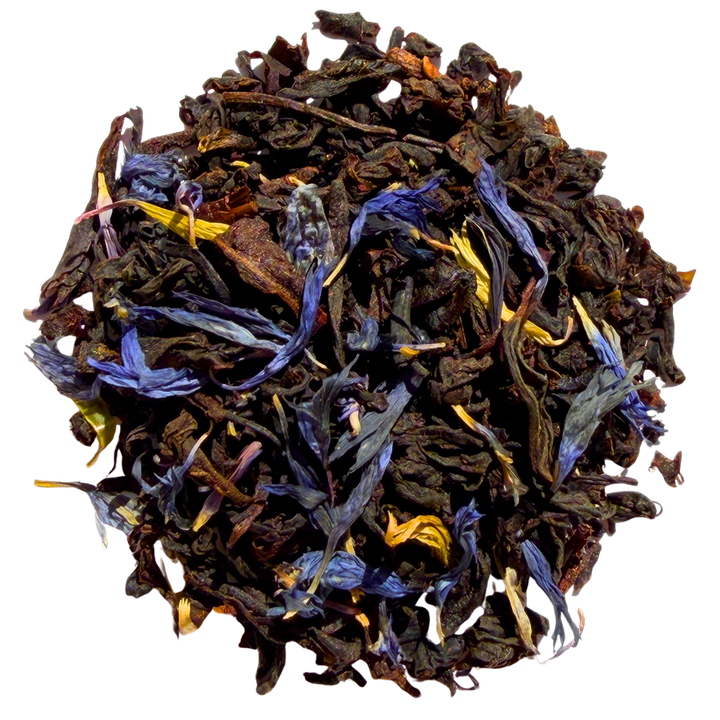
If you're after a stronger, maltier Earl Grey that holds up to milk, Earl of Colne Valley is built on robust Assam. For a softer, vanilla-touched version, Cream Earl Grey keeps the bergamot but adds a creamy sweetness. If you want to compare several styles side by side, the Earl Grey Tasting Box puts five different blends in front of you. And if you're still working out what suits your kettle, the Tea Finder will narrow things down.

Letterbox gift
Five loose leaf Earl Greys side by side, from the classic to creamy, zesty and malty takes on it.
Have a lookOrder any of them online with free UK delivery on orders over £35, or call into the shop in Byram Arcade, Huddersfield.
Frequently asked questions
Does Earl Grey have caffeine?
Yes. Earl Grey is made from black tea, which comes from Camellia sinensis and naturally contains caffeine. A typical cup has 40 to 70 mg, depending on brewing time, water temperature and the base tea used. The bergamot flavouring adds no caffeine.
How much caffeine is in Earl Grey tea compared to coffee?
Earl Grey contains roughly half the caffeine of filter coffee. A cup of Earl Grey has around 40 to 70 mg; a cup of filter coffee has 80 to 140 mg. If you're looking to reduce caffeine but still want a morning boost, Earl Grey is a reasonable middle ground.
Is there a caffeine-free Earl Grey tea?
Yes. Decaf Earl Grey has most of the caffeine removed but keeps the black tea base. Earl Grey Rooibos uses rooibos instead of black tea and is naturally caffeine-free. Both have the bergamot flavour you'd expect from Earl Grey.
What affects the caffeine in my cup of Earl Grey?
Steeping time, water temperature, leaf size and the amount of tea you use. Longer steeping and hotter water extract more caffeine. Tea bags with finely cut leaf release caffeine faster than whole-leaf loose tea. Brewing for two minutes gives you less than five.
Is Earl Grey stronger than English Breakfast?
In terms of caffeine, they're similar: both are black teas in the 40 to 70 mg range. In terms of flavour, Earl Grey has bergamot's citrus lift, while English Breakfast tends to be maltier and more straightforward. Choose based on taste, not caffeine.
Sources: WebMD · Health.com