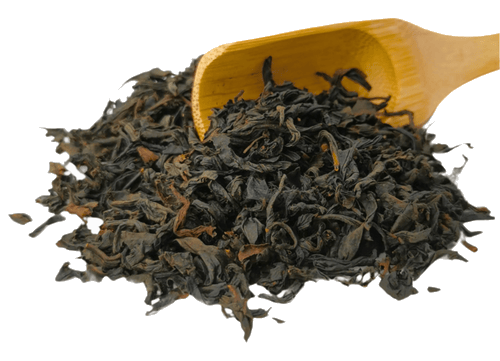
Orange Pekoe Explained: What the Tea Grades Really Mean

You have probably seen 'orange pekoe' on a box of tea and assumed it meant something about oranges. Fair enough. But orange pekoe has nothing to do with citrus fruit, orange peel or any flavouring at all. It is a grading term that describes the size and style of processed black tea leaves, and it has been confusing people for a couple of centuries now.
The tea in this guide: Lumbini Ceylon Orange Pekoe from £4.25 Shop it →
The short answer: orange pekoe (OP) refers to whole-leaf black tea of a particular size, traditionally considered a medium-to-good grade. The 'orange' most likely comes from the Dutch House of Orange-Nassau, not from anything you would put in a marmalade. And 'pekoe' traces back to a Chinese term for the fine white hairs on young tea buds. Once you know what the letters mean, choosing tea becomes a lot less mysterious.
At a glance
- Orange pekoe (OP) is a black tea leaf grade, not a flavour or variety
- The name likely honours the Dutch royal House of Orange-Nassau
- 'Pekoe' comes from Chinese words meaning 'white down', describing young leaf tips
- Grades tell you about leaf size and style, not taste quality
- Common grades include OP, BOP (Broken), FOP (Flowery), TGFOP (Tippy Golden Flowery)
- Higher grades have more tips and larger leaves; lower grades brew faster and stronger
What does orange pekoe actually mean?
Orange pekoe is a Western tea trade term for black tea, used especially for teas from Sri Lanka and India. It describes whole leaves of a specified size, sorted after the tea has been manufactured. In North America, the term sometimes gets used loosely to mean any standard black tea, which adds to the confusion.
The grading system was originally developed for hand-crafted tea leaves but is now mostly applied to mechanically produced tea. The system is largely based on leaf appearance: the presence of tips, whether those tips are hairy or golden, and how finely the leaves are rolled.
Here is the important bit: the grade tells you about what the sorted leaf looks like, not how it will taste. Two teas with exactly the same grade can taste completely different depending on where they were grown, when they were picked and how they were processed. Think of it like egg sizes: large and medium tell you something useful, but they say nowt about how the hen was raised.

Where does the name come from?
The 'orange' mystery
The word 'orange' in orange pekoe has sparked plenty of theories over the years. Some suggest it refers to the coppery colour of oxidised tea leaves or the amber hue of the brewed liquor. But according to Wikipedia, neither explanation is definitive; the more widely accepted theory is that Dutch merchants added 'orange' to suggest a royal association with the House of Orange-Nassau, the Netherlands' ruling family since the mid-sixteenth century.
The Dutch were the most important tea importers and wholesalers throughout the eighteenth century and pioneered tea production in Java in the nineteenth century. Sir Thomas Lipton, the British tea magnate, is widely credited with popularising the term 'orange pekoe' in the late 1800s. Britain only relaxed its tea-importation tax in 1784, reportedly to challenge the Dutch near-monopoly on the trade.
The 'pekoe' puzzle
The word 'pekoe' comes from Chinese, though the exact route is uncertain. The most common explanation is that it derives from the Amoy (Xiamen) dialect term pe̍h-ho, meaning 'white down' or 'white hair'. This refers to the fine silvery hairs found on young tea buds. Robert Morrison listed 'pekoe' in his Chinese dictionary in 1819.
The presence of these downy tips indicates a relatively early plucking. Tea is typically picked as the first two or three leaves plus the bud, and a very young, down-covered shoot suggests the picker caught it at a tender stage. There is a general perception that younger plucks produce better tea, though this is not an absolute rule.

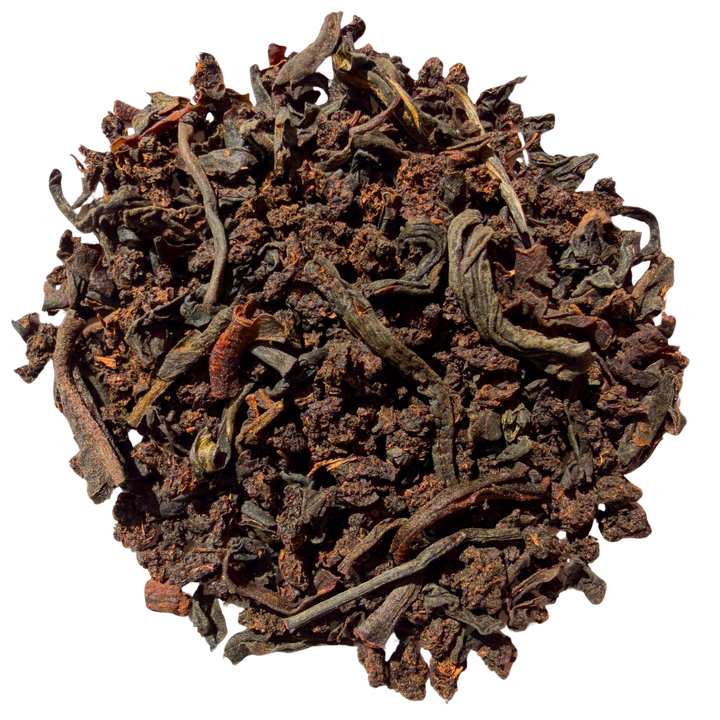
Black Tea
A full-bodied Ceylon tea from Lumbini, with rich flavour and a rounded finish.
Have a lookTea grades explained: OP, BOP, FOP, TGFOP and beyond
The grading system can look like alphabet soup, but it follows a logical pattern. Each letter adds information about the leaf. Here is how the main grades stack up, from simpler to more elaborate:
| Grade | Full name | What it means |
|---|---|---|
| OP | Orange Pekoe | Whole leaves of medium size, no tips |
| FOP | Flowery Orange Pekoe | Whole leaves with some tips (buds) |
| GFOP | Golden Flowery Orange Pekoe | FOP with golden tips |
| TGFOP | Tippy Golden Flowery Orange Pekoe | Higher proportion of golden tips |
| FTGFOP | Finest Tippy Golden Flowery Orange Pekoe | Even more tips, finer quality |
| SFTGFOP | Super Finest Tippy Golden Flowery Orange Pekoe | The top of the whole-leaf grades |
Tea folk sometimes joke that FTGFOP stands for 'Far Too Good For Ordinary People'. It does not, but the humour captures something true: the system can feel designed to mystify rather than inform.
What does BOP mean?
BOP stands for Broken Orange Pekoe. Broken grades are made by crushing larger leaves, often mechanically, to produce smaller pieces that brew faster and release flavour more quickly. This is why tea bags often contain fannings or dust, the smallest grades, which give a strong brew in under a minute.
Broken is not necessarily bad. Fannings from expensive teas can be more costly and more flavourful than whole leaves from cheaper teas. Tea stalls across India, South Asia and Africa prefer dust because it is inexpensive and produces a robust cup. If you like a proper strong brew with milk, a broken grade might suit you better than a whole-leaf tea that needs coaxing.
What does FBOP mean?
FBOP is Flowery Broken Orange Pekoe: broken leaves that include some tips. You will see this on Ceylon teas from Sri Lanka, where the grading system is particularly detailed. Our Lumbini Ceylon FBOPFEXS uses the Sri Lanka Tea Board's extended grading: the FEXS indicates leaf similar in size to FBOPF Special with an attractive showing of golden or silver tips.
If you are curious about the difference between whole-leaf and broken grades from the same estate, comparing Lumbini Ceylon Orange Pekoe and Lumbini Ceylon FBOPFEXS side by side is instructive. The OP has pine-like top notes with a coppery base; the FBOPFEXS has a richer body and plum-like finish. Same estate, different character.

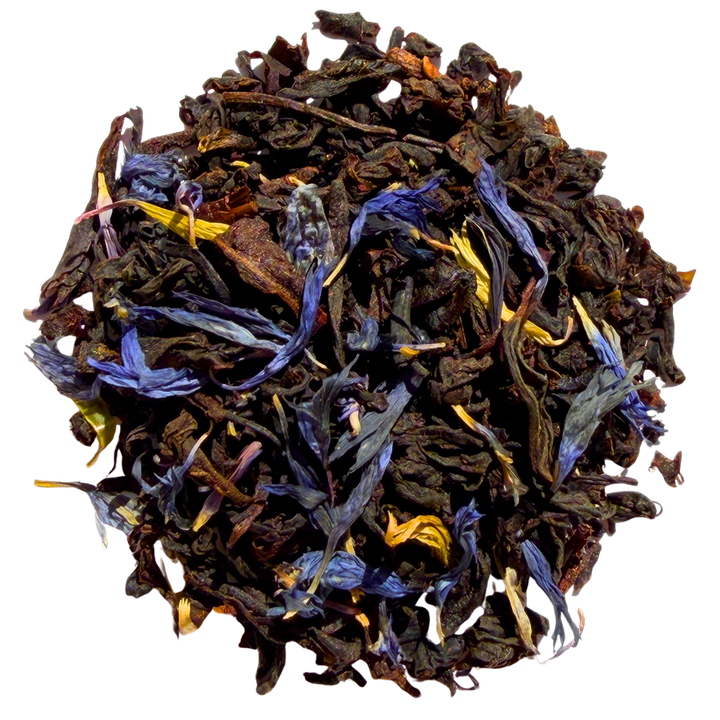
Black Tea
A malty Assam with plenty of body and a gently peaty finish. Happy with a splash of milk.
Have a lookCommon myths about orange pekoe
Myth: Orange pekoe is flavoured with orange
It is not. The name predates fruit-flavoured teas by a long way, and genuine orange pekoe contains nothing but tea leaves. Some less scrupulous sellers do add orange peel to low-grade broken leaves and market it as orange pekoe, but reputable brands do not. If you want orange in your tea, try an Orange Jasmine Oolong or a zesty Earl Grey, where the citrus is stated on the label.
Myth: Higher grades always taste better
Not necessarily. Grade tells you about leaf size and appearance, which affects brewing time and strength, but it does not guarantee flavour quality. A TGFOP from a poorly managed estate in a bad season may taste worse than an OP from a skilled producer at peak harvest. Terroir, processing and freshness matter more than the letters on the packet.
Myth: Orange pekoe is a type of tea plant
All true tea comes from Camellia sinensis. Orange pekoe is a processing and sorting grade applied to black tea, not a cultivar or variety. The same tea bush could yield orange pekoe, broken orange pekoe or dust depending on how the leaves are processed and sorted after picking.
How to use grades when buying tea
- Check the grade to understand leaf size. Whole-leaf grades (OP, FOP, TGFOP) need more time to brew and usually give a more nuanced cup. Broken grades (BOP, FBOP) brew faster and stronger.
- Look for tip content if you want complexity. Golden or silver tips often indicate younger plucks and can add sweetness or floral notes.
- Consider how you drink your tea. If you take milk and want a robust morning cup, a broken grade or a malty Assam like Bukhial Assam TGFOP will serve you well. If you prefer to drink black and savour the nuances, a whole-leaf Darjeeling like Margaret's Hope Darjeeling TGFOP might be more your style.
- Do not be intimidated by long grade names. Once you know the pattern, SFTGFOP1 is just OP with extra descriptors stacked in front.
- Trust your palate over the letters. The best tea is the one you enjoy drinking.
A quick guide to brewing by grade
| Grade type | Water temp | Steep time | Notes |
|---|---|---|---|
| Whole-leaf (OP, FOP, TGFOP) | 95–100°C | 3–5 minutes | Give leaves room to unfurl; taste at 3 minutes |
| Broken (BOP, FBOP) | 95–100°C | 2–4 minutes | Brews faster; watch for bitterness |
| Fannings/Dust | 100°C | 1–2 minutes | Strong quickly; good for masala chai |
These are starting points. Taste as you go and adjust to your preference. A wet Tuesday afternoon might call for a stronger cup than a lazy Sunday; there is no wrong answer.
What to try next
If you want to taste the difference between grades, start with two teas from the same origin. Lumbini Ceylon Orange Pekoe and Lumbini Ceylon FBOPFEXS come from the same Sri Lankan estate, so you can compare OP against a tippy broken grade and see how leaf style affects the cup.
For a classic whole-leaf tea with plenty of golden tips, Bukhial Assam TGFOP is malty and full-bodied, happy with milk on a cold morning. If you prefer something lighter and more aromatic, Margaret's Hope Darjeeling TGFOP has fragrant muscatel notes worth sitting down for.
Not sure where to start? The Tea Finder asks a few quick questions and points you toward something you will actually enjoy.

Black Tea
Margaret's Hope Darjeeling 2nd Flush TGFOP
Second-flush Darjeeling with fragrant muscatel notes. Take a moment over this one.
Have a lookWe pack loose leaf orders by hand in Huddersfield, and UK delivery is free over £35. You can also call into the shop in Byram Arcade, Huddersfield, if you want to have a sniff of something before you commit.
Frequently asked questions
Is orange pekoe tea the same as black tea?
Orange pekoe is a grade of black tea, not a separate type. It describes whole leaves of a particular size from Sri Lanka, India or other tea-producing countries. In North America, the term sometimes gets used loosely to mean any standard black tea, which is technically imprecise but widely understood.
What is Ceylon orange pekoe?
Ceylon orange pekoe is whole-leaf black tea graded OP from Sri Lanka (formerly Ceylon). It typically has long, wiry leaves and brews a clean, brisk cup. The Sri Lanka Tea Board maintains detailed grading standards, so Ceylon OP tends to be consistent in leaf style if not in flavour, which varies by estate and elevation.
What does broken orange pekoe mean?
Broken orange pekoe (BOP) consists of smaller leaf pieces, either intentionally broken during processing or sieved from larger batches. It brews faster and stronger than whole-leaf grades, making it popular for tea bags and for drinkers who like a robust cup with milk. Broken does not mean inferior.
Does orange pekoe tea contain caffeine?
Yes. Orange pekoe is black tea, and all black tea contains caffeine. The exact amount varies depending on the tea, brewing time and water temperature, but you can expect a typical cup to contain roughly 40 to 70 mg of caffeine. If you need to avoid caffeine, look at herbal teas or our decaffeinated range instead.
Why is it called orange pekoe if there is no orange in it?
The most widely accepted explanation is that Dutch merchants named it after the House of Orange-Nassau, the Dutch royal family, to suggest quality or a royal endorsement. The term dates back to the eighteenth and nineteenth centuries, when the Netherlands dominated European tea trade. It has nothing to do with the fruit, the flavour or the colour.
What is the meaning of FBOP in tea?
FBOP stands for Flowery Broken Orange Pekoe. It describes broken tea leaves that include some tips (young leaf buds). The 'flowery' indicates the presence of these tips, which can add sweetness and complexity. You will see FBOP most often on Ceylon and other South Asian black teas.
Sources: Wikipedia: Tea leaf grading · Cambridge Dictionary