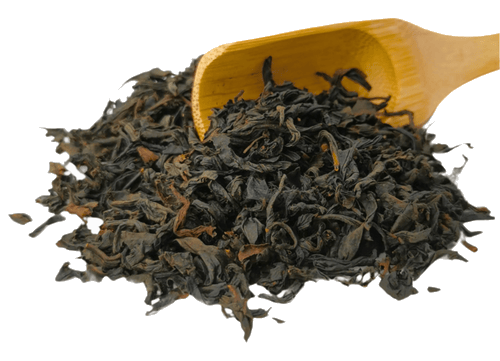
Pumpkin Spice Tea: A Proper Guide to Autumn in a Cup

Pumpkin spice tea is what happens when autumn ends up in your teacup instead of your coffee mug. It is real tea, usually black tea, blended with warming spices like cinnamon, ginger and clove, often with pieces of pumpkin or apple and sometimes flower petals for colour. Unlike the famous pumpkin spice latte, there is no milk or sugar already mixed in. You brew it yourself, taste it first, then decide what it needs.
The tea in this guide: Pumpkin Spice from £4.30 Shop it →
The short answer to 'what is pumpkin spice tea?' is this: a spiced black tea that tastes like a crisp October walk, not like a pudding. It is caffeinated, brews in about three minutes, and works black or with a splash of milk if you fancy it.
If you have ever wondered why the coffee shops get all the pumpkin fun while tea drinkers get left out in the cold, this guide is for you.
At a glance
- Black tea base with cinnamon, ginger, clove and often pumpkin pieces
- Contains natural caffeine (typically 50 to 80 mg per cup)
- Brew at 100°C for 3 to 5 minutes, one teaspoon per cup
- Works black, with milk, or iced
- Not pre-sweetened like a café latte
- A proper autumn tea without the queue
What is pumpkin spice tea made of?
The base is almost always black tea. Most blends use Ceylon, Keemun or a combination, chosen because they are robust enough to stand up to strong spices.
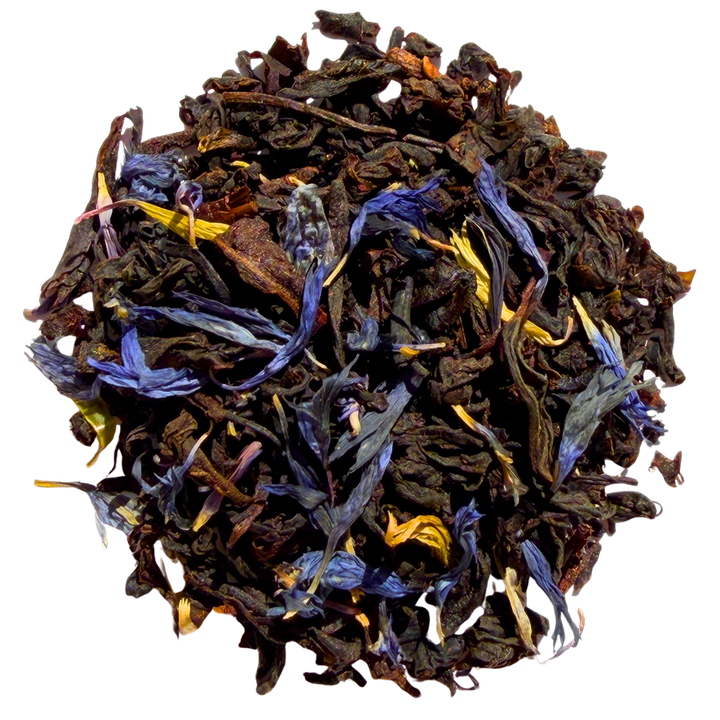
The spices vary by blend. Some lean heavily on cinnamon and ginger; others add cardamom, allspice or a pinch of clove. You might also find cocoa husk, marigold flowers or safflower petals for a splash of colour.
Pumpkin itself is sometimes there in small pieces, sometimes as a natural flavouring. It supports the autumn idea without dominating the cup. Think of it as the set dressing rather than the lead actor.
Common ingredients across blends
| Ingredient | Role | Found in |
|---|---|---|
| Black tea | Base, caffeine, briskness | All blends |
| Cinnamon | Warmth, sweetness | Most blends |
| Ginger | Heat, zing | Most blends |
| Clove | Depth, slight numbing warmth | Many blends |
| Nutmeg | Sweet, earthy note | Some blends |
| Cardamom | Aromatic, slightly floral | Some blends |
| Pumpkin pieces | Subtle sweetness, colour | Some blends |
| Marigold or safflower | Visual appeal | Some blends |

What does pumpkin spice tea taste like?
The black tea comes through first, giving you a proper-tea briskness. Cinnamon warms the cup without overwhelming it. Ginger adds a little heat, clove brings depth, and if there is apple or orange in the blend, you get a gentle brightness that stops things getting too cosy.
The pumpkin itself is subtle. It supports the autumn mood rather than tasting like pie filling. The finish is clean, not sticky or sweet. If you have ever had a chai and thought 'I like this but it is a bit much', pumpkin spice tea is often a gentler cousin.
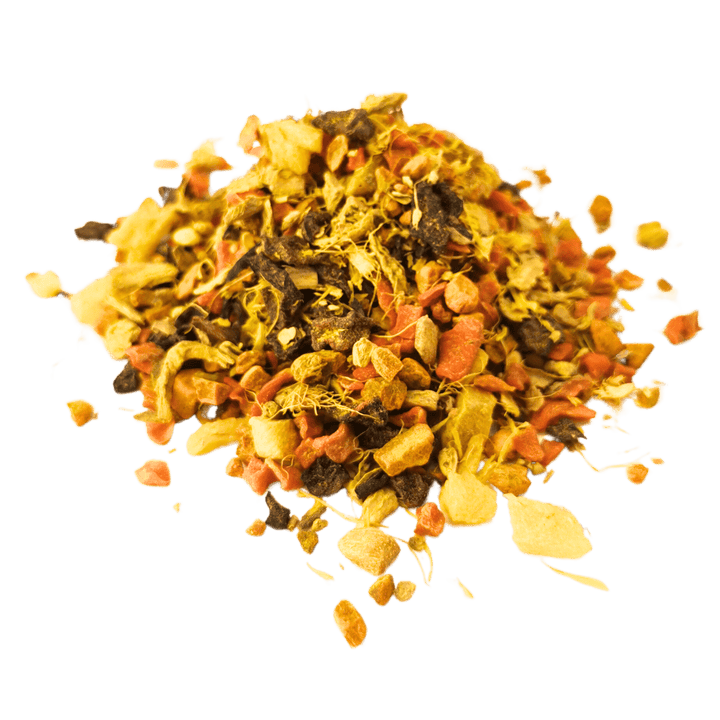
Our own Pumpkin Spice at Porter Hill takes a slightly different route: black tea with actual pumpkin pieces, apple, orange, rosehip, hibiscus, cinnamon and three kinds of petals. It skips ginger, clove and nutmeg entirely, leaning into fruit and warming cinnamon instead. The rosehip and hibiscus add a gentle tartness that keeps the cup lively.

Black Tea
Black tea with pumpkin, cinnamon, apple and orange. A warm welcome after a chilly walk.
Have a lookHow to brew pumpkin spice tea
Getting the timing right matters more than you might think. Too short and the spices barely show up; too long and the black tea gets bossy and tannic.
- Boil fresh water and let it reach 100°C (or 208°F if your kettle speaks American).
- Use one level teaspoon of loose leaf per cup, or one tea bag.
- Pour the water over the tea and start a timer.
- Steep for 3 to 5 minutes. Start with 3 and adjust next time if you want it stronger.
- Strain completely before tasting.
That three-minute mark gives the fruit and cinnamon time to open up while keeping the black tea tidy. Most pumpkin spice teas work well at around 3 minutes with fully boiling water.
Brewing adjustments
- Too brisk? Shorten the next brew by thirty seconds or add a modest splash of milk.
- Too light? Use a little more leaf rather than letting the same amount stew.
- Want it sweeter? Taste it first. Any honey or sugar you add is yours to measure.
- Making it iced? Brew double strength (two teaspoons per cup), then pour over ice. The spices hold up well.
Pumpkin spice tea vs pumpkin spice latte
This is the question that brings most people here, and the answer is simple: they are completely different drinks that happen to share a name.
A pumpkin spice latte is an espresso-based drink with steamed milk, sugar syrup and pumpkin spice flavouring. It is sweet, creamy and caffeinated from the coffee. The famous coffee-shop version, which arguably started the whole craze, contains no actual pumpkin in the spice mix.
Pumpkin spice tea is brewed tea leaves with spices. No milk, no sugar, no syrup unless you add them yourself. The caffeine comes from the tea, not coffee. You are in control of the sweetness, which for some of us is the entire point.
| Feature | Pumpkin spice tea | Pumpkin spice latte |
|---|---|---|
| Base | Black tea | Espresso |
| Milk | Optional | Included |
| Sugar | Optional | Included |
| Caffeine | 50 to 80 mg | 75 to 150 mg |
| Preparation | Brew at home | Made by barista |
| Queue | None | Often long |
How to make a pumpkin spice tea latte at home
If you want the best of both worlds, you can turn your pumpkin spice tea into a latte-style drink without leaving the house or standing in a queue that snakes past the pastry case.
- Brew your tea stronger than usual: use two teaspoons of leaf per cup and steep for the full 5 minutes.
- Strain completely into a mug, filling it about two-thirds full.
- Heat your milk (any kind works) until steaming but not boiling.
- Froth the milk if you have a frother, or just whisk it vigorously.
- Pour the milk into the tea gradually, tasting as you go.
- Add honey, maple syrup or sugar to taste.
A note of caution: if your blend contains hibiscus or other tart fruit elements, add the milk slowly. The acidity can cause curdling if you pour too much too quickly. A test splash is sensible before you commit to the full mug. For more detail, see our pumpkin spice latte guide.
Pumpkin spice chai: what is the difference?
Pumpkin spice chai combines the warming spices of traditional masala chai (ginger, cardamom, cinnamon, clove) with pumpkin flavouring. It is essentially chai's autumnal cousin, leaning harder into the sweet, dessert-like side of spiced tea.
Standard pumpkin spice tea tends to let the black tea shine through more, with spices playing a supporting role. Chai, by contrast, is often designed to be brewed with milk, making it richer and more robust. If you love chai and want an autumn twist, pumpkin spice chai is worth trying. If you prefer tasting the tea itself, stick with a straightforward pumpkin spice blend.
Our Vanilla Chai offers ginger and cinnamon warmth with a vanilla edge, while Jasmine Masala Chai takes a more floral direction. Both work beautifully if you want spice without the pumpkin element.

Does pumpkin spice tea contain caffeine?
Yes. Because the base is black tea, pumpkin spice tea contains natural caffeine. Black teas typically contain 50 to 80 mg of caffeine per cup, which is a reasonable estimate for most pumpkin spice blends.
That is roughly half the caffeine of a standard coffee, enough to perk you up without making you jittery. If you want something warming and spiced without the caffeine, our Spiced Apple brings apple, ginger and spice to a herbal base with no tea leaf at all.
A common mistake: over-steeping
The most frequent error with pumpkin spice tea is leaving it to brew too long. Black tea becomes tannic and bitter if you let it stew past five minutes, and that bitterness fights with the spices rather than complementing them.
If you like a stronger cup, add more leaf rather than more time. You get intensity without the harshness. Set a timer if you tend to wander off while the kettle does its work. We have all done it.
The spices behind the name
While pumpkin spice has been associated with American coffee culture since 2003, the spice blend itself—cinnamon, ginger, clove, nutmeg and sometimes allspice—predates the latte craze by centuries. These are the same warming spices used in traditional chai, in mulled wine, in gingerbread. Autumn has always belonged to these flavours. The pumpkin is just along for the ride.
What to try next
If you enjoy pumpkin spice tea and want to explore further, our Spiced Apple offers similar warming notes without caffeine, perfect for evenings. For something richer and more traditional, Vanilla Chai brings ginger and cinnamon with a smooth vanilla finish that takes milk beautifully.
Not sure where to start? The Tea Finder helps you narrow down what you are after, and our spicy and warming collection gathers all the teas that suit the colder months. If you want to try several without committing to full bags, the Bestsellers Tasting Box is a good place to begin.

Herbal Tea
Apple and ginger with warming spice. Just the thing to wrap cold hands around.
Have a lookWe offer free UK delivery on orders over £35. You can also call into the shop in Byram Arcade, Huddersfield, and see the loose leaf for yourself. The kettle is always on.
Frequently asked questions
Can I drink pumpkin spice tea in the evening?
It depends on your caffeine sensitivity. Pumpkin spice tea contains black tea, which typically has 50 to 80 mg of caffeine per cup. If caffeine keeps you awake, switch to a caffeine-free option like Spiced Apple or browse our caffeine-free collection for evening alternatives with similar warming spices.
Does pumpkin spice tea taste like pumpkin pie?
Not really. The pumpkin pieces add subtle sweetness, but the dominant flavours are cinnamon, ginger and the black tea base. It evokes autumn rather than dessert. If you want something closer to pie, brew it stronger and add milk and a touch of honey, but do not expect a pudding in a mug.
What is the difference between pumpkin spice tea and pumpkin spice chai?
Pumpkin spice chai leans harder into traditional chai spices like cardamom and is usually designed to be brewed with milk. Standard pumpkin spice tea lets the black tea base come through more clearly and works well black or with just a splash of milk. Both are spiced, but chai is richer and milkier.
Can I make iced pumpkin spice tea?
Absolutely. Brew double strength using two teaspoons per cup, steep for 3 to 5 minutes, then pour over ice. The spices hold up well to chilling. Some people add a splash of cold milk for an iced latte effect. It makes a surprisingly refreshing autumn drink on those warmer September days.
Is pumpkin spice tea safe during pregnancy?
The black tea base contains caffeine, and some blends include ingredients like safflower, which is not recommended during pregnancy. Check the ingredients list of your specific blend and speak to your midwife or GP if you are unsure about any component. The NHS advises limiting caffeine to 200 mg per day during pregnancy.
How long does loose leaf pumpkin spice tea last?
Stored in an airtight container away from light and heat, loose leaf tea keeps its flavour for about 12 to 18 months. The spices may fade slightly over time, so it is best enjoyed within the autumn season you buy it. A 100g bag gives you roughly 40 cups at one teaspoon per mug.
Sources: NHS