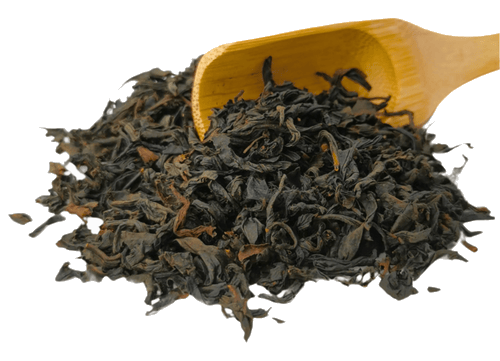
Classic Earl Grey: Brew Black Tea and Bergamot in Balance

Classic Earl Grey is the straightforward choice when you want brisk black tea lifted by bergamot rather than a sweet, creamy or heavily fruited blend. Porter Hill’s current recipe lists black tea, cornflower petals and natural bergamot flavouring. It is caffeinated, works plain or with a little milk, and starts at two to three minutes in freshly boiled water.
The tea in this guide: Decaf Earl Grey from £5.95 Shop it →
Classic Earl Grey at a glance
- In the blend: black tea, cornflower petals and natural bergamot flavouring
- Taste: brisk black tea with a clear, fragrant citrus lift
- Brew: 2.5 g per 250 ml, 100°C, two to three minutes
- Milk: optional; use a small splash
- Caffeine: present because the base is black tea; no measured cup figure is supplied
What is actually in this Earl Grey?
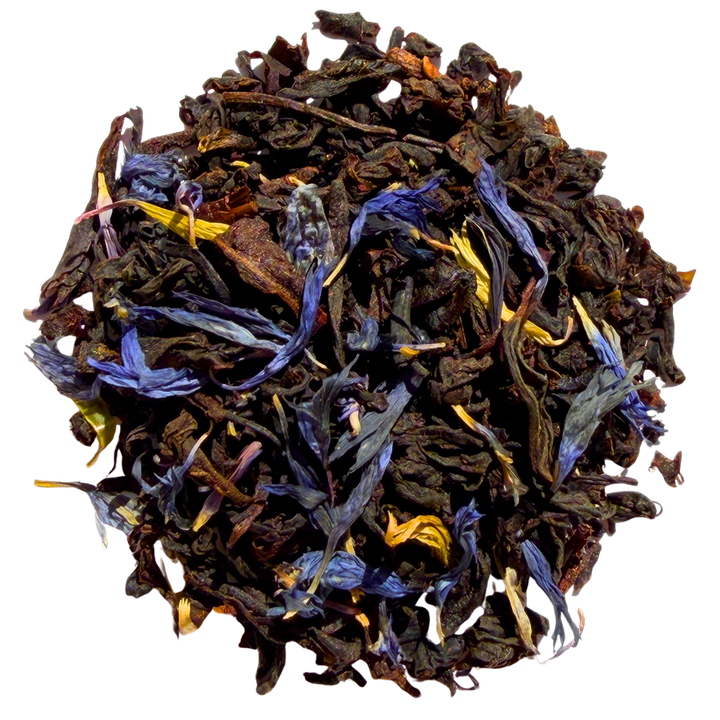
The formal declaration is short: black tea, cornflower petals and natural bergamot flavouring. The current catalogue presents the tea as Sri Lankan and classifies it as single origin, but it does not name an estate, region, leaf grade, harvest or flavouring percentage. Those details matter if you are comparing supplier specifications, so we will not fill the gaps with a generic Earl Grey story.
Bergamot supplies the familiar citrus aroma. The label says natural bergamot flavouring, not pieces of peel and not a separately declared pure essential oil. The blue cornflower petals bring colour to the dry blend; they are not the source of the citrus flavour.
If you want the broader style rather than this particular blend, read our guide to loose-leaf Earl Grey. This page stays with the practical question: what does Porter Hill Classic Earl Grey taste like, and how should you brew it?
What does Classic Earl Grey taste like?
Expect a proper black-tea backbone first, then a bright bergamot aroma that suggests orange peel without adding orange pieces to the blend. It is more direct than a creamy Earl Grey and less fruit-led than our Zesty version. If you dislike floral or perfumed flavours altogether, a plain Ceylon or breakfast tea will probably suit you better.

How to brew Classic Earl Grey
- Measure 2.5 g—about one teaspoon—into a roomy infuser or teapot for each 250 ml cup.
- Pour on fresh water at 100°C.
- Steep for two minutes, then taste. Continue towards three minutes if you want more black-tea body or plan to add milk.
- Remove the leaves as soon as the balance suits you.
This is Porter Hill’s current product recipe. The UK Tea & Infusions Association gives 90–98°C as general guidance for black tea and sensibly tells drinkers to follow the pack. A degree or two either side will not spoil your tea; dose and time are the more useful adjustments here.

If the cup tastes thin
Use a little more leaf next time and keep the two-to-three-minute window. Leaving too little tea in the water for much longer can make the finish dry before it gives you the body you wanted.
If it tastes harsh or too perfumed
Shorten the infusion and check that you measured one cup’s worth rather than a heaped spoon. Bergamot remains part of the blend, so if its fragrance is simply not your thing, choose an unflavoured black tea instead of trying to brew it away.
If the aroma seems flat
Use fresh water, give the leaf room to move and keep the pouch sealed away from heat, light and strong kitchen smells. Aroma fades faster when a scented tea is left open.
Black, with milk or with lemon?
Try the first few sips plain: that is the easiest way to judge how the tea and bergamot share the cup. A small splash of milk rounds the brisk edge and softens the fragrance; brew towards three minutes so the tea is not lost. Lemon makes the citrus feel sharper. Choose milk or lemon rather than both, because citrus juice can curdle milk.
For an iced glass, brew 5 g in 250 ml at the same temperature for two to three minutes, strain, then pour over a full glass of ice. That gives the cooling ice something to dilute. Add lemon only after tasting.
Does Classic Earl Grey contain caffeine?
Yes. This is black tea, so it naturally contains caffeine. Porter Hill has not supplied a laboratory result for a 2.5 g, 250 ml cup, and the amount changes with leaf, dose and brewing. If you want the same broad black-tea-and-bergamot idea with most caffeine removed, choose Decaf Earl Grey. If you need a naturally caffeine-free infusion rather than decaffeinated tea, choose Earl Grey Rooibos.
Which Porter Hill Earl Grey should you choose?
| Tea | Choose it when | Caffeine position |
|---|---|---|
| Classic Earl Grey | You want the direct black-tea-and-bergamot reference point | Contains caffeine |
| Zesty Earl Grey | You want extra orange and lemongrass in the blend | Contains caffeine |
| Decaf Earl Grey | You want black tea with most caffeine removed | Decaf; a trace remains |
| Earl Grey Rooibos | You want bergamot character without tea leaf | Naturally caffeine-free |
You can also browse the Earl Grey collection or use the Tea Finder if flavour, milk or caffeine matters more to you than the name on the pouch.
Which pack size makes sense?
At 2.5 g per cup, the current packs provide roughly 20 cups from 50 g, 40 from 100 g, 100 from 250 g, 200 from 500 g and 400 from 1 kg. These are recipe yields, not promises about how generously you scoop. Start with 50 g if you are still deciding how much bergamot you enjoy; larger packs suit a settled everyday brew.
See current Classic Earl Grey packs and availability.
Quick answers
Is this tea made with bergamot peel?
No peel is declared. The ingredients say natural bergamot flavouring.
Do the cornflower petals make it taste citrusy?
No such claim is supported. They add blue colour to the dry blend; the declared bergamot flavouring supplies the citrus character.
Can you add milk to Earl Grey?
Yes. Use a small splash and brew towards three minutes. Too much milk can hide the aroma that makes Earl Grey distinctive.
Is Classic Earl Grey caffeine-free?
No. Its base is black tea. Choose decaf black tea for a lower-caffeine cup or rooibos Earl Grey for a naturally caffeine-free infusion.