Gunpowder Tea: Why It's Rolled, How It Tastes and How to Brew It

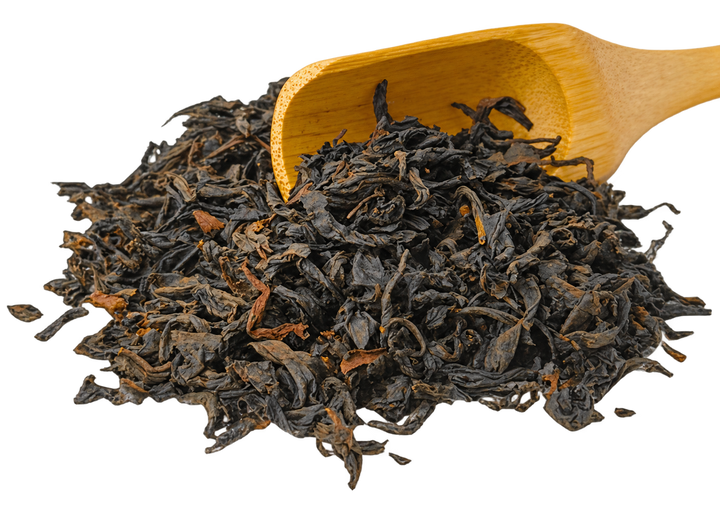
Gunpowder tea gets its name from the way it looks, not from anything explosive happening in the cup. The dry leaves are rolled into tight little pellets that look remarkably like the musket powder used in 17th-century cannons. Pour on hot water and those pellets slowly unfurl, releasing a brisk, vegetal brew with a lightly toasted edge.
The tea in this guide: Organic Osprey Gunpowder from £6.00 Shop it
It's a style of green tea, not a separate plant or a blend. The leaves come from Camellia sinensis, the same species behind every black, white and oolong tea you've ever had. What makes gunpowder distinctive is the rolling: each leaf is shaped into a compact ball during processing, which protects the flavour and helped the tea survive long treks along ancient trade routes.
Porter Hill's Organic Osprey Gunpowder comes from Zhejiang Province in China, where this style has been made since the Tang dynasty. It's bolder than most Chinese greens, with enough backbone to stand up to fresh mint or hold its own without anything added at all.
At a glance
- Chinese green tea with leaves rolled into small pellets that unfurl as they steep
- Bold, vegetal taste with a toasted edge and subtle smokiness
- Contains roughly 25 to 45 mg caffeine per cup, depending on brewing
- Brew at 70 to 80°C for 1 to 3 minutes; re-steep for a softer second cup
- The traditional base for Moroccan mint tea
- Best without milk so the cleaner notes stay clear
What is gunpowder tea and where does it come from?
Gunpowder tea originated in Zhejiang province, China, during the Tang dynasty (618 to 907 CE). The Chinese call it 珠茶 (zhū chá), meaning 'pearl tea', which gives you a better idea of how it looks without any warfare involved.
The English name appeared centuries ago. British merchants were using the term by at least the 18th century, well before the commonly repeated story of a 19th-century clerk coining it.
Why roll the leaves at all? Practical reasons, mainly. Tightly rolled pellets took up less space on the caravans heading to Tibet, Mongolia and the Middle East, and they survived the trip better than loose leaves. The compact shape also slows oxidation, keeping the tea fresher for longer. A well-stored gunpowder can hold its character for 18 to 24 months.

Green Tea
Rolled green leaves slowly open in the water, making a bright cup with a crisp finish.
Shop Organic Gunpowder — 100gHow is gunpowder green tea made?
The process hasn't changed much in a thousand years, though machines now handle most of it. Leaves are picked, withered briefly, then steamed or pan-fired to stop oxidation. While still pliable, they're tumbled in rotating drums that compress them into pellets. Finally, they're dried completely.
The tightest, smallest pellets come from the finest grades, often still rolled by hand. Machine-rolled versions have slightly looser, larger balls. Both unfurl dramatically in hot water, sometimes doubling in size, which is half the fun of watching the pot.

What does gunpowder tea taste like?
This isn't a delicate, grassy green tea. Gunpowder is bold and full-bodied, with vegetal notes, a toasted edge, and sometimes a hint of smokiness. That smoky quality is subtle though, closer to toasted grain than the pine-fire character of Lapsang Souchong.
The liquor brews to a golden yellow-green with a controlled bitterness that lingers pleasantly. If you find most green teas too faint or grassy, gunpowder might be the one that converts you. It's got enough structure to pair with fresh mint without disappearing, and it takes a little honey without losing its character.
Want something softer? Jasmine Green has more perfume and less bite. For a gentler Japanese-style cup with toasted rice, try Genmaicha.
How to brew gunpowder green tea
Getting the best from gunpowder comes down to temperature and timing. Too hot or too long and you'll pull out harshness instead of character.
- Use one teaspoon of pellets per cup. Give them room to unfurl, so a roomy infuser or pot works best.
- Heat fresh water to 70 to 80°C. If you don't have a thermometer, let boiling water sit for about two minutes.
- Steep for 1 to 3 minutes. Start with two minutes and adjust from there.
- Remove or strain the leaves promptly. Leaving them in the cup will turn it bitter.
- Taste it plain first. Porter Hill recommends this tea without milk so the cleaner vegetal notes come through.
| Tea type | Water temp | Steep time | Caffeine |
|---|---|---|---|
| Gunpowder green | 70–80°C | 1–3 min | 25–45 mg |
| Sencha | 70–80°C | 1–2 min | 20–30 mg |
| Jasmine green | 75–85°C | 2–3 min | 25–35 mg |
| English Breakfast | 100°C | 3–5 min | 40–70 mg |
If the cup is too bitter
Shorten the infusion to one minute, use slightly less leaf, or check your water temperature. Boiling water is the most common culprit. Change one thing at a time so you know what made the difference.
If the cup is too light
Add slightly more leaf or extend the steep by 30 seconds. Jumping straight to boiling water often brings harshness before it brings balance.
Can you steep gunpowder tea more than once?
Yes, and you should. Keep the opened leaves in a clean pot and brew again promptly. The second cup will be softer and slightly sweeter, so you might want to steep it a little longer. Most gunpowder teas handle two to three infusions before they fade.
How to make Moroccan mint tea with gunpowder
By the 18th century, gunpowder tea had reached North Africa and become the traditional base for Moroccan mint tea. Gunpowder tea is exported to the Maghreb for traditional North African mint tea, where mint and sugar or honey are added while brewing.
The classic method involves three pours from a height, which aerates the tea and creates a slight foam. Here's a simplified version for a proper brew at home:
- Add one tablespoon of gunpowder tea to a teapot.
- Pour on a little boiling water, swirl for about two minutes, then discard this first rinse.
- Add a generous handful of fresh spearmint and four to five teaspoons of sugar (traditional, though you can reduce it).
- Pour on fresh boiling water and steep for three to four minutes.
- Pour from a height if you're feeling theatrical.
If you'd rather have the mint blended in from the start, Mint Bazaar pairs Chinese gunpowder with spearmint, ready to go.

Green Tea
Chinese gunpowder green tea and cooling spearmint, the classic Moroccan pairing. Drink it hot or pour it over ice.
Have a lookDoes gunpowder green tea have caffeine?
Yes, it's green tea from Camellia sinensis, so it contains natural caffeine. A typical cup has roughly 25 to 45 mg of caffeine, depending on how tightly the pellets are rolled and how long you steep them. That's less than black tea (40 to 70 mg) and considerably less than coffee (80 to 100 mg).
If you're sensitive to caffeine, it may be worth avoiding gunpowder after late afternoon. For an evening cup with similar green tea character, try Decaf Kyushu Sencha or one of Porter Hill's caffeine-free herbal teas.
What does the research say about gunpowder green tea benefits?
Gunpowder is green tea, so it contains the same catechins and polyphenols that researchers have studied for decades. A few findings are worth noting:
A 2011 meta-analysis in the Journal of the American Dietetic Association found that green tea catechins lowered total and LDL cholesterol across multiple randomised trials. A 2014 meta-analysis in the European Journal of Nutrition found measurable blood pressure reductions, with larger effects in people whose starting systolic pressure exceeded 130.
That said, most studies use concentrated extracts rather than brewed tea, and the effects are modest. Tea is a drink, not a medicine. If you have questions about caffeine, blood pressure medication or blood thinners, speak to your GP or pharmacist, as catechins may interact with some medications.
Common myths about gunpowder tea
'It contains actual gunpowder'
It's 100% rolled tea leaves. The name comes from the appearance, nothing more. No need to keep it away from naked flames.
'It's smokier than other green teas'
There can be a subtle smoky note from the pan-firing, but it's closer to toasted grain than bonfire. If you want real smoke, Lapsang Souchong is the one.
'You need special equipment'
A teapot and an infuser work perfectly. The Moroccan height-pouring is for show and aeration, not essential for flavour.
How to pick a good gunpowder tea
Look for small, tightly rolled pellets with a slight sheen, which indicates relative freshness. Larger, looser pellets are typically lower grade. The traditional grading system uses alphanumeric codes: 3505AAA is considered the highest quality, while 9375 is more basic.
For drinking plain, grades one or two work best. For mint tea, grades three or four are traditional and won't be overpowered by the mint and sugar. Porter Hill's Osprey Gunpowder sits at the finer end, made from tender leaves that produce a clean, bright cup.
What to try next
If you're just getting to know gunpowder tea, start with Organic Osprey Gunpowder. This brisk, toasted cup is ideal if you want a green tea that stands up on its own or with fresh mint.
Want to compare a few green teas side by side? The Green Tea Tasting Box gives you five loose leaf greens from Japan and China, including gunpowder, so you can work out which style suits you.
For something with a similar toasted edge but a gentler cup, try Genmaicha, which blends Japanese green tea with roasted rice. If you prefer floral and soft, Jasmine Green is crisp with a fresh jasmine scent. Not sure where to start? The Tea Finder can point you in the right direction.

Letterbox gift
Five loose leaf green teas from Japan and China, from grassy Sencha to jasmine, Dragonwell and rolled gunpowder.
Have a lookOrder loose leaf online with free UK delivery on orders over £35, or call into the shop in Byram Arcade, Huddersfield, if you're nearby.
Frequently asked questions
Why is it called gunpowder tea?
The dry leaves are rolled into small pellets that resemble the gunpowder used in 17th and 18th-century muskets and cannons. British merchants were using the name by at least the 18th century. The Chinese name, zhū chá, translates as 'pearl tea', which is rather more poetic.
Is gunpowder green tea good for you?
Gunpowder is green tea, so it contains catechins and polyphenols that researchers have studied. Some meta-analyses have found modest effects on cholesterol and blood pressure. However, tea is a drink, not a treatment. Speak to your GP about specific health questions.
How much caffeine is in gunpowder tea?
A typical cup contains roughly 25 to 45 mg of caffeine, depending on how tightly the pellets are rolled and how long you steep. That's less than black tea and much less than coffee. Brewing time is the main factor you can control.
Can you drink gunpowder tea with milk?
You can, but it's not traditional and tends to muddy the cleaner vegetal notes. Most people drink it plain, sometimes with fresh mint or a little honey. If you want a green tea that works with milk, it's probably not this one.
What's the difference between gunpowder and jasmine green tea?
Gunpowder is rolled and has a brisk, vegetal, lightly toasted character. Jasmine green is scented with jasmine flowers and tastes softer and more floral. Both are green teas from the same plant, just processed differently.
How many times can you steep gunpowder tea?
At least twice, often three times. The second infusion will be softer and may need a slightly longer steep. Keep the opened leaves in a clean pot and brew again promptly for the best flavour.
Sources: Wikipedia