Matcha Benefits: What the Science Actually Says (No Hype)

Matcha gets credited with everything from laser focus to fat burning to preventing half the ailments in the medical dictionary. The headlines are impressive. The actual research is more cautious. Before you decide whether that bright green bowl belongs in your morning routine, it helps to know what scientists tested, how they tested it, and whether any of it applies to the two grams of powder you whisk into water on a wet Tuesday.
The tea in this guide: Izu Matcha from £4.40 Shop it →
The short answer: matcha contains caffeine, L-theanine and catechins, all of which have been studied. Some findings look promising. Most come from concentrated extracts, isolated compounds or animal studies rather than someone drinking a normal bowl of tea. Matcha is a drink worth enjoying for its creamy texture and savoury taste, not a guaranteed health intervention.
At a glance
- Matcha is powdered green tea consumed whole, not steeped and removed.
- A typical serving (1 to 2 g) contains roughly 38 to 88 mg of caffeine.
- It also contains L-theanine and catechins, including EGCG.
- Many studies use concentrated extracts or isolated compounds, not ordinary tea.
- Human trials on cognition and metabolism are limited and sometimes contradictory.
- Enjoy it for the flavour; talk to a GP about health questions.
What is actually in a bowl of matcha?
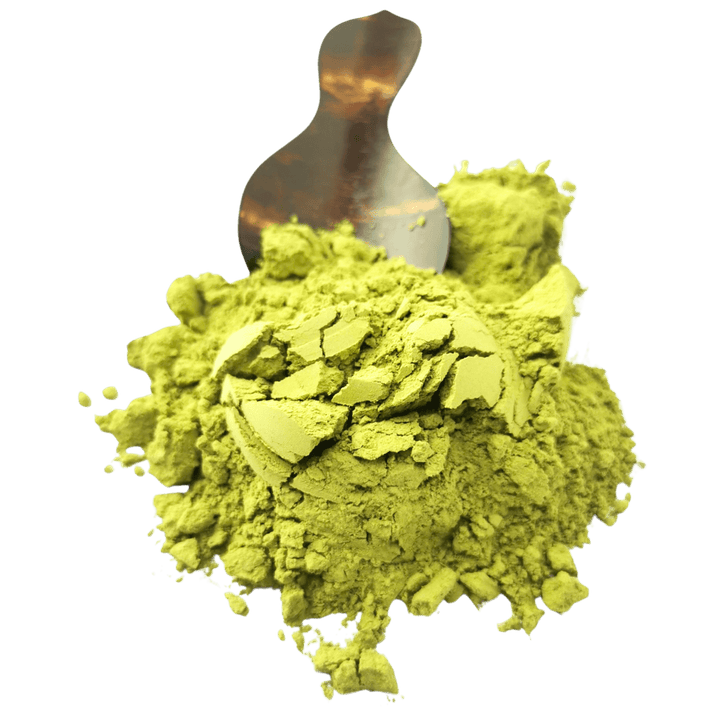
Matcha is finely ground green tea. The plants are shade-grown under bamboo mats before harvest, which increases chlorophyll and amino acids, giving the powder its vivid colour and earthy, savoury taste. You whisk the powder into water and drink the lot, consuming the whole leaf rather than steeping leaves and lifting them out.
A typical serving uses one to two grams of powder whisked into 60 to 100 ml of water at around 70 to 80°C. That single serving delivers roughly 38 to 88 mg of caffeine, depending on the powder and how heavy your hand is with the scoop. For comparison, an 8-ounce cup of coffee sits at about 100 to 120 mg.
Beyond caffeine, matcha contains the amino acid L-theanine and a family of antioxidants called catechins, including epigallocatechin-3-gallate (EGCG). These are the compounds most often studied when researchers look at green tea.

Matcha
Finely powdered green tea for whisking, iced drinks or a matcha latte. Sift first to keep things smooth.
Have a lookMatcha health benefits: what does the research say?
Headlines tend to collapse years of laboratory work into a single confident claim. The reality is messier. Here is what the science has actually examined.
Catechins and antioxidants
Catechins are plant compounds that act as antioxidants in test tubes. A meta-analysis cited by Harvard Health found that catechins in green tea were associated with lower blood pressure and LDL cholesterol in some studies. That sounds good, but note the phrase 'green tea', not specifically matcha, and note that many studies used concentrated extracts rather than a beverage.
Because you consume the whole leaf, matcha delivers more catechins per cup than steeped green tea. Whether that translates to a measurable benefit in your body depends on the dose, how you prepare it (heat reduces some antioxidant activity) and a dozen other variables researchers are still working out.

Focus and alertness
Matcha contains both caffeine and L-theanine. Caffeine increases alertness; L-theanine has been linked in some studies to calmness and attention. The combination is often credited with providing focus without jitters, and small studies have looked at this.
A review on Verywell Health reported that short- or long-term matcha use may improve thinking ability, slightly improve attention speed and working memory, and reduce perceived stress. However, sample sizes were small, and the authors called for larger, longer trials. One study gave participants 4 g of matcha in tea or a food bar; another used 2 g in capsules daily. These are specific, controlled doses, not the variable scoop you take at home.
A systematic review of tea, theanine and caffeine found some evidence for effects on cognition and mood, but the authors called for more work using actual tea beverages rather than isolated ingredients. The same review disclosed funding from tea companies, which is common in nutrition research and tends to produce more favourable conclusions than independent work.
Heart health
Polyphenols in green tea have been associated with healthier blood vessels and lower inflammation in some research. Cleveland Clinic notes that matcha is abundant in polyphenols, but adds that more research is needed to determine how much matcha contributes to these effects. At least one animal study contradicted similar claims, so the picture is not settled.
Weight and metabolism
A 2020 review concluded that up to 500 mg per day of green tea, combined with diet and exercise over 12 weeks, might reduce body mass index. That evidence concerns green tea in general, not matcha specifically, and 500 mg of green tea compounds is a supplement dose, not a morning latte.
Liver findings
A 2015 review of 15 studies associated drinking green tea with decreased liver-disease risk. More recent work suggested matcha might reduce liver enzymes in people with nonalcoholic fatty liver disease but increase them in people without the condition. Most evidence comes from extracts in animals, not tea in humans.
The gap between studies and your teacup
Here is the awkward bit: a supplement capsule containing the catechin equivalent of ten cups of tea is not the same as whisking one bowl. Researchers often use concentrated extracts because they need a controlled, measurable dose. That makes the science cleaner but harder to apply to everyday drinking.
The Healthline review notes that dissolving matcha in water produces about three times more catechins than steeped green tea, but much of the cited research still involves extracts or isolated EGCG rather than a bowl of tea.
Concentrated extracts also have safety considerations. The National Center for Complementary and Integrative Health says definite conclusions cannot yet be reached for most promoted uses of green tea, and notes reports of liver injury in some users taking high-dose supplements. An ordinary whisked bowl of tea is not the same thing as a high-dose capsule.
Caffeine in matcha: the practical facts
Caffeine is the compound with the clearest, most predictable effect. It makes you more alert, and too much can keep you awake or make you jittery. Matcha contains roughly 19 to 44 mg of caffeine per gram of powder. A typical 2 g serving gives you 38 to 88 mg, less than a standard cup of coffee but more than most green teas.
| Drink | Serving | Caffeine (approx.) |
|---|---|---|
| Matcha | 2 g in 80 ml water | 38–88 mg |
| Brewed green tea | 240 ml (8 oz) | 23–49 mg |
| Brewed coffee | 240 ml (8 oz) | 100–120 mg |
The European Food Safety Authority says 100 mg of caffeine consumed close to bedtime may affect sleep in some adults. If you are sensitive to caffeine, keep matcha to the morning. The NHS advises keeping total caffeine to no more than 200 mg a day during pregnancy, from all sources.

Teaware
A matcha bowl, bamboo whisk and scoop together in one set. Bring the matcha; the tools are here.
Have a lookCommon myths about matcha benefits
'Matcha burns fat'
Studies on weight involve green tea extracts at supplement doses combined with diet and exercise. A morning latte is not a metabolism booster.
'Matcha is calming and energising at the same time'
L-theanine may take the edge off caffeine's jitters for some people, but this is not magic. You are still drinking caffeine. If it keeps you up at night, it does not care about the theanine.
'Matcha fixes everything'
There is no legal or scientific definition that sets matcha apart as a cure-all. Matcha is a drink with some interesting compounds. Harvard Medical School says more research is needed to support claims about improved cognition and cardiovascular health.
How to make a proper bowl of matcha
- Sift 1 to 2 g of matcha powder into a bowl. Sifting removes lumps and makes whisking easier.
- Add a splash of water at 70 to 80°C (not boiling) and whisk into a paste.
- Add the rest of the water (60 to 80 ml total) and whisk briskly in a zig-zag motion until frothy.
- Drink straight away. Matcha settles quickly.
For a matcha latte, whisk the paste with a little hot water, then add warmed milk or a plant-based alternative. Our matcha latte recipe walks through the details, and the how to make matcha guide covers the traditional method with photos.
Does matcha taste good?
Good matcha has a savoury, creamy, slightly sweet flavour with a fresh grassy note. The Japanese call this umami, the fifth taste alongside sweet, sour, salty and bitter. Lower-grade matcha can taste bitter or chalky, so start with a decent powder and do not use boiling water, which makes it harsh.
If you have only tried matcha in a coffee-shop latte, you may have been drinking mostly sugar. Some chain drinks contain 20 to nearly 50 g of sugar per cup, which is more than the American Heart Association recommends for an entire day. Try a plain bowl first, then decide if you want sweetness.
What to try next
Izu Matcha is a single-ingredient powdered green tea with a creamy, savoury flavour, suitable for whisking, iced drinks or a latte. If you want the full setup, the Yoko Traditional Matcha Set includes a bowl, whisk and scoop in one box.
Curious about Japanese green tea more broadly? The Japanese Green Tea Adventure Box includes five loose leaf teas to compare cup by cup, from grassy Sencha to roasted Hojicha. For something caffeine-free, try the Caffeine-Free Tasting Box.
Not sure what suits? The Tea Finder asks a few quick questions and suggests something that fits.
We ship loose leaf tea across the UK with free delivery on orders over £35. If you are in Huddersfield, call into the shop in Byram Arcade and we will talk you through what is on the shelf.
Frequently asked questions
Is matcha healthy?
Matcha contains caffeine, L-theanine and catechins, all of which have been studied. Some research looks promising, but most uses extracts or isolated compounds rather than ordinary tea. It is a drink, not a medicine. Speak to a GP if you have specific health questions.
What are the benefits of drinking matcha?
Matcha provides caffeine for alertness and contains antioxidants. Some small studies suggest effects on focus and attention, but the evidence is limited. The main benefit is that it tastes good and offers a gentler caffeine lift than coffee for some people.
Does matcha have more caffeine than coffee?
No. A typical 2 g serving of matcha contains 38 to 88 mg of caffeine, while an 8-ounce cup of coffee contains 100 to 120 mg. Matcha has more caffeine than most green teas, but less than coffee.
Is matcha good for your skin?
Some people apply matcha topically or assume drinking it helps skin. There is no strong human evidence that drinking matcha improves skin. The antioxidants exist, but whether they reach your skin in meaningful amounts after digestion is not established.
Can I drink matcha every day?
A normal whisked bowl is a drink, not a concentrated supplement, and most people tolerate it without issue. If you are pregnant, on medication, or have concerns about caffeine, check with your midwife, GP or pharmacist.
What does matcha taste like?
Good matcha tastes savoury, creamy and slightly sweet with a fresh grassy note. Lower-grade matcha can be bitter or chalky. Whisking it properly and using water that is not boiling both help keep things smooth.
Sources: BBC Bitesize · Healthline · Cleveland Clinic · Harvard Health · Verywell Health