Turmeric Tea and Golden Milk: How to Make Them at Home

Turmeric tea is one of those drinks that sounds complicated but takes about five minutes to make. You steep fresh or dried turmeric root in hot water, add a pinch of black pepper if you like, and you have a golden cup with an earthy, slightly bitter warmth. Golden milk goes a step further, adding milk and spices for something richer. Both have been drunk across South Asia for centuries, and both are simple enough to make on a Tuesday evening in Huddersfield.
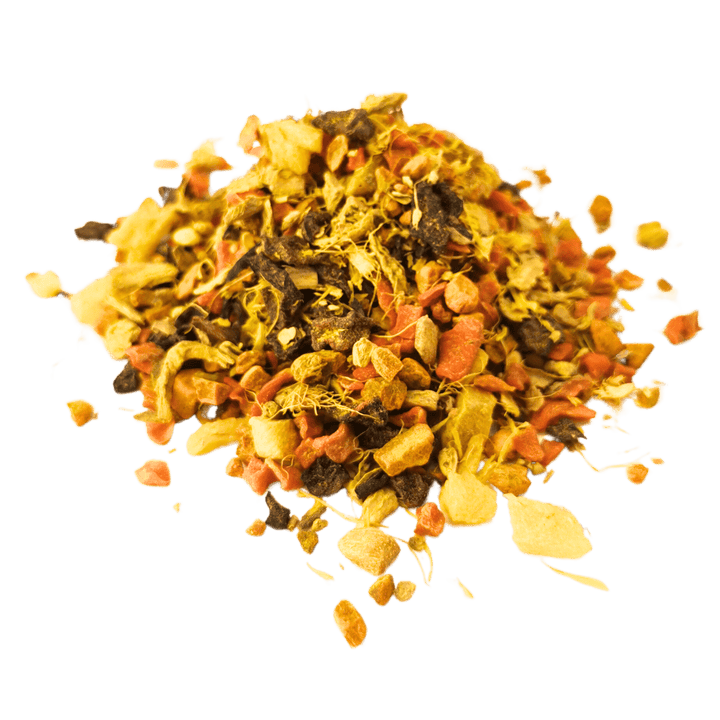
The tea in this guide: Glow from £4.30 Shop it →
The short answer: turmeric tea is turmeric steeped in water. Golden milk is turmeric simmered with milk and spices. Neither requires special equipment, rare ingredients or a health food shop membership. A kettle, a pan and ten minutes will do it.
At a glance
- Turmeric tea: steep fresh or ground turmeric in hot water for 3 to 15 minutes
- Golden milk: simmer turmeric with milk, ginger and spices
- Black pepper may help the body absorb curcumin (turmeric's active compound)
- Naturally caffeine-free unless you add green or black tea
- Earthy, slightly bitter, warming; sweeten with honey if you like
- Research on curcumin is ongoing; tea is not medicine
What is turmeric tea?
Turmeric tea is made by steeping the rhizome (underground stem) of Curcuma longa, a flowering plant in the ginger family, in hot water. The plant is native to southern India and Indonesia and has been used in cooking and traditional medicine for hundreds of years. In Ayurveda, the ancient Indian health system, turmeric goes by names like haldi and manjal.
The result is a bright yellow or orange cup with an earthy flavour and a spicy, slightly bitter edge. Some people describe it as warming and almost peppery. It contains no caffeine unless you add a tea bag, and a plain cup made with one teaspoon of ground turmeric has roughly 8 calories.
You can use fresh turmeric root, sliced or grated, or ground turmeric from a jar. Fresh root gives a brighter, more aromatic cup; ground is more convenient and still works well.
How to make turmeric tea
This is a simple stovetop method that takes about fifteen minutes. It works with ground turmeric or fresh root.
- Add 2 cups (about 500 ml) of water to a small pan.
- Add ½ teaspoon of ground turmeric (or grate about 1½ teaspoons of fresh turmeric root).
- Add a pinch of freshly ground black pepper.
- Bring to the boil, then reduce the heat and simmer gently for 10 minutes.
- Remove from the heat and stir in 2 teaspoons of honey or maple syrup if you want sweetness.
- Strain through a fine sieve or tea strainer into mugs.
This makes two servings. You can add a tablespoon of lemon juice before heating for a brighter, slightly sharper cup, or drop in a few slices of fresh ginger for extra warmth. A Downshiftology recipe suggests substituting fresh orange juice for lemon if you want something sweeter and fruitier.

Quick method with a kettle
If you want something faster: put ½ teaspoon of ground turmeric and a pinch of black pepper in a mug, pour over freshly boiled water, stir well and steep for 3 to 5 minutes. The Healthline guide suggests this timing for a straightforward brew. Stir again before drinking, as ground turmeric settles.

Herbal Tea
Ginger and turmeric bring warmth; pineapple adds a fruity lift. Good hot or chilled over ice.
Have a lookWhat is golden milk?
Golden milk, sometimes called a turmeric latte, is turmeric tea's richer cousin. Instead of water, you simmer turmeric with milk (dairy or plant-based) and a handful of warming spices: ginger, cinnamon, sometimes a pinch of nutmeg or cardamom. The result is creamy, golden and more like a drink you would curl up with than a plain herbal infusion.
The name comes from the colour: that deep yellow-orange that turmeric gives to everything it touches, including your mug, your spoon and, if you are not careful, your best tea towel.
How to make golden milk
- Pour 250 ml of milk (oat, coconut and almond all work well) into a small pan.
- Add ½ teaspoon of ground turmeric, a pinch of ground cinnamon, a pinch of ground ginger (or a few thin slices of fresh ginger) and a pinch of black pepper.
- Warm over a medium heat, whisking gently, until steaming but not boiling. This takes 3 to 5 minutes.
- Strain into a mug if you used fresh ginger; otherwise just pour.
- Sweeten with honey or maple syrup to taste.
For a frothier latte, use a milk frother or whisk vigorously before pouring. Coconut milk gives a richer body; oat milk adds a natural sweetness. Dairy milk works too, of course.
Why add black pepper?
Turmeric's main active compound is curcumin, which gives the root its bold colour. The trouble is that the body does not absorb curcumin very well on its own. Piperine, a compound in black pepper, may increase curcumin bioavailability by as much as 2,000 percent according to some research. A small pinch is enough; you do not want the tea to taste like a pepper mill.
Turmeric ginger tea
Ginger and turmeric are botanical relatives, both members of the Zingiberaceae family, and they get along well in a cup. Adding fresh ginger to turmeric tea gives it more heat and a sharper, almost citrusy bite. Use a thumb-sized piece of fresh ginger, sliced thinly, and simmer it alongside the turmeric.
If you would rather not fuss with fresh roots, our Glow herbal tea combines ginger and turmeric with pineapple, carrot, beetroot and calendula. It brews in three minutes and has a warming, fruity character without any tea leaf or caffeine.
For more on ginger tea specifically, have a look at our guide to ginger tea.
What does the research say?
Curcumin has been studied for its antioxidant and anti-inflammatory properties, and you will find plenty of bold claims online. Here is what the evidence actually shows:
Most research has looked at high-dose curcumin supplements, not turmeric tea. Turmeric powder contains roughly up to 10 percent curcumin, so a cup of tea delivers far less than a concentrated capsule. That means study results from supplements cannot be directly applied to tea.
A 2021 review of clinical trials found that turmeric extract may help with knee osteoarthritis symptoms and might work comparably to some anti-inflammatory medicines, with 12 percent fewer adverse effects. However, the review noted risk of bias and called for higher-quality studies. A 2019 review reported that curcumin may reduce oxidative stress and could improve cholesterol markers in people at risk of cardiovascular disease, but again, more research is needed.
The honest summary: curcumin is interesting to researchers, but turmeric tea is a drink, not a treatment. If you have health questions, talk to your GP or pharmacist.
A note on safety
Turmeric tea is generally well tolerated. Potential side effects from larger amounts of curcumin include upset stomach, nausea and diarrhoea. People taking blood thinners such as Warfarin, or medicines for diabetes or high blood pressure, should speak to a doctor before drinking turmeric tea regularly. A 2020 study identified 23 cases of liver injury in Italy among people taking turmeric supplements alongside other medications, so caution is sensible if you are on multiple medicines.
| Method | Turmeric | Water/Milk | Steep/Simmer | Caffeine |
|---|---|---|---|---|
| Quick kettle brew | ½ tsp ground | 1 cup water | 3–5 min steep | None |
| Stovetop tea | ½ tsp ground or 1½ tsp fresh | 2 cups water | 10 min simmer | None |
| Golden milk | ½ tsp ground | 1 cup milk | 3–5 min simmer | None |
Common mistakes with turmeric tea
Forgetting the pepper. Without black pepper, curcumin absorption is limited. A small pinch makes a difference and does not change the flavour much.
Boiling it to death. Simmering gently is fine, but a rolling boil for ages can make the tea taste harsh. Ten to fifteen minutes is plenty.
Expecting miracles. Turmeric tea is pleasant to drink, but it is not going to cure anything. Treat it as a warming, caffeine-free cup, not a pharmacy.
Ignoring the staining. Turmeric stains everything. Use a dark mug if you are attached to your crockery, and wipe up spills quickly.

Herbal Tea
Bright lemon and warming ginger. A straightforward, zingy cup for whenever you fancy it.
Have a lookWhat to try next
If you like the idea of turmeric and ginger without the chopping, Glow is a ready-to-brew herbal tea with both, plus pineapple and beetroot for a fruity lift. It works hot or iced.
For a sharper, zingier cup, Lemon & Ginger brings bright citrus and warming ginger together in a straightforward caffeine-free brew.
Want to explore a few caffeine-free options side by side? The Wellness Tasting Box includes Glow alongside herbal teas like spiced kadha, dandelion, nettle and lemon balm. It is letterbox-friendly and makes a thoughtful gift for anyone avoiding caffeine.
Not sure where to start? Try the Tea Finder and answer a few quick questions about what you like.
Order loose leaf online with free UK delivery on orders over £35. Or call into the shop in Byram Arcade, Huddersfield, and we will put the kettle on.

Letterbox gift
Five of our best-selling herbal teas in one letterbox box: ginger and turmeric, spiced kadha, dandelion, nettle and lemon balm.
Have a lookFrequently asked questions
What are the benefits of turmeric tea?
Turmeric contains curcumin, which researchers have studied for its antioxidant and anti-inflammatory properties. However, most studies use high-dose supplements, not tea, so results cannot be directly applied. Turmeric tea is a warming, caffeine-free drink, but it is not a medicine. Speak to your GP about health concerns.
How do you make turmeric tea at home?
Add half a teaspoon of ground turmeric and a pinch of black pepper to a mug, pour over freshly boiled water, stir and steep for three to five minutes. For a richer version, simmer turmeric with water and lemon juice for ten minutes on the hob, then strain and sweeten with honey.
Is turmeric and ginger tea good for you?
Both turmeric and ginger have been used in traditional medicine for centuries, and curcumin and gingerols have been studied by researchers. Evidence from tea specifically is limited. Enjoy turmeric ginger tea as a warming drink, but do not rely on it for health outcomes. A GP can advise on any medical questions.
Does turmeric tea have caffeine?
Plain turmeric tea made from turmeric root or powder contains no caffeine. If you add a green or black tea bag while brewing, you will introduce caffeine. Our Glow herbal tea is naturally caffeine-free.
Can you drink turmeric tea every day?
For most people, a cup or two of turmeric tea daily is fine. Those taking blood thinners, diabetes medication or blood pressure medicines should check with a doctor first, as curcumin may interact with some drugs. High doses over long periods could cause digestive upset.
What does turmeric taste like in tea?
Earthy, slightly bitter and warming, with a peppery edge. It is not sweet or fruity on its own. Adding honey, ginger or lemon softens the bitterness and makes the cup more approachable.
Sources: Medical News Today · Downshiftology · Healthline · WebMD