Ginger Tea: How to Make It with Fresh Root or Loose Leaf

Ginger tea is one of those drinks that sounds simple until you actually make it. Boil some ginger, pour water on it, done. But the difference between a flat, vaguely spicy cup and one that properly warms you from the inside comes down to how you cut the root, how long you steep it, and whether you reach for the honey jar at the right moment.
The tea in this guide: Lemon & Ginger Tea from £4.25 Shop it →
The short answer: slice or grate about a thumb-sized piece of fresh ginger per cup, steep in boiling water for five to ten minutes, and strain. Longer steeping means more heat. Add lemon for brightness, honey for sweetness, or leave it plain if you like the ginger to do the talking.
If you would rather skip the peeling and grating, a loose leaf blend like our Lemon & Ginger Tea gives you the same warming character with less kitchen mess. Either way, the kettle does most of the work.
At a glance
- Fresh ginger tea: slice a thumb-sized piece per cup, steep in boiling water for 5 to 10 minutes
- Loose leaf blends brew faster, around 3 to 5 minutes, with less prep
- Naturally caffeine-free when made without tea leaves
- Add lemon for citrus lift, honey for sweetness, or drink it plain
- Works hot or chilled over ice
- Store homemade ginger tea in the fridge for up to 4 days
What does ginger tea taste like?
Fresh ginger tea tastes warm, peppery, and slightly sweet with a slow-building heat at the back of your throat. The longer you steep it, the more assertive that heat becomes. A short brew is mild and almost citrusy; a ten-minute steep will let you know about it.
If you are using a loose blend with lemon and flower petals, expect the citrus to brighten the finish and round off some of the ginger's sharpness. It is lively rather than sugary, and best drunk without milk.

How to make ginger tea with fresh root
You do not need a recipe book for this. A chopping board, a kettle, and five minutes of patience are plenty.
- Take a thumb-sized piece of fresh ginger, about 5 grams or a 1½-inch chunk
- Rinse it under the tap and scrub off any mud. Peeling is optional; the skin is fine left on
- Slice it thinly, no wider than a coin, or grate it for faster flavour release
- Put the ginger in a mug or small saucepan with one cup of water
- Bring to a boil, then reduce to a gentle simmer for 5 to 10 minutes
- Strain into your mug and drink hot, or let it cool and pour over ice
Grating the ginger speeds things up because more surface area meets the water. According to Swasthi's Recipes, grated ginger needs only 3 to 4 minutes of simmering, while sliced pieces take 5 to 6 minutes. If you like a punchier cup, go longer. If your ginger tea tastes too fiery, pull it off the heat sooner next time.
Fresh ginger vs loose leaf blends
Fresh root gives you control. You decide exactly how much heat you want, and there is something satisfying about starting from scratch. The downside is the grating, the straining, and the leftover ginger slowly withering in the fridge.
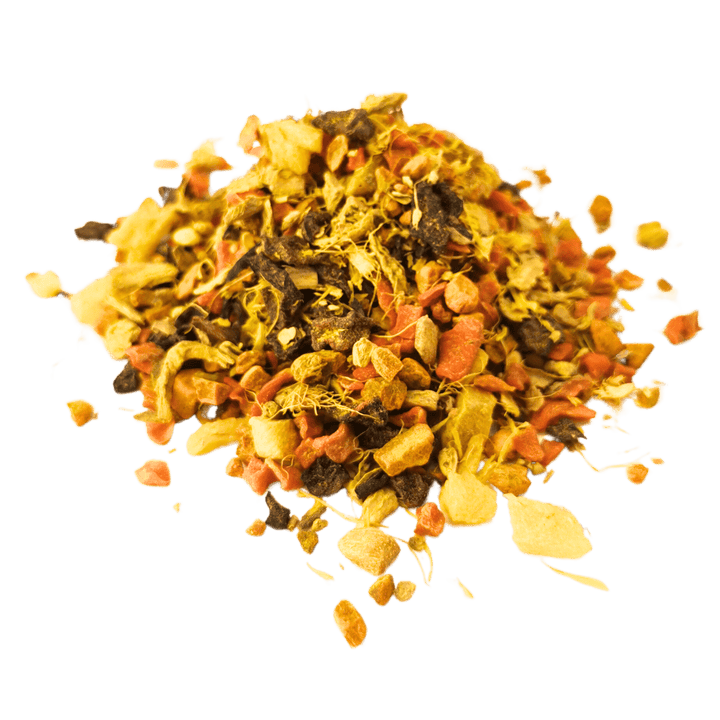
Loose leaf blends trade some of that control for convenience. Our Lemon & Ginger contains ginger pieces, lemon, and marigold and safflower petals. You measure a teaspoon, pour on boiling water, steep for three minutes, and lift out the infuser. No chopping board required.

Herbal Tea
Bright lemon and warming ginger. A straightforward, zingy cup for whenever you fancy it.
Have a look| Method | Prep time | Steep time | Flavour control |
|---|---|---|---|
| Fresh ginger root | 2 to 3 minutes | 5 to 10 minutes | High |
| Loose leaf blend | Under 1 minute | 3 to 5 minutes | Moderate |
If you want pure ginger heat with nothing else, fresh root is the way. If you like a brighter, more rounded cup and want to skip the prep, the blend works well.
Lemon and ginger tea: the classic combination
Lemon and ginger is one of those pairings that just works. The citrus lifts the ginger's warmth without fighting it, and a squeeze of lemon adds a bit of tartness that balances any sweetness you might add.
For fresh ginger tea, slice a thin round of lemon and drop it in during the last minute of brewing. Or squeeze the juice in after straining. Cookie and Kate suggests adding the lemon to taste rather than cooking it, which keeps the flavour fresh.
If you are using a loose blend that already contains lemon, you might not need more. Taste first, then decide.
Ginger lemon honey tea: getting the sweetness right
Honey softens ginger's bite and adds a gentle floral sweetness. The trick is to wait until the tea has cooled slightly before stirring it in. Very hot water can damage some of honey's subtler flavours, so give it a minute after pouring.
One teaspoon is usually enough. Maple syrup works too if you want to keep things vegan, and it brings a toffee-ish note that pairs surprisingly well with ginger.
If you find yourself reaching for more than a tablespoon of sweetener, try a shorter steep. The ginger will be milder, and you will not need as much honey to balance it out.
Other ways to vary your ginger tea
Ginger plays well with spices. A cinnamon stick simmered with the root adds warmth without extra heat. Turmeric gives an earthy, slightly peppery note and turns the cup a cheerful yellow. A few mint leaves cool things down if you overdid the steeping time.
In parts of Southeast Asia, ginger tea is made with palm sugar, pandan leaves, and sometimes coconut milk. In India, adrak chai combines grated ginger with black tea, milk, and sugar. These are different drinks from plain ginger tea, but they show how adaptable the root is.
If you fancy more ginger heat without the citrus, Thai Ginger Root is worth a look. Despite the name, it is actually galangal, which has a more aromatic, peppery warmth than ordinary ginger.

Herbal Tea
Despite the name, this is galangal root. Expect aromatic, peppery warmth rather than ordinary ginger.
Have a lookIs ginger tea good for a cold or sore throat?
This is one of those questions where the honest answer is: maybe, a bit, but do not expect miracles.
Ginger has been used in folk medicine across Asia for centuries. People reach for it when they feel under the weather, and there is something comforting about wrapping your hands around a hot, spicy mug when you have got a sore throat. But comfort is not the same as cure.
Some research has looked at ginger's effects on nausea, particularly related to pregnancy and motion sickness. According to Healthline, gingerols may help with nausea associated with pregnancy, chemotherapy, or surgery, though the article advises consulting a healthcare professional before using ginger after surgery because it may interfere with blood clotting. If you are pregnant, speak to your GP or midwife before using ginger regularly.
As for colds and sore throats, there is no strong clinical evidence that ginger tea treats them. It is a drink, not a medicine. If you are feeling rough, a warm cup might make you feel a bit better, but it is no substitute for rest, fluids, and advice from a pharmacist or doctor if things do not improve.
A bit of history
Ginger has been around for a long time. According to Swasthi's Recipes, it has appeared in Asian, Indian, and African cooking and folk medicine for over 5,000 years, and ancient Ayurvedic texts described it as a universal medicine. It reached Europe around 800 AD.
During China's Tang dynasty, tea was often flavoured to balance its natural bitterness, and ginger was a popular choice alongside orange peel, peppermint, and cloves. In the Philippines, salabat is still made by boiling crushed ginger in water and sweetening it with honey or calamansi. In Malaysia and Singapore, teh halia combines ginger with strong sweetened black tea and condensed milk.
However you make it, ginger tea sits in a long tradition of people reaching for the root when they want something warming.
Common mistakes when making ginger tea
Cutting the slices too thick
Chunky pieces do not release flavour quickly. Thin slices or grated ginger give you a stronger cup in less time.
Not steeping long enough
If your ginger tea tastes like slightly warm water, it needed more time. Five minutes is a minimum; ten gives you proper heat.
Adding honey to boiling water
Let the tea cool for a minute first. Boiling water dulls the honey's flavour and defeats the point of using the good stuff.
Using stale ginger
Fresh ginger should be firm and smooth-skinned. If it is wrinkled, soft, or sprouting, the flavour will be flat. Buy it in small amounts and use it within a week or two.
What to try next
If you enjoy ginger's warmth, Kadha Tonic is a spiced herbal blend inspired by traditional kadha infusions, with plenty of warming spices and no tea leaf. For a completely different take on ginger, Harth Ginger Hot Chocolate pairs rich cocoa with a ginger kick.
If the citrus is what you are after, Organic Lemon Balm Tea has a soft citrus scent without the ginger, and Raspberry Lemon Verbena brings tangy raspberry into the mix. Read more in our lemon balm tea guide or our piece on lemon verbena tea.
Not sure where to start? Our Caffeine-Free Tasting Box lets you try five herbal teas side by side, including ginger. Or take the Tea Finder quiz and we will point you in the right direction.

Letterbox gift
Five caffeine-free herbal teas for evenings, after dinner or all day: mint, chamomile, fruit and ginger.
Have a lookYou can order any of our teas online with free UK delivery on orders over £35. Or call into the shop in Byram Arcade, Huddersfield, and we will put the kettle on.
Frequently asked questions
How do you make ginger tea from fresh ginger?
Slice or grate a thumb-sized piece of fresh ginger per cup. Add it to boiling water and simmer for 5 to 10 minutes, depending on how strong you want it. Strain into a mug and add lemon or honey to taste. Grating the ginger releases flavour faster than slicing.
Is lemon and ginger tea good for a cold?
A warm cup may feel soothing when you have a cold, but there is no strong evidence that ginger tea treats colds or sore throats. It is a comforting drink, not a medicine. If symptoms persist, speak to a pharmacist or GP.
Does ginger tea contain caffeine?
Plain ginger tea made with fresh root and water is naturally caffeine-free. Loose blends are also caffeine-free unless they contain added tea leaves. Always check the ingredients if you are avoiding caffeine entirely.
How long does homemade ginger tea keep?
Cover and refrigerate it for up to 3 to 4 days. You can drink it chilled or reheat it. The flavour may mellow slightly over time, but it will still be good.
Can I drink ginger tea every day?
Most people can enjoy ginger tea daily without problems. However, large amounts may cause heartburn, bloating, or stomach discomfort in some people. If you are pregnant or taking medication, speak to your GP before drinking it regularly.
What is the best time to drink ginger tea?
Whenever you fancy it. It works well as a morning pick-me-up, an afternoon warmer, or an evening wind-down. Because it is caffeine-free, it will not keep you awake if you drink it before bed.
Sources: Cookie and Kate · Healthline · Swasthi's Recipes · Wikipedia