Lemon Balm Tea: Growing, Brewing and What the Research Says

Lemon balm tea smells like summer even when it's grey outside. Pour hot water over the crinkled green leaves and a soft citrus scent rises from the cup, somewhere between lemon zest and a freshly opened packet of sherbet lemons. The taste is gentler than the smell suggests: mild, slightly sweet, with a faint herbal finish that lingers without demanding attention. It's one of the easiest herbal teas to like, and one of the simplest to make at home if you have a windowsill or a patch of garden.
The tea in this guide: Organic Lemon Balm Tea from £5.65 Shop it →
Lemon balm, or Melissa officinalis, is a perennial member of the mint family. The plant is native to southern Europe, the Mediterranean and Central Asia, though it now grows happily in gardens across the UK. Its lemon-scented leaves have been used for over a thousand years, originally as a medicinal herb and later as a flavouring in food and drink. These days, most people brew it simply because it tastes pleasant and contains no caffeine.
At a glance
- Botanical name: Melissa officinalis, a perennial in the mint family
- Taste: mild citrus, lightly sweet, soft herbal finish
- Caffeine-free
- Brew: one tablespoon dried leaf or a handful of fresh leaves, water just off the boil, steep 5 to 10 minutes covered
- Easy to grow in UK gardens or pots; spreads readily
- Best without milk; a thin slice of lemon or a little honey suits it
What does lemon balm tea taste like?
The first thing you notice is the scent. Before you even take a sip, there's that gentle lemon fragrance lifting from the cup. The flavour itself is softer than you might expect: a quiet citrus note, a touch of sweetness, and a clean herbal quality that doesn't linger too long. It's nothing like the punchy tartness of actual lemon juice. Think of it as lemon's polite younger sibling.
Brewed from fresh leaves, the tea has a brighter, greener taste and a lighter golden colour. Dried lemon balm produces a slightly more concentrated, herbaceous cup. Neither version is bitter unless you steep it far too long or use genuinely boiling water. If you've ever found chamomile too floral or peppermint too bracing, lemon balm sits somewhere gentler.

How to brew lemon balm tea from fresh leaves
Growing lemon balm at home means you can pick leaves straight from the plant and have tea ready in under fifteen minutes. Here's the method:
- Pick about one cup of loosely packed fresh lemon balm leaves. Rinse them briefly under cold water to remove any dust or small insects.
- Boil your kettle, then let it stand for about thirty seconds so the water is just below boiling. This prevents the leaves turning slightly bitter.
- Place the leaves in a teapot or heatproof jug and pour over about two cups (500 ml) of the hot water.
- Cover with a lid or a saucer. This is important: covering the tea keeps the citrus aroma in the cup rather than drifting off into the kitchen.
- Steep for about ten minutes, then strain into cups.
The finished tea should be lightly golden and fragrant. Taste it; if you want a stronger flavour, add more leaves next time rather than steeping longer, which can make it grassy.
Lemon balm tea from dried leaves
Dried lemon balm is more concentrated than fresh. Use roughly one tablespoon of dried leaves per two cups of water, or one heaped teaspoon per mug. The steeping time stays the same: five to ten minutes, covered. Dried leaves produce a slightly more herbal, less green taste, but the citrus note remains.

| Leaf type | Amount per 500 ml | Water | Steep time |
|---|---|---|---|
| Fresh | 1 cup loosely packed | Just off the boil | 10 minutes, covered |
| Dried | 1 tablespoon | Just off the boil | 5 to 10 minutes, covered |
Growing lemon balm at home
Lemon balm is one of the most forgiving herbs you can grow. It thrives in sun or partial shade, tolerates poor soil, and spreads eagerly once established. In fact, the main challenge is stopping it from taking over the entire garden. If you'd rather keep it contained, plant it in a large pot.
Sow seeds indoors in early spring or buy a small plant from a garden centre. Once frosts have passed, plant it out in well-drained soil. Water it during dry spells, but don't fuss over it. By midsummer you'll have more leaves than you can reasonably use, which is no bad thing: the small white flowers attract bees and other pollinators, and the lemony scent is said to repel mosquitoes.
Harvest leaves in the morning after the dew has dried. Use them fresh or dry them on a baking sheet in a warm room for a few days. Store dried leaves in an airtight tin away from light and heat; they'll keep their flavour for several months.
Varieties to look for
The standard species works perfectly well for tea, but named varieties exist. Medical News Today lists aurea, citronella, lemonella, lime, quedlinburger and variegated as recognised cultivars. 'Aurea' has golden-green leaves and looks handsome in a border; 'Lime' has a slightly different citrus note. For tea purposes, any variety will do the job.
What does the research say about lemon balm tea benefits?
Lemon balm has been used as a calming herb for centuries, and modern researchers have looked at whether there's anything behind the traditional reputation. The short answer: some studies suggest possible effects, but the evidence is limited, often based on small trials or animal research, and tea specifically has not been studied as thoroughly as extracts or supplements.
A small human study reported by Cleveland Clinic found that participants who consumed lemon balm extract showed improved mood and cognitive ability while completing computer-based memory and maths tasks. The same study noted that participants reported feeling calmer. However, the researchers emphasised that more work is needed, and lemon balm is not a treatment for serious anxiety or chronic stress.
A 2021 study involving postmenopausal women concluded that lemon balm could improve quality of life in those with sleep disturbance, and another found that eight weeks of supplementation decreased depression, anxiety, stress and sleep disorder in people with chronic stable angina. A 2024 review suggested lemon balm may have promise as a calming agent, with phytochemicals that may support psychological wellbeing. But reviewers noted that many studies were small and low-quality.
Lab research has suggested that lemon balm extract can increase gamma-aminobutyric acid (GABA), a neurotransmitter involved in relaxation. Some compounds may also interact with GABA receptors in the brain. None of this means drinking a cup of lemon balm tea will make you fall asleep or cure your anxiety. Tea is a drink, not a medicine. If you have health concerns, speak to your GP or pharmacist rather than relying on herbal infusions.
Common myths about lemon balm tea
'Lemon balm tea burns fat and helps you lose weight'
There is no solid evidence that lemon balm tea independently causes weight loss or burns fat. Some animal studies have looked at effects on blood sugar in rats with obesity, but human confirmation is lacking. If you're swapping a sugary drink for unsweetened lemon balm tea, the calorie difference might help, but the herb itself isn't doing the heavy lifting.
'It's exactly like lemon verbena'
Lemon balm and lemon verbena are different plants. Lemon verbena (Aloysia citrodora) has a sharper, more intensely citrus flavour. Both make good tea, but they're not interchangeable. If you'd like to compare, try our Raspberry Lemon Verbena, which pairs the tangy citrus scent of verbena with real fruit.
Safety and who should check first
For most healthy adults, one or two cups of lemon balm tea per day is likely safe. WebMD notes that up to 5,000 milligrams daily for 20 days caused no side effects in many people, though rare oral side effects include headache, dizziness and upset stomach.
Lemon balm may interact with thyroid medications, as some compounds can affect thyroid hormone activity. It may also interact with sedatives used for insomnia. If you take medication for your thyroid or use sleeping tablets, check with your doctor or pharmacist before adding lemon balm to your routine. The same applies if you are pregnant or breastfeeding.

Letterbox gift
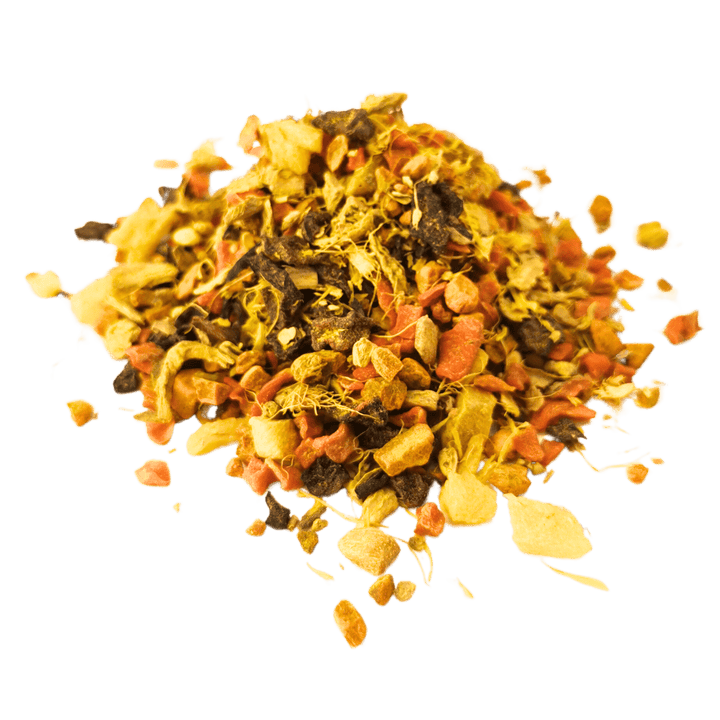
Five of our best-selling herbal teas in one letterbox box: ginger and turmeric, spiced kadha, dandelion, nettle and lemon balm.
Have a lookMaking iced lemon balm tea
Lemon balm's gentle citrus note makes it a natural fit for iced tea. Brew a slightly stronger cup than usual (an extra teaspoon of dried leaf, or a few more fresh leaves), let it cool promptly, and pour over ice. A sprig of fresh mint or a slice of lemon brightens it further.
For a milder, less grassy result, try cold-brewing: steep leaves in cold water in the fridge overnight and strain in the morning. The flavour is softer and there's virtually no risk of bitterness.
What to try next
If you enjoy lemon balm's gentle citrus character, Lemongrass Tea offers a brighter, zestier cup with a fresh lemon scent and gentle herbal sweetness. For something with a bit of warmth, Lemon & Ginger Tea pairs bright lemon with a proper ginger kick.
Curious about other calming herbs? The Wellness Tasting Box includes lemon balm alongside ginger and turmeric, spiced kadha, dandelion and nettle, so you can compare them cup by cup. If you'd rather explore caffeine-free options more broadly, the Caffeine-Free Tasting Box gives you mint, chamomile, fruit and ginger in one letterbox set. Not sure where to start? Point yourself at the Tea Finder and answer a few questions.
Our Organic Lemon Balm Tea is available in a range of sizes, with free UK delivery on orders over £35. You can also call into the shop in Byram Arcade, Huddersfield, if you want to smell the leaf before you commit.
Frequently asked questions
Is lemon balm tea caffeine-free?
Yes. Lemon balm is naturally caffeine-free, making it suitable for evenings, for those avoiding caffeine, or simply for anyone who fancies a gentle cup without the buzz. It won't keep you awake no matter how late you drink it.
Can I make lemon balm tea from fresh leaves?
Absolutely. Pick about one cup of loosely packed fresh leaves, rinse them, pour over water that's just off the boil, cover, and steep for about ten minutes. Fresh leaves give a brighter, greener flavour than dried. If you grow lemon balm at home, you'll have more leaves than you know what to do with by midsummer.
What are lemon balm tea benefits?
Researchers have looked at possible calming effects, mood support and sleep quality, mostly using extracts rather than tea. Some small studies suggest benefits, but evidence is limited and often low-quality. Tea is a drink, not a medicine. If you have health concerns, speak to a GP or pharmacist rather than relying on herbal cups.
How much lemon balm tea can I drink per day?
One or two cups per day is likely safe for most healthy adults. If you take thyroid medication, sedatives or are pregnant, check with your doctor or pharmacist first. Rare side effects from larger amounts include headache, dizziness and upset stomach.
Does lemon balm tea taste like lemon?
It has a gentle citrus scent and a mild lemon-ish flavour, but it's much softer than actual lemon juice. Think of it as lemon's quieter, sweeter cousin. The taste is light enough that it suits most palates, even those who find other herbal teas too strong.
What is the best lemon balm tea?
Look for organic, whole dried leaves rather than dusty fannings. Loose leaf gives you more control over strength and allows the leaves to unfurl properly. Our Organic Lemon Balm Tea uses whole dried leaves with a clear citrus scent straight from the pouch.
Sources: Medical News Today · WebMD · Cleveland Clinic