Apple Tea: Brewing, Varieties and How to Make It at Home

Apple tea is one of those drinks that smells exactly like it should taste: sweet, gently spiced, and unmistakably autumnal. Pour boiling water over dried apple pieces and warming spices, and within minutes your kitchen smells like a bakery. The drink itself is a fruit infusion, which means no actual tea leaf unless you add one, so most apple teas are naturally caffeine-free. That makes them good for evenings, for children, or for anyone who wants something warming without the buzz.
The tea in this guide: Organic Turkish Apple Tea from £3.50 Shop it
The drink traces its roots to Turkey, where elma çayı is served as a welcoming gesture to guests. Whether you buy a ready-blended pouch or simmer apple peels from this afternoon's crumble, the principle stays the same: fruit, spice, hot water, patience.
At a glance
- Apple tea is a fruit infusion, usually caffeine-free unless blended with black or green tea
- Originated in Turkey and Iran; traditionally served in tulip-shaped glasses
- Brew at 100°C for 3 to 5 minutes, or simmer apple peels for 10 to 20 minutes
- Popular variations include apple cinnamon tea, spiced apple tea and Turkish apple tea
- Works hot or iced, and pairs well with cinnamon, ginger, clove and star anise
What is apple tea?
Strictly speaking, apple tea is a tisane rather than a true tea. True tea comes from the Camellia sinensis plant; apple tea comes from dried apple pieces, apple peel, or apple flavouring infused in hot water. Some blends add a black or green tea base for body and caffeine, but many are fruit-only, making them a proper caffeine-free option.
The flavour depends on what else goes in. Plain apple tea is mellow and gently sweet. Add cinnamon and you get the familiar apple-pie warmth. Throw in ginger, clove, cardamom and pepper, and the cup becomes something closer to mulled cider without the alcohol.

Herbal Tea
A mellow apple infusion with soft natural sweetness. A simple, fruity cup without caffeine.
Have a lookWhere does apple tea come from?
Apple tea is especially popular in Turkey and Iran, where it is believed to have originated. In Turkey, it goes by elma çayı and is traditionally served as a welcoming drink in small, tulip-shaped glasses. Hosts customarily offer guests a glass upon arrival, a gesture of hospitality that makes a cup of tea feel like a proper occasion.
The traditional Turkish method uses an infusion system with one teapot stacked on another, a modern take on the old samovar. The lower kettle boils water while the upper pot makes concentrated tea, which is then diluted to taste. Turkish apple tea is traditionally made with dried apples and is also sold as instant granules, though the loose-leaf version has more depth.

Apple cinnamon tea: the classic combination
If apple tea has a soulmate, it is cinnamon. The two have been paired for centuries in pies, crumbles and drinks, and the logic is sound: apple brings gentle sweetness while cinnamon adds woody warmth without competing. Most commercial apple tea blends include cinnamon as standard.
For a homemade version, the method is simple. Tasty's recipe uses the peels of three medium apples, one cinnamon stick and two teaspoons of sugar, simmered in boiling water for about ten minutes. The result is a light, fragrant drink that uses up scraps you might otherwise bin.
A more layered spiced apple tea
If you want something with more going on, add star anise and fresh ginger. Use the peels and cores of four apples, one cinnamon stick, one star anise and a tablespoon of grated ginger, simmered in four cups of water. Let it steep off the heat for around twenty minutes for better flavour and fragrance. The longer it sits, the more the spices come through.
Other spices that work well include clove, cardamom, nutmeg and allspice. If you are making a batch for a cold afternoon, a squeeze of lemon and a drizzle of honey round things off nicely.
How to brew apple tea
The method depends on whether you are using loose-leaf blends or making your own from scratch.
Loose-leaf apple tea
- Boil fresh water and let it reach a full rolling boil (100°C).
- Use one teaspoon of loose-leaf blend per cup.
- Pour the water over the blend and steep for 3 to 5 minutes.
- Strain well and taste before sweetening, as some blends already contain stevia or dried fruit sugars.
Apple tea is best enjoyed without milk, as the fruit and spice flavours tend to get lost in dairy. If the cup tastes too sharp, add a splash more hot water rather than reaching for the milk jug.
Homemade apple peel tea
- Collect the peels and cores from 3 to 4 apples. Red apples give a prettier pink hue.
- Place in a pot with 3 to 4 cups of water, a cinnamon stick, and optional ginger or star anise.
- Bring to a gentle boil, then reduce heat and simmer for 10 minutes.
- Turn off the heat and let it steep for another 10 to 20 minutes.
- Strain through a fine-mesh sieve into cups or a teapot.
- Add honey, maple syrup or lemon to taste.

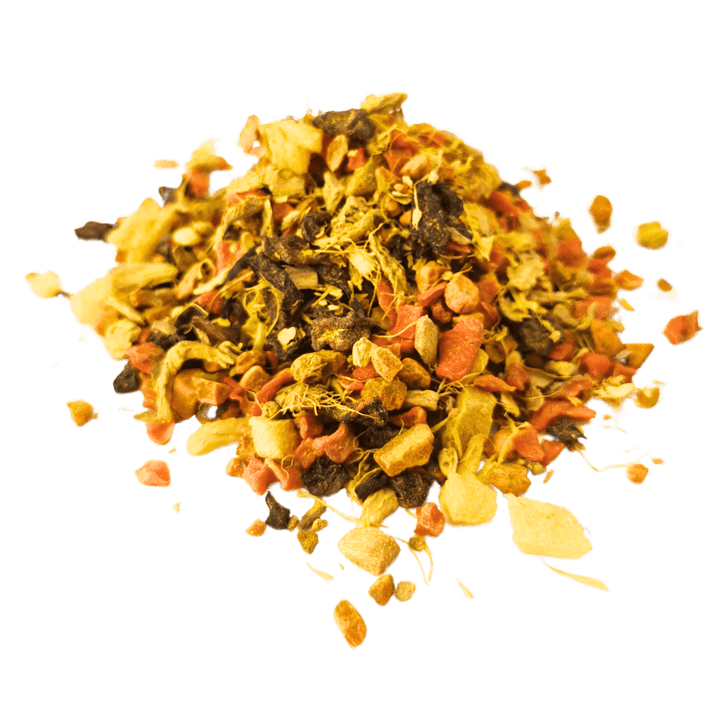
Herbal Tea
Apple and ginger with warming spice. Just the thing to wrap cold hands around.
Have a lookBrewing comparison: loose leaf vs homemade
| Method | Water temp | Steep time | Best for |
|---|---|---|---|
| Loose-leaf blend | 100°C | 3 to 5 minutes | Convenience, consistent flavour |
| Homemade peel tea | Boiling, then simmer | 10 min simmer + 10 to 20 min steep | Using up scraps, deeper flavour |
| Iced apple tea | 100°C (double strength) | 3 minutes, then chill | Summer pitchers |
Does apple tea contain caffeine?
Most apple teas are naturally caffeine-free because they contain no tea leaf, just fruit and spices. However, some blends use a black or green tea base for body, and those will contain caffeine. Always check the ingredients if caffeine matters to you.
Our Organic Turkish Apple Tea and Spiced Apple are both made without tea leaf, so they are suitable for evenings or anyone avoiding caffeine. If you want the apple flavour with a proper tea backbone, Pumpkin Spice blends apple with black tea and warming spices, and does contain caffeine.
Common mistakes when making apple tea
A few things can trip you up:
- Over-steeping spiced blends: Clove and pepper can become overpowering if left too long. Stick to the recommended time and taste as you go.
- Adding milk: It rarely works. The fruit goes muddy and the spices lose definition. If you want creaminess, try a chai or rooibos instead.
- Forgetting the blend has sweetener: Some apple teas include stevia or dried fruit sugars. Taste before adding your own honey or sugar.
- Using stale apples for homemade: Fresh, fragrant peels make better tea. If the apples have been in the fruit bowl since last month, the tea will taste like it.
Hot apple tea vs iced apple tea
Apple tea works beautifully cold. The fruit sweetness becomes more refreshing, and the spices mellow into the background rather than dominating.
To make iced apple tea, brew double strength (two teaspoons per cup) in half the usual water, steep for three minutes, strain, then top up with cold water and pour over ice. An orange slice or a sprig of mint lifts it nicely. Chill promptly if you are making a jug for later.
A surprising fact about apples
The apple tree, Malus pumila, is a deciduous tree from the rose family, and its wild ancestor still grows in Central Asia. Cultivation likely began on the slopes of the Tian Shan mountains in what is now China's Xinjiang region, where Malus sieversii was first domesticated. Apples have been cultivated in Asia and Europe for thousands of years. By 2014, the world was producing 84.6 million tonnes of apples annually, with China accounting for 48 percent of global production.
What does any of this have to do with your cup? Only that when you steep dried apple in hot water, you are carrying on something humans have been doing in one form or another since Central Asian farmers first realised apples were worth keeping.
What to try next
Organic Turkish Apple Tea is mellow and naturally sweet, with no spice, ideal if you want pure apple flavour. Spiced Apple adds ginger, cinnamon, cardamom, clove and pepper for a warming, layered cup. Cranberry Apple Tart swaps the spice for bright cranberry tang alongside the apple. If you want something completely different, Mekong Cinnamon delivers pure cinnamon warmth without any fruit.
Not sure where to start? The Fruit Tea Tasting Box lets you try five loose-leaf fruit teas side by side, including Spiced Apple. Or use the Tea Finder to filter by flavour and caffeine.

Letterbox gift
Five loose leaf fruit teas bursting with real fruit, from bramble and strawberry rhubarb to raspberry, spiced apple and hibiscus.
Have a lookOrder loose-leaf apple tea online with free UK delivery over £35. Or call into the shop in Byram Arcade, Huddersfield, and we will talk you through the whole fruit tea range. The kettle is always on.
Frequently asked questions
What is Turkish apple tea?
Turkish apple tea, or elma çayı, is a traditional Turkish drink made from dried apples, often served in small tulip-shaped glasses as a gesture of hospitality. It is typically caffeine-free and gently sweet, made using an infusion method or from instant granules. The loose-leaf version tends to have more depth than the instant powder.
How do I make apple cinnamon tea at home?
Simmer the peels of three to four apples with a cinnamon stick in boiling water for ten minutes, then steep off the heat for another ten to twenty minutes. Strain, add honey or lemon if you like, and serve warm. Red apple peels give a prettier pink colour. You can also add ginger, star anise or clove for extra warmth.
Is apple tea good for you?
Apple tea is a pleasant caffeine-free drink, but Porter Hill makes no health claims. If you have questions about diet or health, speak to your GP or pharmacist. Tea is a drink, not a medicine, and anyone telling you otherwise is probably selling something.
Can I drink apple tea while pregnant?
Most apple teas are caffeine-free and contain common fruit and spices. However, some blends include ingredients like liquorice or hibiscus, so always check the label. If you are pregnant or breastfeeding, speak to your midwife or GP about any ingredients you are unsure of.
What is the difference between apple tea and apple cider?
Apple tea is an infusion of dried apple pieces or peels in hot water, sometimes with spices. Apple cider is pressed apple juice, often unfiltered and sometimes fermented. Mulled cider is heated with spices, which gives it a similar flavour profile to spiced apple tea, but cider contains the full juice and sometimes alcohol.
Where can I buy Turkish apple tea in the UK?
Turkish apple tea is available from specialist tea shops, some supermarkets and online retailers. Our Organic Turkish Apple Tea is loose-leaf, caffeine-free and ships with free UK delivery over £35.
Sources: Swasthi's Recipes · Tasty