Indian Tea Regions: Assam, Darjeeling, Nilgiri and Beyond

India is the world's largest producer and consumer of black tea, and most of what the country grows never leaves its borders. That tells you something: Indians know good tea, and they drink a lot of it. What reaches our shelves in the UK comes from a handful of distinct regions, each with its own climate, altitude and character. If you have ever wondered why an Assam tastes nothing like a Darjeeling, or what makes Nilgiri tea so bright in the cup, the answer is geography.
The tea in this guide: Bukhial Assam TGFOP from £4.40 Shop it →
The three regions you will see most often are Assam, Darjeeling and Nilgiri. Beyond those, smaller districts like Kangra, Dooars-Terai and even the Singpho tribal lands of Arunachal Pradesh produce teas with their own personalities. Understanding where your tea comes from helps you choose the right one for your morning mug or your afternoon sit-down.
At a glance
- Assam: low-lying plains, malty and full-bodied, takes milk well
- Darjeeling: high-altitude gardens, floral and muscatel, the 'Champagne of teas'
- Nilgiri: southern hills, bright and brisk, low tannin
- Kangra: Himalayan valley, milder than Darjeeling with more body
- Dooars-Terai: Himalayan foothills, smooth and slightly milder than Assam
Why does Indian tea taste different from region to region?
Tea plants are sensitive creatures. Altitude, rainfall, soil composition, temperature swings and even the angle of sunlight all shape the chemistry of the leaf. Assam sits on rolling plains beside the Brahmaputra River, where high rainfall and warm humidity produce bold, malty teas. Darjeeling perches at elevations between 2,000 and 7,000 feet, where cooler air slows growth and concentrates flavour into something altogether more delicate. Nilgiri's tropical hills allow year-round harvesting, but the best lots come in the cooler months of November to March.
Processing matters too. Most Indian tea is black tea, but the same leaf can become green, white or oolong depending on how it is handled. According to the India Brand Equity Foundation, India produces black, green, oolong, white and even purple tea, alongside masala chai blends and infusions. Black tea still dominates exports, making up 83 per cent of what India sends abroad.

Assam: malty, robust and made for milk
Assam is the heavyweight. The region is home to the indigenous wild tea variety, Camellia sinensis var. assamica, and tea plants have grown wild there since antiquity. The British East India Company began promoting local cultivation in the 1830s, and by the late nineteenth century machinery had transformed production. According to Wikipedia, by 1900 Indian tea supplied 50 per cent of Britain's consumption, with Ceylon at 33 per cent and Chinese tea falling to just 10 per cent.
What ends up in your cup is strong, full-bodied and often described as malty. The IBEF describes Assam tea as strong and full-bodied, grown on rolling plains with high rainfall. The second flush, harvested in mid-summer, is particularly prized: coppery, creamy and brisk. If you like your breakfast tea with milk and no nonsense, Assam is your region. It is the backbone of most English and Irish breakfast blends.

Black Tea
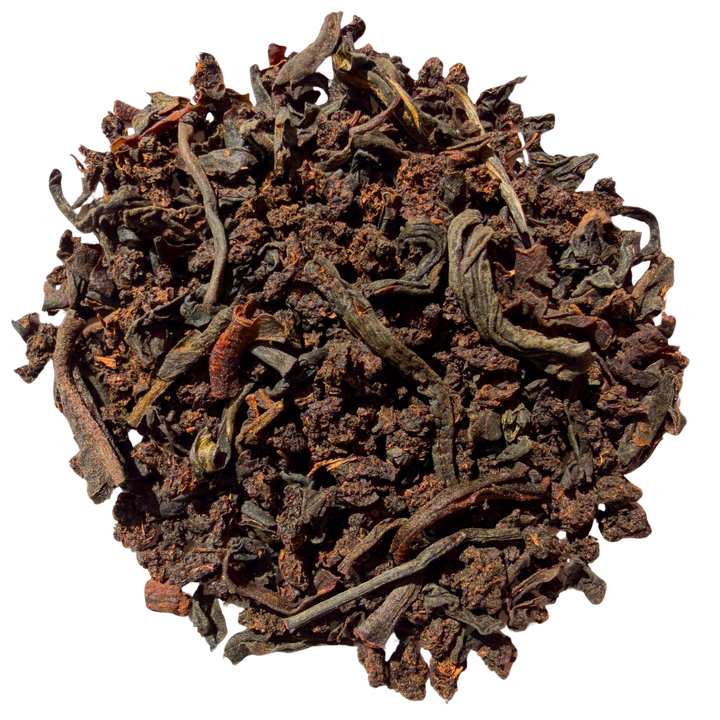
A malty Assam with plenty of body and a gently peaty finish. Happy with a splash of milk.
Have a lookWhen to drink Assam tea
First thing in the morning, with toast. After a long walk in the rain. Whenever you need a proper brew that stands up to a splash of milk and maybe a ginger biscuit. Assam is not subtle, and that is rather the point.
Darjeeling: floral, muscatel and famously expensive
Darjeeling produces only about one per cent of India's tea, yet it commands prices that would make an Assam farmer weep. The nickname 'Champagne of teas' is not just marketing; like Champagne, Darjeeling has a Geographical Indication tag protecting its name. According to Lonely Planet, the first tea factory in India opened at Makaibari Tea Estate near Kurseong in 1859, and the region has been celebrated ever since.
Gardens here use China-bush plants, Assam-bush plants and hybrids. The China bushes produce smaller leaves, requiring about twice as much leaf to equal the weight of Assam leaf. What you taste depends heavily on the flush:
| Flush | Harvest | Character |
|---|---|---|
| First flush | February–March | Light, floral, fresh, astringent |
| Second flush | May | Full-bodied, muscatel, fruity |
| Monsoon flush | June–October | Stronger, less nuanced |
| Autumnal flush | October–November | Full, smooth |
The second flush is the one people get excited about. That muscatel character, a natural grape-like fruitiness, develops as the leaves mature in warmer weather. If you have never tried a good second-flush Darjeeling, it is worth seeking out.

Black Tea
Margaret's Hope Darjeeling 2nd Flush TGFOP
Second-flush Darjeeling with fragrant muscatel notes. Take a moment over this one.
Have a lookNilgiri: bright, brisk and underrated
The Nilgiri hills stretch across Tamil Nadu, Kerala and Karnataka in southern India. According to the IBEF, Nilgiri tea is produced in these regions and is known for spicy and fruity notes with a balanced blend of flavour and body. The region's tropical climate allows year-round harvesting, though the best teas come between November and March.
Nilgiri tea tends to be bright and brisk, with fruity notes and relatively low tannin. According to Swasthi's Recipes, Nilgiri tea contains very little tannin, so it does not become as astringent when brewed longer. The cup is clean, lively and sits somewhere between the malty punch of Assam and the delicate fragrance of Darjeeling.
Our Nonsuch Nilgiri BOP comes from a real estate in the Nilgiri hills. The BOP grade (Broken Orange Pekoe) means smaller leaf pieces that brew quickly, typically in about two minutes. If you want a black tea that does not demand your full attention, Nilgiri is a good choice.
Beyond the big three: Kangra, Dooars-Terai and Singpho
India's tea map has more corners than most people realise. A few worth knowing:
Kangra
From the Kangra Valley in Himachal Pradesh, where cooler temperatures and distinct soil give the first flush a refreshing aroma and fruity flavour. The IBEF describes it as milder than Darjeeling but with more body and liquor. It has its own Geographical Indication tag.
Dooars-Terai
The Himalayan foothills below Darjeeling, including Jalpaiguri district in West Bengal. The tea here is bright, smooth and full-bodied, slightly milder than Assam. If you find Assam too intense but Darjeeling too light, Dooars-Terai might be the quiet middle ground.
Singpho
Also known as Singpho Phalap, Bamboo Tea or Smoked Tea, this comes from the Singpho tribe in Arunachal Pradesh and neighbouring Assam. It is traditional, unusual and rarely seen outside specialist circles. Tea plants grew wild in Assam since antiquity, though Indians historically viewed tea as herbal medicine rather than a recreational drink.
Indian chai: how masala changed everything
Tea drinking in India is inseparable from chai. The word simply means 'tea', but in practice it usually refers to black tea brewed with milk, sugar and spices. According to Lonely Planet, widespread tea drinking was actually imposed during British colonisation. Indians initially boycotted it because of the exploitation of indentured workers. During the Great Depression, Britain's unsold tea stocks prompted colonial pressure on factories to provide tea breaks and promote tea among Indian workers. Indians transformed the drink into something entirely their own: sweet, milky, spice-heavy chai.
Masala chai typically includes some combination of ginger, cardamom, cinnamon, cloves, black pepper and nutmeg. Wikipedia notes that Assam, Darjeeling and Nilgiri are the three most common tea types used as a base. CTC (crush, tear, curl) tea, with its granular pellets, is the standard because it brews quickly and boldly. If you fancy making it at home, use about one and a half cups of water to one cup of full-fat milk, two to three teaspoons of loose CTC tea, crushed spices and sugar to taste. Boil the spices in water first, add the tea, let it darken, then add milk and simmer for a couple of minutes.
Common mistakes when buying Indian tea
A few things trip people up:
- Assuming all Indian tea is the same. An Assam and a Darjeeling have almost nothing in common except the country of origin. Treat them as different drinks.
- Overbrewing Darjeeling. It is not a breakfast tea. Two to three minutes, no milk, or you will drown the muscatel.
- Ignoring the flush. First flush and second flush Darjeeling taste like different teas. Check the label if you can.
- Using stale tea. Black tea keeps for months, but it is always best fresh. Buy in quantities you will finish in a reasonable time.
How to brew Indian black tea
- Boil fresh water to 100°C.
- Warm your pot or mug with a splash of hot water, then tip it out.
- Add one teaspoon of tea per cup.
- Pour the boiling water over the leaves.
- Steep for two to four minutes depending on the tea and your taste.
- Strain completely and serve.
Assam and Nilgiri take milk happily. Darjeeling is usually better without, or with just a few drops if you must. If you are making chai, the method changes: simmer the spices first, boil the tea in the liquid, then add milk and bring back to a simmer.

Black Tea
A brisk Nilgiri tea whose smaller leaves brew quickly. Plenty of flavour without a long wait.
Have a lookWhat to try next
If you want to taste the difference between regions for yourself, start with a couple of single-origin teas. Bukhial Assam TGFOP is a proper malty Assam with a gently peaty finish, happy with milk. Margaret's Hope Darjeeling is a second-flush tea with that muscatel character people seek out. Nonsuch Nilgiri BOP shows you the brisk, bright side of southern India. If you cannot decide, the Breakfast Tea Tasting Box lets you compare five strong loose-leaf teas side by side, or try the Tea Finder for a recommendation based on what you already like.
Order loose leaf online with free UK delivery on orders over £35. We pack orders by hand in Huddersfield. Or call into the shop in Byram Arcade, Huddersfield, and we will talk you through the collection.
Frequently asked questions
What are the types of Indian tea?
The main types are black, green, white, oolong and masala chai. Black tea dominates, especially Assam, Darjeeling and Nilgiri. Green and white teas are produced in smaller quantities. Masala chai is black tea brewed with milk, sugar and spices like cardamom, ginger and cinnamon.
What is Nilgiri tea?
Nilgiri tea comes from the Nilgiri hills in southern India, spanning Tamil Nadu, Kerala and Karnataka. It is known for being bright, brisk and fruity, with low tannin levels that make it forgiving if you overbrew. It has a balanced blend of flavour and body.
What is Indian masala chai?
Masala chai is black tea, usually CTC, brewed with milk, sugar and a blend of spices. Common spices include cardamom, ginger, cinnamon, cloves and black pepper. The name means 'mixed-spice tea' in Hindi. It is especially popular in northern, central and western India.
Is Indian tea stronger than Chinese tea?
Generally, yes. Indian black teas, particularly Assam and CTC grades, are bolder and more robust than most Chinese black teas. They were developed partly to suit British tastes for strong, milky tea. Chinese teas tend to be more delicate and varied, with a longer history of green and oolong production.
Which Indian tea region is best for breakfast tea?
Assam. Its malty, full-bodied character and ability to stand up to milk make it the backbone of most English, Irish and Scottish breakfast blends. Nilgiri also works well in blends, adding brightness without heaviness.
Does Indian tea contain caffeine?
Yes. All tea from the Camellia sinensis plant contains caffeine. Black teas like Assam and Darjeeling typically have moderate to high caffeine levels. The exact amount in your cup depends on how much leaf you use and how long you brew it.
Sources: India Brand Equity Foundation · Lonely Planet · Wikipedia · Swasthi's Recipes