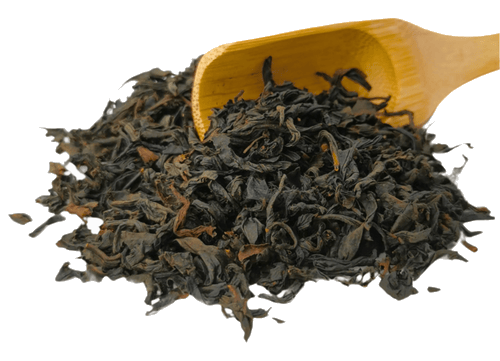
Kenyan Tea: A Guide to Bright, Brisk Black Tea

Kenya is one of the world's largest tea exporters, yet most people have never knowingly drunk a Kenyan tea. It slips anonymously into breakfast blends, providing the strength, colour and briskness that gets Britain through the morning. If your everyday builder's brew tastes punchy and brews fast, there is a good chance Kenyan leaf is doing the heavy lifting.
The tea in this guide: Milima GFBOP from £4.25 Shop it →
So what does Kenyan tea actually taste like on its own? Bright, clean and brisk, with a coppery-red liquor, a fruity lift and enough body to take milk without complaint. It lacks the malt of Assam or the floral delicacy of Darjeeling, but it has a refreshing directness that suits anyone who wants their morning cup to wake them up rather than whisper poetry at them.
This guide covers where Kenyan tea comes from, how it is processed, how to brew it properly and what to look for when you want something better than the contents of your average teabag.
At a glance
- Kenya is one of the world's largest exporters of black tea
- Most Kenyan tea is CTC processed for quick, strong brews
- Grown at high altitude on volcanic soil either side of the Rift Valley
- Bright, brisk flavour with coppery-red colour and clean finish
- Takes milk well but worth trying black first
- Contains caffeine, roughly similar to other black teas
Where does Kenyan tea come from?
Tea is not native to Kenya. The first seeds arrived from India in the early 1900s, brought by British planters eager to test whether the East African highlands could support Camellia sinensis. Early plantings were almost experimental, but by the 1920s tea cultivation was expanding across the fertile slopes west and east of the Rift Valley.
The industry expanded substantially after World War II. After independence, government policy developed tea as a smallholder crop, and today more than 600,000 small farmers work through cooperatives coordinated by the Kenya Tea Development Agency (KTDA), delivering fresh leaf to local factories for processing.
Growing regions
Most Kenyan tea grows in the fertile highlands on both sides of the Rift Valley, on deep red volcanic soil with reliable rainfall and strong equatorial sun. Elevations typically range from 1,500 to 2,700 metres above sea level. The Kisii Hills of western Kenya, for example, benefit from abundant rainfall and fertile soil that produce teas described as exceptionally full-bodied and smooth.
| Region | Elevation | Character |
|---|---|---|
| Kericho (west) | 1,500–2,100 m | Strong, robust, suited to commercial blends |
| Nandi (west) | 1,500–2,100 m | Smoother with deep, nuanced flavours |
| Kisii Hills (west) | 1,500–2,000 m | Full-bodied, smooth, suited to both milk and black |
| Limuru / Mount Kenya (east) | 1,800–2,400 m | Bright, vigorous, suited to strong blends with milk |
Because Kenya sits on the equator and has no harsh winter, tea bushes are plucked year-round rather than in distinct seasonal flushes. This produces a dependable, consistent tea with less variation from month to month than you might find in Darjeeling or Assam.

Black Tea
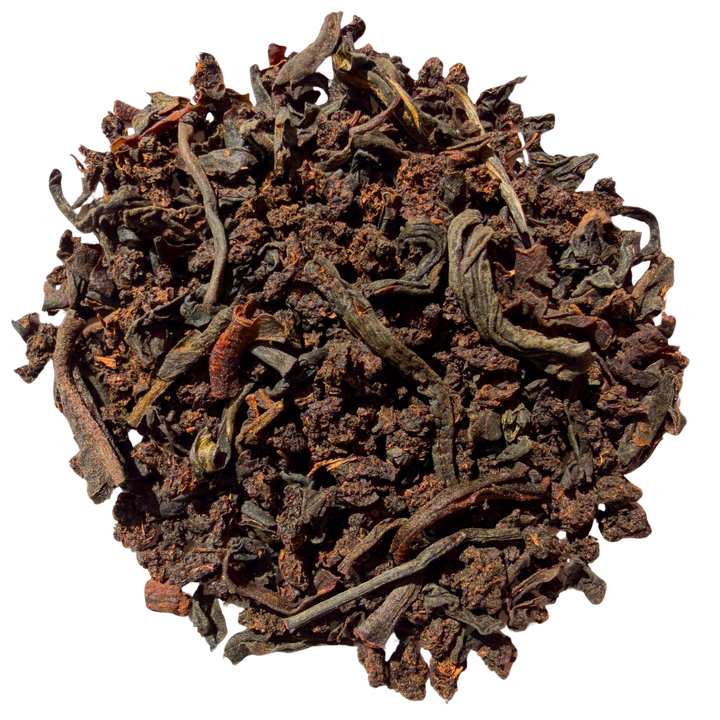
A bright Kenyan black tea with golden tips and enough body for a satisfying morning cup.
Have a lookHow is Kenyan tea processed?
The vast majority of Kenyan tea is made using the CTC method: crush, tear, curl. Specialised machinery breaks the leaf into small, hard granules that infuse quickly, brew dark and strong, and take milk without flinching. CTC is particularly suited to teabags, which is why Kenyan tea ends up in so many mass-market blends without anyone noticing.

Orthodox production, where leaves are rolled rather than crushed, is expanding. Factories in Nandi and the eastern Rift area are producing teas with more complexity, fruity and floral notes, and a lighter texture than standard CTC. Kenya has also developed a purple tea cultivar high in anthocyanins, though that remains something of a specialist product.
What does GFBOP mean?
If you see a grade like GFBOP (Golden Flowery Broken Orange Pekoe), it describes the size and appearance of the dry leaf rather than the quality. 'Broken' means smaller pieces than whole-leaf grades. 'Golden' and 'flowery' refer to the lighter tips mixed in. 'Orange Pekoe' is a traditional term that has nothing to do with oranges. Think of it as shorthand: GFBOP tells you the tea will brew quickly and show some golden colour in the dry leaf.
What does Kenyan tea taste like?
Expect a bright, coppery cup with a fruity lift and a clean, brisk finish. It is refreshing rather than heavy, direct rather than subtle. The body is full enough to carry milk, but the real charm is that brightness, which you lose if you drown it.
Compared with other origins:
- Assam: maltier, fuller, deeper, with a robust body
- Ceylon: bright and citrus-edged, medium-bodied
- Darjeeling: light, floral, muscatel, almost wine-like
- Kenyan: brisk, bright, clean, coppery, consistent
If your usual breakfast tea feels a bit muddy or dull, a single-origin Kenyan is worth trying. If you want malt and muscle for a generous pour of milk, Bukhial Assam is the better choice.
How to brew Kenyan black tea
Kenyan tea is forgiving, but a few details make a noticeable difference.
- Use one teaspoon of loose leaf (about 2–3 g) per cup, or one rounded teaspoon per person plus one for the pot.
- Bring fresh water to a rolling boil: 100°C.
- Pour directly over the leaf.
- Steep for 2 to 3 minutes for loose broken-leaf grades, 3 to 5 minutes for teabags or CTC.
- Strain promptly and taste before adding anything.
If the cup seems too light, add a touch more leaf next time rather than extending the steep. If the finish becomes overly dry or astringent, shorten the infusion by thirty seconds. A roomy basket infuser is useful for broken leaf because you can lift it out at exactly the right moment.
Does Kenyan tea take milk?
Yes, and it takes it well. But try one cup black first so you can judge the brightness and fruit. A small splash suits the body without flattening the character. In rural Kenya, tea is often prepared by boiling the leaves with water and milk together, then sweetening to taste, and served with bread or chapati.
For iced tea, brew slightly stronger than usual, remove the leaf, cool promptly and pour over plenty of ice. Taste before sweetening.

Black Tea
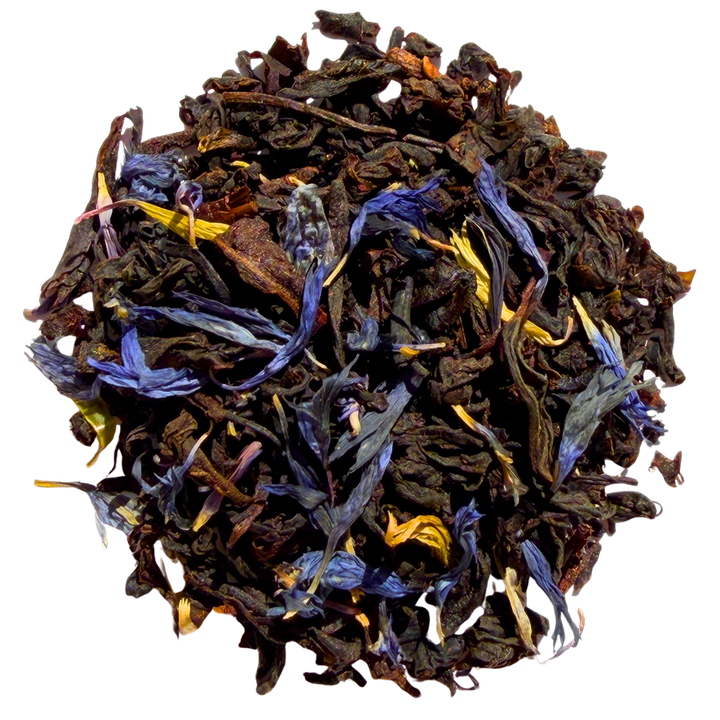
A full-bodied, malty breakfast blend that takes milk well. Kettle on, toast in.
Have a lookKenyan tea versus other black teas
If you are choosing between origins for your morning cup, here is how they stack up:
| Origin | Flavour | Body | Best with milk? |
|---|---|---|---|
| Kenya | Bright, brisk, fruity, clean | Medium-full | Yes, but go easy |
| Assam | Malty, robust, deep | Full | Yes, generous splash |
| Ceylon | Bright, citrus-edged | Medium | Yes, a little |
| Darjeeling | Light, floral, muscatel | Light | No, or very little |
Kenyan tea sits neatly between the malt of Assam and the delicacy of Darjeeling. It is a good choice if you want something lively and refreshing that still has enough backbone for a proper morning brew.
Common mistakes with Kenyan tea
Most brewing errors come down to impatience or habit:
- Over-steeping: CTC and broken-leaf grades infuse fast. Three minutes is usually plenty. Leave it longer and you get a harsh, bitter finish.
- Too much milk: Kenyan tea's charm is its brightness. Drown it in milk and you lose exactly what makes it interesting.
- Stale leaf: Tea is not wine. Store it sealed, cool and dry, away from sunlight and strong kitchen smells. Use it within a year.
- Cold pot or mug: Warming your pot or cup before brewing keeps the water temperature up and improves extraction. It takes ten seconds and makes a difference.
A brief history of Kenyan tea
Kenya's tea industry is barely a century old, yet the country is now one of the world's largest exporters. The story begins in the early 1900s with those first seeds from India, continues through the early plantations of the 1920s and the post-war expansion, and arrives at the present day with hundreds of thousands of smallholders feeding a network of factories and the famous Mombasa auction, one of the largest tea auctions in the world.
Most Kenyan tea still passes through Mombasa, where graded lots are bought by blenders and packers, shipped in bulk, and combined with tea from elsewhere to meet flavour and price targets. That is why you have probably drunk Kenyan tea without ever seeing the name on a packet.
Single-origin Kenyan tea, by contrast, lets you taste what the highlands actually produce: brighter, cleaner, more aromatic than the commodity blends, and well worth seeking out.
Does Kenyan tea contain caffeine?
Yes. Kenyan tea is made from Camellia sinensis, so it naturally contains caffeine. The amount in your cup varies with how much leaf you use, how long you steep it and how hot your water is, but expect a typical black-tea level: roughly 40 to 70 mg per cup, depending on your method.
If you need to avoid caffeine, choose a caffeine-free herbal infusion or a tea that has been specifically decaffeinated, such as Decaf English Breakfast.
What to try next
If you want to taste Kenyan tea at its best, Milima GFBOP is a bright, single-origin black tea with golden tips and a clean, fruity character. It is Kenyan brightness without the blunt weight of a standard breakfast blend.
For comparison, try Bukhial Assam for malt and body, or Margaret's Hope Darjeeling for a lighter, more floral cup with muscatel notes. If you want to compare several origins side by side, the Breakfast Tea Tasting Box gives you five loose-leaf options in one letterbox pack.

Letterbox gift
Five strong loose leaf breakfast teas that all take milk, from a smooth English Breakfast to a smoky Huddersfield blend.
Have a lookNot sure where to start? The Tea Finder asks a few questions and points you towards teas you are likely to enjoy.
You can order loose-leaf tea online with free UK delivery on orders over £35, or call into the shop in Byram Arcade, Huddersfield, if you want to see the leaf before you buy.
Frequently asked questions
Is Kenyan tea good quality?
Yes. Kenya produces some of the world's best black tea, though most of it disappears into blends. Single-origin Kenyan teas are brighter, cleaner and more aromatic than commodity grades. Quality depends on the estate, the processing and how fresh the leaf is, just as with any origin.
What is the difference between Kenyan tea and English Breakfast?
English Breakfast is a blend, usually combining teas from several origins (often Assam, Ceylon and Kenya) to create a consistent, malty brew. Kenyan tea is a single origin: brighter, brisker and cleaner than most blends, with a fruity lift rather than deep malt.
How much caffeine is in Kenyan tea?
Roughly 40 to 70 mg per cup, depending on how much leaf you use and how long you steep it. That is similar to other black teas. If you are sensitive to caffeine or avoiding it, try a caffeine-free herbal infusion instead.
Can I drink Kenyan tea with milk?
Absolutely. Kenyan tea has enough body to take milk well, and that is how most of it is drunk in the UK. But try a cup black first to appreciate the brightness and fruit. A small splash is usually better than a generous pour.
What is CTC tea?
CTC stands for crush, tear, curl. It is a processing method that breaks the leaf into small, uniform granules for fast, strong infusions. Most Kenyan tea is CTC, which is why it works so well in teabags and takes milk without complaint.
Where can I buy Kenyan loose-leaf tea?
We stock Milima GFBOP, a single-origin Kenyan black tea with golden tips. You can order online or visit the shop in Byram Arcade, Huddersfield, where the kettle is usually on.
Sources: Ajiri Tea