English Breakfast Tea: What It Is, How to Brew It and Which to Try

English breakfast tea is a blend of black teas designed to be strong, malty and robust enough to handle a splash of milk without losing its character. It is not a single tea from a single place but a recipe that changes from blender to blender, which is why one box can taste nothing like another despite wearing the same name. The style dates back to at least the mid-nineteenth century and remains the most popular blended tea in Britain.
The tea in this guide: English Breakfast from £3.20 Shop it →
If you want the short answer: it is a full-bodied black tea, usually combining leaves from Assam, Ceylon, Kenya or occasionally China, brewed with boiling water for three to five minutes and served however you like it. The longer answer is more interesting.
At a glance
- A blend of black teas, typically from Assam, Ceylon, Kenya or China
- Full-bodied, malty, brisk; takes milk and sugar well
- Contains caffeine (roughly 47 to 90 mg per cup depending on brewing)
- Brew with freshly boiled water at 100°C for 3 to 5 minutes
- No standard recipe: every brand's blend is different
What is English breakfast tea?
English breakfast tea is a traditional black-tea blend, not a single-origin leaf. The name refers to the style rather than the place the tea was grown. Despite its English title, the leaves themselves come from tea-growing countries: typically India, Sri Lanka, Kenya and sometimes China.
According to Wikipedia's entry on the blend, it is 'usually described as full-bodied, robust, and rich' and traditionally blended to pair well with milk and sugar alongside a hearty full English breakfast. The exact proportions vary, but Assam provides malty depth, Ceylon adds brightness and balance, and Kenyan tea contributes briskness and body. Some more expensive blends include Keemun from China for a rounded finish.
There is no official recipe. That is part of the appeal and part of the confusion. Our version at Porter Hill blends black teas from Kenya's Nandi Highlands, India's Nilgiri and Assam regions, and China's Yunnan Province for a malty, brisk cup with enough structure to stand up to milk.
A brief history of English breakfast tea
The origins are murkier than the cup. Tea vendors had used the term 'breakfast tea' since at least the late eighteenth century, but the modern naming practice may have started in America rather than England.

One account, cited by Wikipedia, credits Richard Davies, an English immigrant and tea merchant in New York City, with creating the blend in 1843 or 1844. He reportedly began with Congou, added some Pekoe and Pouchong, and sold it for fifty cents a pound. Its success spawned imitators and helped popularise the name across the Atlantic.
The blend gained royal approval in 1892 when Queen Victoria tasted and enjoyed a version at her Scottish residence of Balmoral. Despite its Scottish origin on that occasion, the tea acquired the prefix 'English' and the name stuck. The style was well established by the early twentieth century and has remained popular ever since.

Black Tea
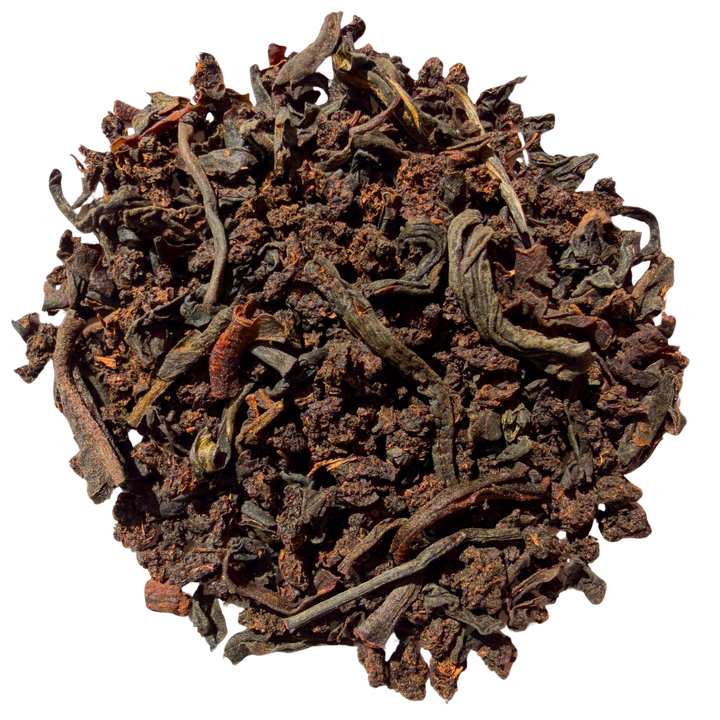
A full-bodied, malty breakfast blend that takes milk well. Kettle on, toast in.
Have a lookWhat does English breakfast tea taste like?
Expect malt, briskness and enough body to fill your mouth without knocking you sideways. A good blend is balanced: rich enough to satisfy on a cold morning, smooth enough to drink cup after cup. If you have grown up on builder's tea from a bag, loose-leaf English Breakfast will taste familiar but more interesting, with layers rather than a single tannin thump.
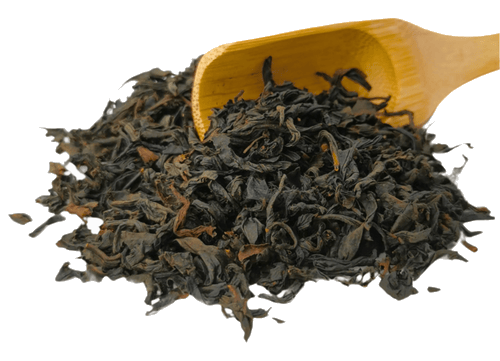
Colour in the cup runs from deep amber to reddish-brown depending on brewing time and the proportion of Assam in the blend. The dry leaf smells malty and a little biscuity. With milk, the brisk edge softens and the malt comes forward; without milk, you taste more brightness and a clean finish.
How to brew English breakfast tea
Getting the best from loose-leaf English Breakfast is straightforward, but the details matter. Here is the method:
- Boil fresh, cold water and let it reach 100°C (a full rolling boil).
- Warm your teapot or mug by swirling a little hot water inside, then discard it.
- Add one heaped teaspoon of loose leaf (about 2 g) per cup.
- Pour the boiling water directly onto the leaves.
- Steep for 3 to 5 minutes. Taste at 3 minutes; if you want more body or you are adding milk, let it go towards 4 or 5.
- Strain completely and serve.
If your cup is too light, add a little more leaf next time rather than extending the steep. A very long brew makes the tea taste dry and papery rather than properly strong. Most blends work best with 3 to 5 minutes of steeping. Find the time that suits your taste and stick to it.
| Water temperature | Amount of leaf | Steep time | Result |
|---|---|---|---|
| 100°C (boiling) | 1 heaped tsp per cup | 3 minutes | Lighter, brighter |
| 100°C (boiling) | 1 heaped tsp per cup | 4–5 minutes | Fuller body, takes milk well |
How much caffeine is in English breakfast tea?
English breakfast tea contains caffeine because every leaf in the blend is black tea. A cup typically contains 47 to 90 milligrams of caffeine, which is more than green tea but usually less than a cup of coffee.
The exact amount in your mug depends on how much leaf you use, how long you brew it, how hot the water is and whether you use loose leaf or bags. If you want the wake-up without the caffeine, try a decaf version brewed the same way.

Black Tea
A medium-bodied decaf black tea with soft floral notes. Decaffeinated, rather than completely caffeine-free.
Have a lookShould you add milk to English breakfast tea?
That is entirely up to you, but the blend is designed for it. Taste the first mouthful plain, then decide. A small splash softens the brisk edge without flattening the malt; a bigger pour turns it into the sort of mug you might wrap your hands around on a wet Tuesday morning.
Add milk after brewing so you can judge the strength first. Sugar is optional. Some people swear by it; others consider it sacrilege. We do not judge.
Irish breakfast vs English breakfast tea
Both are strong, malty black-tea blends that take milk well, but they sit at different points on the boldness scale. Irish Breakfast typically uses a higher proportion of Assam, making it darker, maltier and more emphatically robust. English Breakfast is a bit more rounded and lighter in body, though 'light' is relative when you are talking about breakfast tea.
If your current English Breakfast feels a bit polite and you want something that practically demands milk, Irish Breakfast is the next step. Our Irish Breakfast guide goes into more detail on the differences.
Common mistakes when brewing breakfast tea
Using water that is not hot enough
Black tea needs boiling water to release its full flavour. If you let the kettle cool or use water from a hot tap, you will get a thin, underwhelming cup.
Oversteeping until it turns bitter
Leaving the leaves in past five or six minutes makes the tannins dominate. The result is dry, astringent and unpleasant. Set a timer.
Adding too little leaf and compensating with time
If you want a stronger cup, use more tea rather than brewing for longer. An extra half-teaspoon gives you body without bitterness.
Resteeping the same leaves
Unlike some oolongs and green teas, black tea gives most of its flavour in the first infusion. A second steep is usually thin and papery. Use fresh leaves for each pot.
Best English breakfast tea: what to look for
The best blend depends on what you want from it. Some people prefer a rounder, more balanced cup; others want something that could strip paint. Here is what to consider:
- Origin blend: Assam-heavy blends are maltier and bolder. Ceylon adds brightness. Kenyan tea brings briskness. Yunnan or Keemun rounds things out.
- Leaf grade: Whole leaves and golden tips (often marked as TGFOP or similar) tend to produce a smoother, more complex cup than fannings or dust.
- Loose leaf vs bags: Loose leaf usually offers better quality and more nuance. Bags are convenient but often contain smaller, faster-brewing particles that can turn bitter quickly.
If you want to explore the teas that go into breakfast blends on their own terms, try Bukhial Assam TGFOP for single-estate malty depth, Nonsuch Nilgiri BOP for brisk brightness or Milima GFBOP for Kenyan body and golden tips.

Letterbox gift
Five strong loose leaf breakfast teas that all take milk, from a smooth English Breakfast to a smoky Huddersfield blend.
Have a lookWhat to try next
Irish Breakfast if you want something darker, maltier and even more robust, a step up in body that practically insists on milk. Bukhial Assam TGFOP if you would like to taste a named single-estate Assam with a gently peaty finish, no blending involved. Decaf English Breakfast for a full-bodied morning cup when you are watching your caffeine or drinking tea late in the day.
Still finding your way through breakfast teas? The Breakfast Tea Tasting Box lets you compare five different strong brews side by side, from a smooth English Breakfast to a smoky Huddersfield-inspired blend. Or use the Tea Finder to narrow things down based on what you already like.
Order loose leaf online with free UK delivery on orders over £35. Or call into the shop in Byram Arcade, Huddersfield, and we will talk you through the options over the counter. The kettle is always on.
Frequently asked questions
What is the difference between English breakfast tea and normal tea?
English breakfast tea is a specific style of black-tea blend designed to be strong, malty and milk-friendly. 'Normal tea' could mean anything from green tea to herbal infusions. In Britain, when people say 'a cuppa' or 'builder's tea', they often mean something similar to English Breakfast: a robust black tea served with milk.
Can I use English breakfast tea for iced tea?
Yes. Brew it a little stronger than usual, about an extra half-teaspoon per cup, and let it cool before pouring over ice. A slice of lemon or a splash of milk works well. You can also cold brew it in the fridge overnight for a smoother result.
Does English breakfast tea go bitter if I leave it too long?
It can. Steeping past five or six minutes draws out too many tannins, leaving the cup dry and astringent. Stick to three to five minutes for the best balance of body and brightness, and strain completely when the time is up.
Is loose leaf English breakfast tea better than tea bags?
Loose leaf generally offers more complexity and a smoother cup because the leaves are larger and have more room to unfurl. Tea bags often contain smaller particles that brew faster but can turn bitter more easily. Both work; loose leaf rewards a little extra effort.
Does English breakfast tea have more caffeine than Earl Grey?
They are usually similar because both are black-tea blends. The caffeine content depends more on how much leaf you use and how long you brew it than on the blend itself. English Breakfast tends to be brewed stronger, so a typical cup may end up with slightly more caffeine in practice.
Sources: Wikipedia