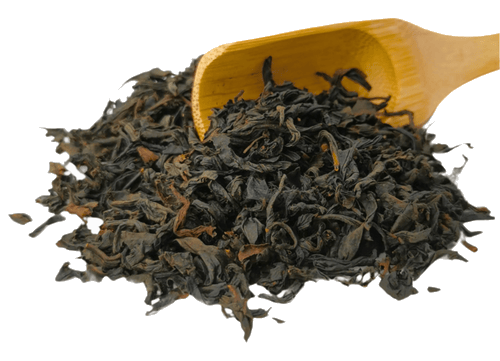
Breakfast Tea: A Guide from Smooth English to Bold Irish

Breakfast tea is the backbone of British tea drinking. Three quarters of people in the UK drink black tea, and for most of them that means a sturdy, full-bodied blend designed to cut through morning fog, stand up to milk, and get you out the door with something approaching optimism. But not all breakfast teas are equal. English Breakfast is smooth and balanced; Irish Breakfast is darker, maltier and considerably stronger. Between them sit single-origin Assams and Kenyan teas, each with their own character.
The tea in this guide: English Breakfast from £3.20 Shop it →
The short answer: if you want an approachable, everyday cup, start with English Breakfast. If you want something with more punch, move up to Assam, Kenyan or Irish Breakfast. And if you want a proper belt of tea that could stand a spoon in it, we have a couple of blends that might suit you very well indeed.
Below we compare every breakfast-style tea we sell at Porter Hill, from smoothest to strongest, with a strength chart, brewing advice and a few stories along the way.
At a glance
- Breakfast tea is a blend of black teas (usually Assam, Ceylon and Kenyan) designed to be robust, malty and milk-friendly.
- English Breakfast is the smoothest; Irish Breakfast is the strongest traditional style.
- Our range runs from Decaf English Breakfast to Terrier Tea and Weaver's Blend at the bold end.
- Brew at 95 to 100°C for 3 to 5 minutes; add milk after brewing.
- A typical cup of black tea contains around 47 mg of caffeine per 240 ml.
What is breakfast tea?
Breakfast tea is a broad term for full-bodied black tea blends intended to accompany a hearty morning meal. According to historical accounts, the phrase 'breakfast tea' has been used by vendors since at least the late 18th century, and one New York tea merchant, Richard Davies, is credited with creating an early blend around 1843 by combining Congou, Pekoe and Pouchong teas.
Most modern breakfast blends draw on teas from Assam in India, Ceylon (Sri Lanka) and Kenya. Assam provides malt and body; Ceylon adds brightness; Kenyan tea contributes a bold, brisk 'tea' flavour that helps the blend cut through milk. More expensive blends sometimes include Keemun, a Chinese black tea with a winey, slightly smoky character.
In 1892, Queen Victoria reportedly tasted a blend labelled 'breakfast tea' at Balmoral in Scotland and returned to London with a supply. Despite this Scottish connection, the blend later acquired the prefix 'English'. Tea history is rarely straightforward.
English Breakfast vs Irish Breakfast: what is the difference?
Both are robust black tea blends, but their balance differs considerably.
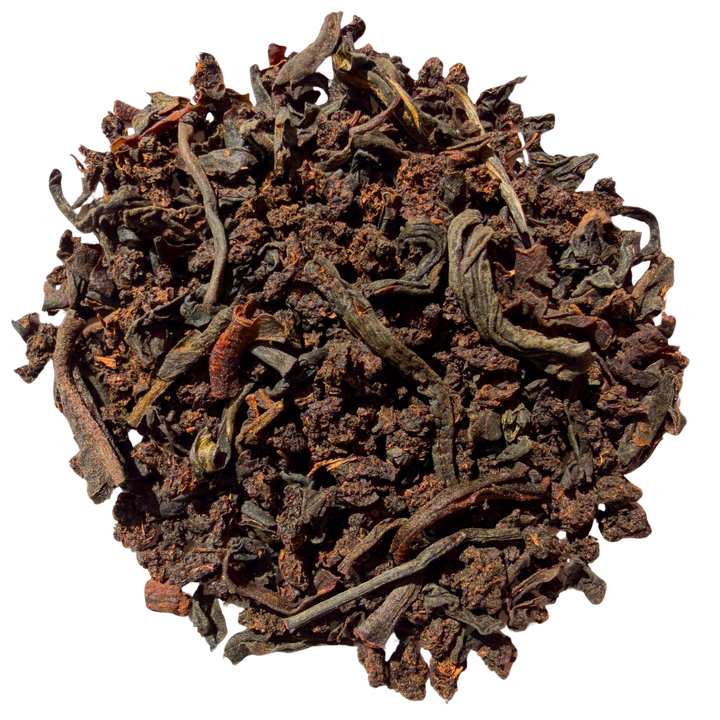
English Breakfast is typically a smooth, balanced blend of Assam, Ceylon and Kenyan teas. It is full-bodied but not aggressive, designed to pair with toast and marmalade without overwhelming your palate. Our English Breakfast is malty, easy-going and happy with a splash of milk.
Irish Breakfast is weighted heavily toward Assam. Irish brands use strong black Assam tea as the base, giving the brew a darker colour, a more pronounced malt character and a robust taste that can hold its own against a full Irish fry-up. Our Irish Breakfast has a stout-like richness that rewards a good long steep and a generous pour of milk.

Black Tea
A full-bodied, malty breakfast blend that takes milk well. Kettle on, toast in.
Have a lookIf English Breakfast is a friendly handshake, Irish Breakfast is a firm grip and a knowing look.

What about Scottish Breakfast?
Scottish Breakfast is traditionally the strongest of the British breakfast styles, often blending a high proportion of Assam with other punchy black teas. We do not sell a Scottish Breakfast blend, but if you are after that level of intensity, try Irish Breakfast, Milima (our Kenyan tea) or Terrier Tea. Any of them will give you the bold, dark cup you are looking for.
Breakfast tea strength comparison
We have arranged our breakfast-style teas from smoothest to strongest. Strength here refers to flavour intensity and body, not caffeine (all standard black teas contain similar caffeine levels).
| Tea | Origin/Style | Strength | Flavour notes | Best for |
|---|---|---|---|---|
| Decaf English Breakfast | Blend (decaf) | Mild | Soft, lightly floral | Evening cups, caffeine-sensitive drinkers |
| English Breakfast | Blend | Medium | Malty, balanced, smooth | Everyday mornings, newcomers to loose leaf |
| Bukhial Assam TGFOP | Assam, India | Medium-strong | Malty, full-bodied, gently peaty | Those who like a bit more oomph |
| Milima GFBOP | Kenya | Strong | Bright, brisk, golden tips | Lovers of bold tea with character |
| Irish Breakfast | Blend | Strong | Dark, malty, stout-like | Serious morning tea drinkers |
| Terrier Tea | Blend (Huddersfield) | Strong | Bold, three-continent blend | Anyone who wants tea with backbone |
| Weaver's Blend | Blend with oolong and smoke | Strong and smoky | Malty, smoky, local character | Adventurous drinkers, fans of Lapsang |
All of these teas take milk well. If you want to try several before committing, the Breakfast Tea Tasting Box contains five of our strongest loose leaf breakfast teas and fits through a letterbox.

Letterbox gift
Five strong loose leaf breakfast teas that all take milk, from a smooth English Breakfast to a smoky Huddersfield blend.
Have a lookStrongest breakfast tea: which to choose?
If your priority is pure strength, our boldest options are Terrier Tea and Weaver's Blend. Both are designed for drinkers who find standard English Breakfast a bit timid.
Terrier Tea blends leaves from three continents into a robust cup that stands up to milk and still has plenty to say. Weaver's Blend adds oolong and a wisp of smoke, inspired by the textile heritage of Huddersfield. It is malty, a little mysterious, and not for the faint-hearted.
For a more traditional strong brew, Irish Breakfast or Milima will do the job. Milima is a single-origin Kenyan tea with golden tips and a bright, brisk character. Kenya is the world's third-largest tea producer, and most of its output is bold black tea processed using the CTC (crush, tear, curl) method, which gives it a strong, generic 'tea' flavour ideal for breakfast blends.
How to brew loose leaf breakfast tea
Loose leaf breakfast tea is forgiving, but a few details help you get the best from it.
- Use fresh water. Reboiled water loses oxygen and can make tea taste flat.
- Bring the kettle to a rolling boil: 95 to 100°C is ideal for black tea.
- Use roughly one rounded teaspoon (2 to 3 g) per cup.
- Steep for 3 to 5 minutes. Three minutes gives a lighter cup; five minutes brings out more body and malt.
- Add milk after brewing, not before. Even the former royal butler recommends this.
Longer steeping can make black tea bitter (the British call this 'stewed'). If you like a stronger cup, use more leaf rather than more time.
Caffeine in breakfast tea
A standard cup of black tea (240 ml) contains around 47 mg of caffeine. That is roughly half the caffeine in a similar cup of filter coffee. All our breakfast teas contain similar caffeine levels, since they are all made from black tea leaves.
If you want the taste of breakfast tea without the caffeine, our Decaf English Breakfast is decaffeinated (rather than completely caffeine-free) and has soft floral notes. It is good for evenings or for anyone avoiding caffeine for medical reasons.
Common mistakes with breakfast tea
Using water that is not hot enough. Black tea needs properly boiling water to release its full flavour. Lukewarm water gives you a weak, insipid cup.
Brewing too long. Five minutes is plenty. Beyond that, tannins build up and the tea becomes astringent. If you want more strength, add more leaf.
Adding milk too early. Milk cools the water and interferes with brewing. Let the tea steep fully, then add milk to taste.
Assuming all breakfast teas are the same. English Breakfast, Irish Breakfast and single-origin Assams have genuinely different flavour profiles. It is worth trying a few to find your favourite.
A short history of breakfast tea
Tea arrived in Britain via Portugal and the Netherlands in the 17th century, but it took a while to become the national drink. By the mid-19th century, Irish breakfast tea was readily available to people across socioeconomic classes, and Assam tea from India was beginning to dominate British imports. The first batch of Assam tea was shipped to London in 1838 and auctioned in January 1839. By 1888, tea imported from India exceeded imports from China.
Kenya joined the story later. Tea was introduced there in 1903 with seeds from Assam, and commercial planting began in 1924. Today, most tea drunk in the UK comes from Kenya, often blended with Assam and Ceylon to create the breakfast blends we know.
What to try next
If you are not sure where to start, the Breakfast Tea Tasting Box gives you five strong loose leaf teas to compare, from smooth English Breakfast to smoky Weaver's Blend. It fits through a letterbox and makes a good gift for the tea drinker who thinks they have tried everything.
For a present with a bit more ceremony, the Breakfast Tea and Honey Gift Set pairs our breakfast blends with Yorkshire honey.
If you already know you want something bold, go straight for Irish Breakfast or Terrier Tea. Both reward a generous steep and a splash of milk.
Still undecided? Our Tea Finder quiz asks a few quick questions and points you to the right cup.

Black Tea
A strong black tea blend celebrating Huddersfield. Three leaves, three continents and a little Town pride.
Have a lookAll orders over £35 qualify for free UK delivery, and we pack orders by hand in Huddersfield. Or call into the shop in Byram Arcade, Huddersfield, and we will make you a cup while you browse.
Frequently asked questions
What is the difference between English Breakfast and Irish Breakfast tea?
English Breakfast is a balanced blend of Assam, Ceylon and Kenyan teas, smooth and malty. Irish Breakfast is weighted heavily toward Assam, giving it a darker colour, stronger malt character and more robust flavour. Irish Breakfast is the bolder choice if you like your tea with real backbone.
Which breakfast tea is the strongest?
Among traditional styles, Irish Breakfast is typically the strongest. At Porter Hill, our boldest options are Terrier Tea and Weaver's Blend, both designed for drinkers who want a serious, full-bodied cup that stands up to milk.
Is loose leaf breakfast tea better than tea bags?
Loose leaf tea is usually made from larger, higher-quality leaves than the fine particles in most tea bags. This gives a more complex, nuanced flavour. Loose leaf also lets you adjust the strength by varying the amount of tea you use.
How much caffeine is in breakfast tea?
A typical 240 ml cup of black tea contains around 47 mg of caffeine. This applies to English Breakfast, Irish Breakfast and most other black teas. Our Decaf English Breakfast is decaffeinated for those who want to reduce their intake.
Can I drink breakfast tea in the afternoon?
Absolutely. Despite the name, breakfast tea is popular throughout the day in Britain and Ireland. If caffeine is a concern later in the day, try Decaf English Breakfast or switch to a caffeine-free herbal option.
Do you sell Scottish Breakfast tea?
We do not currently stock a Scottish Breakfast blend, but if you want that level of strength, Irish Breakfast, Milima or Terrier Tea will give you a similarly bold cup.
Sources: Wikipedia: English breakfast tea · Wikipedia: Irish breakfast tea · Wikipedia: Assam tea · Wikipedia: Tea production in Kenya · Wikipedia: Black tea · UK Tea and Infusions Association: Brew