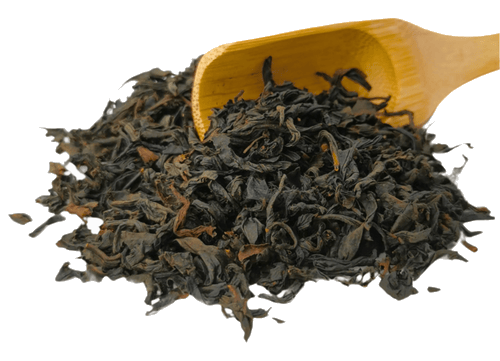
Assam Tea: A Complete Guide to the Malty Black Tea

Assam tea is the backbone of every proper British breakfast cup. It is a black tea grown in the Brahmaputra valley of northeastern India, made from the large-leafed Camellia sinensis var. assamica, and it tastes malty, full-bodied and brisk with a deep amber-to-ruby colour in the cup. If you have ever enjoyed an English Breakfast or Irish Breakfast blend, you have almost certainly drunk Assam, whether you knew it or not.
The tea in this guide: Bukhial Assam TGFOP from £4.40 Shop it →
The region produces around 680 million kilograms of tea each year, making it the world's largest contiguous tea-growing area. That is a staggering amount of leaf, yet single-estate Assams still reward the curious drinker with character that blends cannot match.
This guide covers what Assam tea is, how it is made, what it tastes like, how to brew it properly, and how to pick between grades, flushes and processing styles. Kettle on.
At a glance
- Black tea from India's Assam region, made from Camellia sinensis var. assamica
- Full-bodied, malty flavour with a brisk finish and deep colour
- Harvested in flushes; second flush (May to August) is most prized
- Brew with freshly boiled water at 100°C for two to five minutes
- Takes milk beautifully, though good loose leaf is worth trying plain first
- Naturally caffeinated; a proper morning tea
What is Assam tea?
Assam tea is a fully oxidised black tea grown on the rolling plains beside the Brahmaputra River in northeastern India. The climate there is unlike anywhere else tea grows: hot and humid during the monsoon, with rainfall reaching 250 to 300 millimetres per day and daytime temperatures around 36°C. The soil is rich with floodplain nutrients, and the plants grow at or near sea level rather than in the highlands where Darjeeling and Nilgiri teas thrive.
The result is a tea with body, briskness and that distinctive malt note that has made Assam the go-to base for breakfast blends since the first commercial batch was auctioned in London in January 1839.
A brief history
Scottish trader Robert Bruce encountered Assam's native tea plant in 1823 while travelling through the region. A local Singpho chief, Bessa Gam, showed him how the leaves were brewed. Robert died before the plant could be formally identified, but his brother Charles sent samples to Calcutta's botanical gardens in the early 1830s, where scientists confirmed it was a distinct variety of Camellia sinensis. By 1838, the first shipment reached London, and the British tea industry had a new star.
That first auction batch sold well but was noted as less fragrant than Chinese tea. Nearly two centuries later, Assam's robust character is exactly what many drinkers want in their morning cup.

What does Assam tea taste like?
Malty is the word you will hear most often, and it fits. Good Assam has a biscuity, almost toasted-grain sweetness underneath a full body and a brisk, clean finish. Some estates add earthy or lightly peaty notes; others lean more towards honey or even a hint of spice. The liquor colour ranges from ruby red to deep amber depending on the harvest and how long you steep it.
Compared to Darjeeling, which is lighter and more floral with muscatel notes, Assam is the sturdy one. It is tea with its boots on, ready for work.
Does Assam tea need milk?
It certainly takes milk well. A splash softens the briskness and lets the malt come through more clearly. But if you are drinking a quality single-estate loose leaf, try it plain first. You might find it does not need anything.

Black Tea
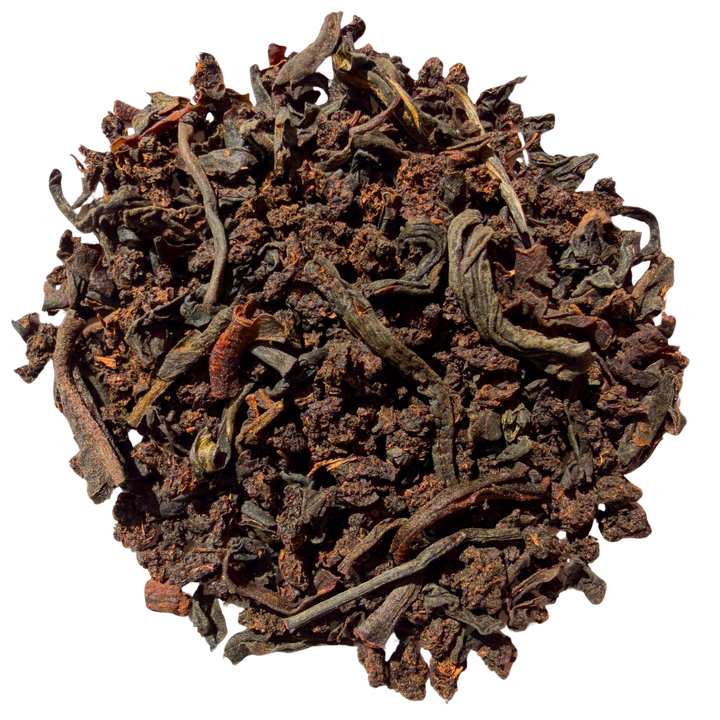
A malty Assam with plenty of body and a gently peaty finish. Happy with a splash of milk.
Have a lookAssam black tea grades explained
You will see letters like TGFOP, BOP, CTC and others on Assam labels. They describe how the leaf looks after processing, not how good it tastes.
| Grade | Meaning | Leaf style | Best for |
|---|---|---|---|
| TGFOP | Tippy Golden Flowery Orange Pekoe | Large, tippy orthodox leaves | Loose-leaf brewing, savouring |
| BOP | Broken Orange Pekoe | Smaller broken pieces | Faster brewing, everyday cups |
| CTC | Cut, Tear, Curl | Uniform pellets | Tea bags, quick strong brews, chai |
TGFOP is not automatically better than BOP; it simply behaves differently in the cup. The larger leaves of a TGFOP steep more slowly and often have more nuance, while BOP and CTC give you strength quickly. Most supermarket tea bags use CTC Assam because those pellets infuse fast and deliver the punch people expect from a builder's brew.
First flush versus second flush Assam
Assam tea is harvested in flushes. The first flush comes in late March, producing a lighter, fresher cup. The second flush, picked between May and August, is considered the most prized. It is called 'tippy tea' because the leaves develop golden tips that signal sweetness and body. Second-flush Assam is fuller, maltier and generally richer than first-flush.
Some estates also produce a third, winter flush (October to December), though it is less common in the UK market. If you see a 2nd flush Assam on a label, that is the one most connoisseurs reach for.
How to brew Assam tea
Assam is forgiving, but a little care makes a real difference. Here is a straightforward method for loose leaf:
- Boil fresh water and let it reach a rolling boil (100°C).
- Warm your teapot or mug with a splash of hot water, then tip it out.
- Add one teaspoon of loose leaf per cup, or three to four grams per 200 millilitres if you prefer scales.
- Pour the boiling water over the leaves.
- Steep for two to five minutes. Two minutes gives a lighter infusion; four to five minutes produces a robust cup. Over five minutes risks bitterness.
- Strain, taste, and decide whether you want milk.
If you want a stronger cup without bitterness, add more leaf rather than steeping longer. That way you get body without the dryness that over-brewing brings.
Tea-bag brewing
Pour freshly boiled water over the bag and steep for two to five minutes. Remove the bag without squeezing it; squeezing releases more tannins and can make the cup harsh.
How much caffeine is in Assam tea?
Assam is naturally caffeinated, and it tends to contain more caffeine than green or white tea because it comes from a variety known for robust growth and because it is fully oxidised. The exact amount in your cup depends on how much leaf you use, how long you steep and the size of your mug, but it is enough to wake you up on a wet Tuesday.
For most adults, up to 400 milligrams of caffeine per day is not associated with adverse effects. During pregnancy, guidance suggests limiting caffeine to around 200 milligrams daily. If you are sensitive to caffeine or have questions, speak to your GP or midwife.
Decaf Assam tea
Decaffeinated Assam does exist, though it is harder to find as a single-origin loose leaf. Our Decaf English Breakfast uses a similar malty profile for those who want the taste without the buzz.

Black Tea
A medium-bodied decaf black tea with soft floral notes. Decaffeinated, rather than completely caffeine-free.
Have a lookCommon mistakes when brewing Assam
A few things can trip you up:
- Stale water: Water that has been boiled multiple times loses dissolved oxygen and makes flat-tasting tea. Start fresh each time.
- Over-steeping: More than five minutes and you are likely to get bitterness and excessive astringency. Set a timer if you tend to wander off.
- Drowning it in milk: A splash is enough. Too much milk buries the malt and any subtle estate character.
- Storing badly: Keep your Assam in an airtight container, away from light and strong smells. It will stay fresh for up to a year, but use it within a few months for the best flavour.
Assam versus Darjeeling versus Nilgiri
All three are Indian black teas, but they taste quite different.
| Tea | Region | Flavour | Body |
|---|---|---|---|
| Assam | Northeast India, lowlands | Malty, earthy, bold | Full |
| Darjeeling | West Bengal, highlands | Floral, muscatel, delicate | Light to medium |
| Nilgiri | Southern India, highlands | Bright, brisk, less malt | Medium |
If you enjoy Assam's heft, you might also like Irish Breakfast, which is often made from 100 percent Assam and brews even darker. For something lighter, try Nonsuch Nilgiri BOP or Margaret's Hope Darjeeling.
What is Assam tea used for?
Beyond drinking it straight, Assam appears in:
- Breakfast blends: English Breakfast, Irish Breakfast and Scottish Breakfast all lean on Assam for body and colour.
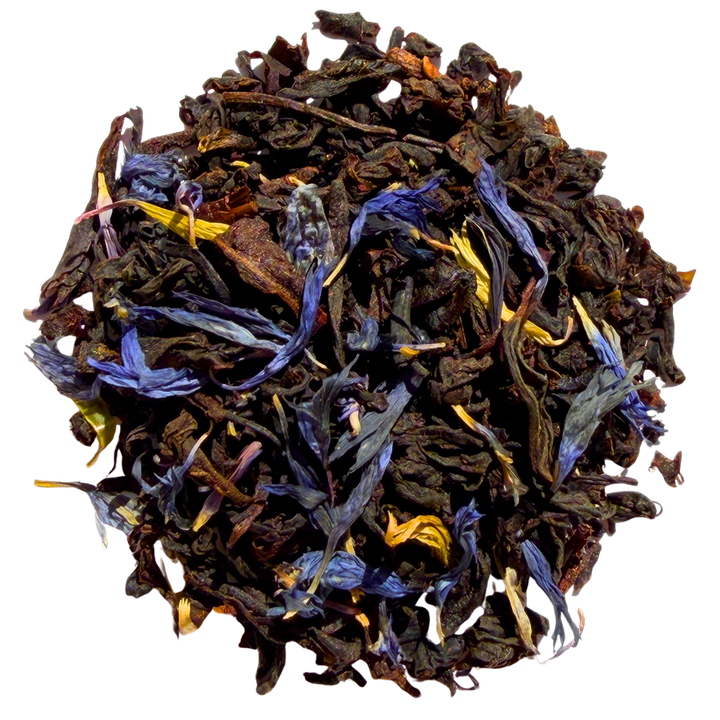
- Earl Grey: Some Earl Greys use an Assam base for a maltier take on the bergamot classic. Our Earl of Colne Valley does exactly that.
- Masala chai: The robust flavour stands up to ginger, cardamom and cinnamon without disappearing.
- Bubble tea: CTC Assam brews fast and strong, making it a common choice for boba shops.

Black Tea
A full-bodied, malty breakfast blend that takes milk well. Kettle on, toast in.
Have a lookWhat to try next
If you are new to single-estate Assam, start with Bukhial Assam TGFOP: malty, brisk, with a gently peaty finish that rewards attention. For a darker, stronger morning cup, Irish Breakfast delivers stout-like richness. If you want to compare several breakfast teas side by side, the Breakfast Tea Tasting Box includes five strong loose-leaf teas that all take milk.
Not sure where to begin? The Tea Finder asks a few quick questions and points you in the right direction.
Order online with free UK delivery on orders over £35, or call into the shop in Byram Arcade, Huddersfield. The kettle is always on.
Frequently asked questions
What is Assam tea?
Assam tea is a black tea from the Assam region of northeastern India, made from the large-leafed Camellia sinensis var. assamica. It is known for its full body, malty flavour and deep amber colour, and it forms the base of most British breakfast blends.
Is Assam tea good for you?
Assam tea contains antioxidants called theaflavins and thearubigins, which researchers have studied in early laboratory and animal research. However, tea is a drink, not a medicine, and we make no health claims. If you have questions about caffeine or how tea fits into your diet, speak to your GP or pharmacist.
What is the best Assam tea?
That depends on what you enjoy. Second-flush single-estate Assams like Bukhial offer nuance and character. For everyday strength, a good CTC or BOP will do the job. The best Assam is the one you look forward to drinking.
Does Assam tea have more caffeine than other teas?
Assam tends to have more caffeine than green or white teas, partly because it is fully oxidised and partly because the assamica plant variety is naturally robust. Exact amounts vary with brewing time and leaf quantity.
Can I drink Assam tea without milk?
Absolutely. Good loose-leaf Assam is worth trying plain to appreciate the malt and any estate-specific notes. Milk softens the briskness and is traditional in breakfast cups, but it is not compulsory.
Where can I buy loose leaf Assam tea?
We stock single-estate Assam and Assam-based breakfast blends at Porter Hill, both online at porterhill.co.uk and in our shop in Byram Arcade, Huddersfield. Free UK delivery on orders over £35.
Sources: Wikipedia · The Spruce Eats · Healthline