Chinese Tea: Six Types, Key Regions and How to Brew Them

China is where tea began, roughly five thousand years ago, and the country still produces more variety than anywhere else on earth. The trouble is, that variety can feel overwhelming. Walk into a tea shop or browse online and you meet names like Longjing, Tieguanyin, Dian Hong, Pu'er, each with its own province, processing style and brewing method. A Chinese tea map helps because it turns a confusing list into a landscape: once you know that Yunnan is in the south-west and famous for dark, aged pu'er and golden-tipped black tea, while Zhejiang near the coast is green tea country, the whole subject starts to make sense.
The tea in this guide: Yunnan Tea Adventure – Chinese Loose Leaf Tea Tasting Box from £19.95 Shop it →
So here is the short answer: China produces six main categories of tea, all from the same plant, Camellia sinensis. The categories are green, white, yellow, oolong, black (called red tea in China) and dark tea. What separates them is how the leaves are handled after picking, especially how much they are allowed to oxidise. Each category has its heartland provinces, its famous teas, and its own brewing sweet spot. This guide walks you through the map, region by region, with the numbers you need to brew well and the stories that make each tea worth knowing.
At a glance
- Six categories: green, white, yellow, oolong, black (red) and dark (including pu'er)
- Key provinces: Yunnan, Fujian, Zhejiang, Anhui, Hunan, Jiangsu
- Processing, not geography, defines the category: oxidation level plus heating, rolling and ageing
- Green tea is the most consumed type in China; black tea is second
- Brew temperatures range from 75°C for delicate greens to 100°C for pu'er
- Good loose-leaf Chinese tea can yield 3 to 12 infusions depending on the style
Why does oxidation matter?
Oxidation is the process that turns a cut apple brown. In tea, it darkens the leaf, deepens flavour and changes aroma. Stop it early and you get green tea: fresh, grassy, often vegetal. Let it run to completion and you get black tea: rich, malty, sometimes chocolatey. Somewhere in between sits oolong, which can range from 1% to 99% oxidised, depending on the maker's intent. White tea is barely processed at all; yellow tea has a slow 'sealed yellowing' step that mellows the flavour without the grassiness of green.
Dark tea, including pu'er, goes further: the leaves are fermented and often aged for years or decades. The result is earthy, smooth and sometimes mushroomy, nothing like the fresh snap of a spring green.
The six types of Chinese tea
Green tea (绿茶, lǜchá)
The most widely drunk tea in China. Leaves are heated shortly after picking, by pan-frying or steaming, to stop oxidation. The result is a clear, green-gold liquor with a fresh, sometimes sweet, sometimes chestnut-like taste. Famous greens include Longjing (Dragon Well) from Hangzhou in Zhejiang, with its flat, sword-shaped leaves and gentle sweetness, and Biluochun from near Lake Tai in Jiangsu, known for its delicate, floral aroma. Brew at 75 to 85°C; boiling water scorches the leaves and turns the cup bitter. Expect 3 to 5 infusions from good leaf.

White tea (白茶, báichá)
The least processed category: buds and young leaves are withered in open air and dried without rolling or pan-firing. Silver Needle (Báiháo Yínzhēn) uses only unopened buds and produces a pale, delicate, almost honey-like brew. White Peony includes buds and leaves for a little more body. Brew at 80 to 85°C. Best consumed within a year and kept cool. Fujian is the classic home.
Yellow tea (黄茶, huángchá)
China's rarest type. After initial heating, damp leaves are gently warmed in a closed container, a step called 'sealed yellowing'. The result is mellower and sweeter than green tea, without the grassiness. Junshan Yinzhen, from a small island in Dongting Lake in Hunan, was once tribute tea reserved for emperors. Brew at 80 to 85°C.
Oolong tea (乌龙茶, wūlóng chá)
Partially oxidised, anywhere from lightly floral to deeply roasted. Tieguanyin (Iron Goddess of Mercy) from Anxi in Fujian is on the lighter end, buttery and orchid-scented. Da Hong Pao (Big Red Robe) from the Wuyi Mountains is more heavily roasted, with mineral depth and almost chocolatey notes. Oolong is the traditional choice for gongfu tea: small vessel, high leaf-to-water ratio, short infusions of 5 to 15 seconds, gradually lengthened. Good oolong can yield 8 to 12 rounds. Brew at 90 to 100°C.

Gift Box
Yunnan Tea Adventure – Chinese Loose Leaf Tea Tasting Box
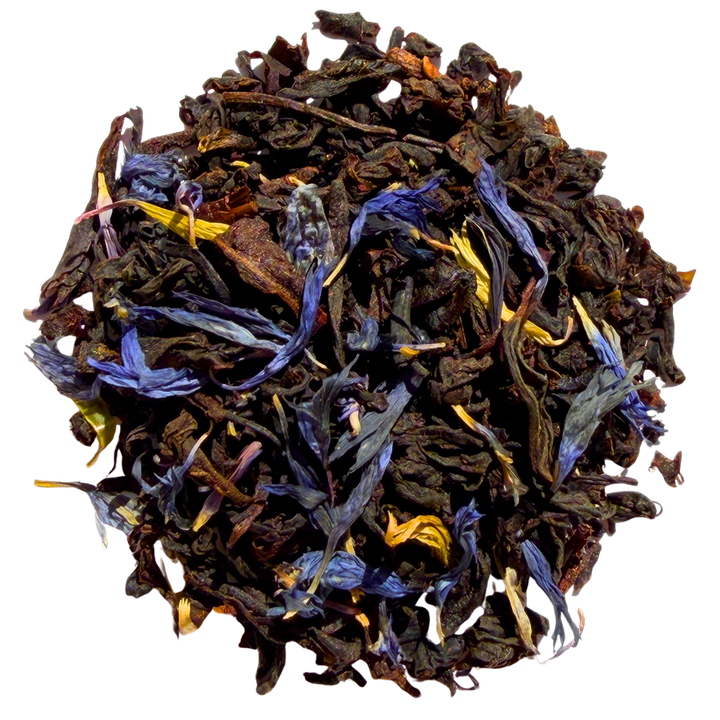
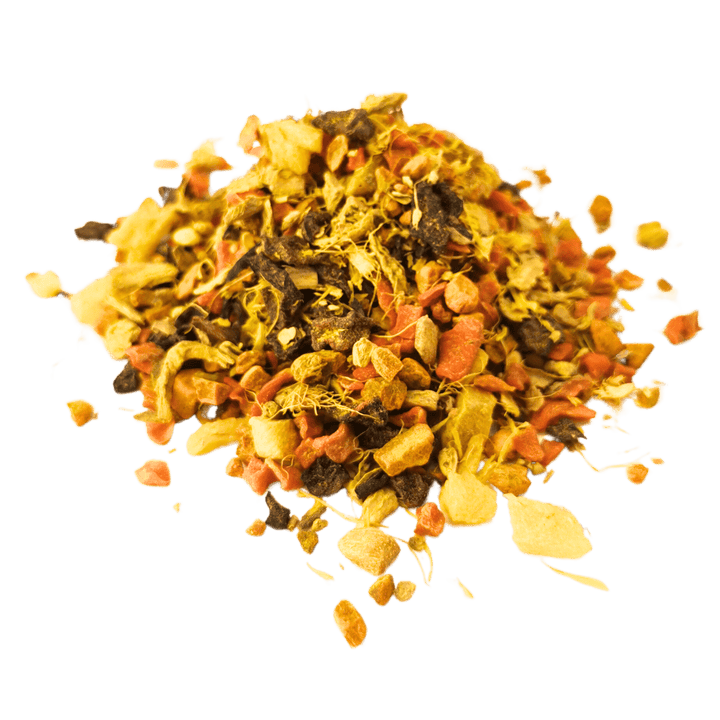
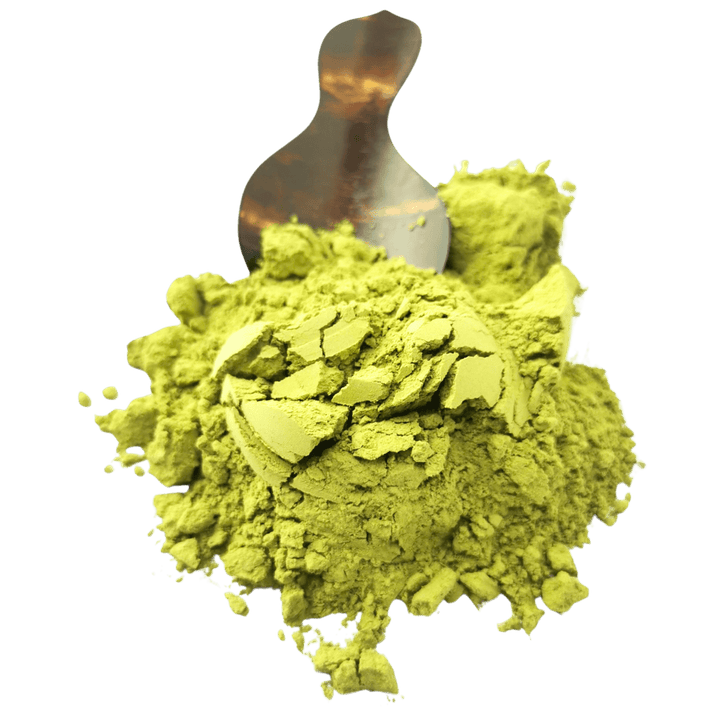
Four different teas in 25g pouches, with a brewing guide. Taste them side by side and find your favourite.
Have a lookChinese black tea (红茶, hóngchá)
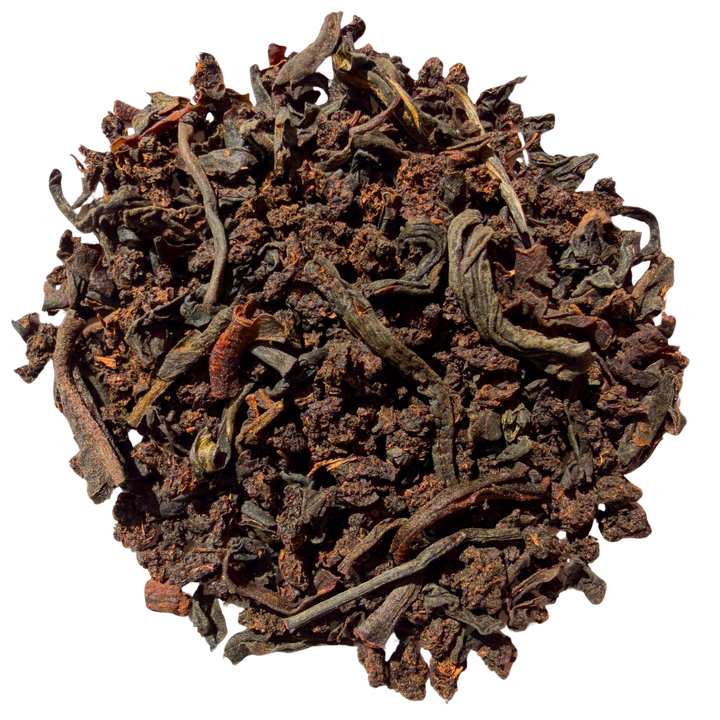
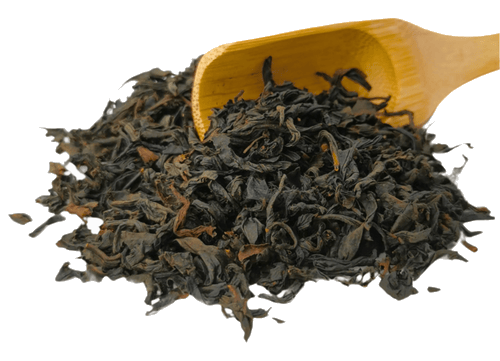
Fully oxidised, producing a rich, malty, sometimes chocolatey flavour. The Chinese call it 'red tea' because of the amber-red liquor. Keemun from Qimen County in Anhui was once a key ingredient in English Breakfast blends, prized for its wine-like complexity and mild sweetness. Lapsang Souchong from the Wuyi Mountains is smoked over pine wood and has a distinctive campfire aroma. Yunnan's black teas, known collectively as Dian Hong, tend toward cocoa, honey and malt, with a smoother, sweeter profile than brisk Assam. Brew at 90 to 95°C for most; Yunnan blacks are forgiving with freshly boiled water and two to three minutes.
Dark tea (黑茶, hēichá) and pu'er
The only truly fermented Chinese tea. Pu'er from Yunnan comes in two forms: raw (sheng), which ages naturally over years, and ripe (shou), which is quickly fermented in piles. The liquor is red and bright, the flavour earthy, smooth and sometimes mushroomy. Pu'er is traditionally pressed into cakes or bricks for storage and transport, and it improves with age. Brew at 100°C. Use boiling water and short, repeated infusions.
A quick brewing chart
| Type | Temperature | First steep | Typical infusions |
|---|---|---|---|
| Green | 75–85°C | 1–2 min | 3–5 |
| White | 80–85°C | 2–3 min | 3–5 |
| Yellow | 80–85°C | 1–2 min | 3–4 |
| Oolong | 90–100°C | 5–15 sec (gongfu) | 8–12 |
| Black (red) | 90–95°C | 2–3 min | 2–4 |
| Dark / Pu'er | 100°C | 10–20 sec (gongfu) | 8–15 |
If you are using a large mug rather than a small gaiwan, lengthen the steep and expect fewer rounds. The table above is a starting point; let your taste guide adjustments.
The map: key provinces and what they produce
Yunnan tea (south-west)
Mountainous and subtropical, Yunnan is the birthplace of pu'er and home to ancient tea trees. The province also produces Dian Hong black tea, with its golden tips, cocoa depth and honeyed sweetness. If you want a rounded black tea that works plain or with a splash of milk, Yunnan is the place to look. Our Golden Heaven Yunnan is a good starting point: cocoa-like richness, gentle sweetness, a long finish. Snow Yunnan is a delicate white from the same region.
Fujian (south-east coast)
Fujian is oolong heartland. The Wuyi Mountains give us Da Hong Pao, Rou Gui and Lapsang Souchong. Anxi, further south, produces Tieguanyin. Fujian also makes jasmine tea, where green tea is scented with fresh jasmine flowers through repeated layering. The University of Bath notes that the best black dragon tea is often considered to come from the Wuyi Mountains, where the complicated brewing process earns it the joking nickname 'Kungfu tea'.
Zhejiang (east coast)
Green tea country. Longjing, grown near Hangzhou, is the most famous Chinese green, with a price tag to match in top grades. The highest grades use tender shoots picked before 5 April, the Qingming Festival. Gardens might be picked daily or every two days during the spring flush.
Anhui (east)
Keemun black tea comes from Qimen County here. Anhui also produces Huangshan Maofeng, a green tea from near the Yellow Mountain with a gentle, sweet flavour and floral aroma.
Hunan (south-central)
Home to Junshan Yinzhen yellow tea. The tea grows only on Junshan Island in Dongting Lake, making it rare and expensive. During the Song dynasty, tea farms covered 242 counties across China; Hunan remains one of the most productive provinces.
Jiangsu (east coast)
Biluochun green tea is the star, grown near Lake Tai. The leaves are rolled into tight spirals and have a delicate, floral aroma.

Black Tea
A rounded Yunnan black tea with cocoa-like depth and a gentle natural sweetness.
Have a lookCommon mistakes when brewing Chinese tea
The most frequent error is using boiling water for everything. That works for pu'er and dark oolongs, but it scorches delicate greens and whites, turning them bitter and flat. A kitchen thermometer or a kettle with temperature settings makes a real difference. If you have neither, let the kettle sit for two to three minutes after boiling before pouring onto green or white tea.
The second mistake is steeping too long. With gongfu brewing, the first infusion might be only five seconds. Even in a mug, two minutes is often enough for green tea. Taste as you go and adjust next time.
The third is ignoring the rinse. For oolong and pu'er, a brief rinse with hot water, poured off immediately, opens the leaves and washes away dust from storage. For delicate greens, the rinse is usually skipped.
A short history: from medicine to Ming dynasty loose leaf
Legend places tea's discovery with Emperor Shen Nong in 2737 BC, when a leaf drifted into boiling water. Early drinkers used tea as medicine. By the Tang dynasty (618–907 AD), tea drinking was a cultural practice, and the first tea book, the Chájīng (Classic of Tea), was written by Lu Yu in the eighth century. Tang drinkers boiled powdered tea with salt; Song drinkers whisked it into foam.
The shift to loose-leaf steeping came during the Ming dynasty. The Hongwu emperor abolished compressed tea bricks and required tribute to be paid in loose buds. That change shaped the way most of the world drinks tea today. Pu'er, pressed into cakes, is the surviving exception, a practical form for transport along the Ancient Tea Horse Road.
What about jasmine, chrysanthemum and herbal teas?
Jasmine tea is usually a green tea base scented with fresh jasmine flowers. Chrysanthemum tea is a tisane, made from dried flowers rather than Camellia sinensis, and consumed for its mild, sweet flavour. Flower teas and herbal infusions are popular in China but sit outside the six main categories.
What to try next
If you want to explore Yunnan properly, the Yunnan Tea Adventure box includes four teas in 25 g pouches with a brewing guide, so you can taste them side by side. Golden Heaven Yunnan is a rounded black tea with cocoa depth and gentle sweetness. Snow Yunnan is a delicate white from the same province. For a Chinese green, Monkey Eye Jade Buds offers young buds with a fresh, grassy flavour and smooth mouthfeel.
Not sure where to start? The Tea Finder asks a few quick questions and points you toward teas you are likely to enjoy.
Order loose leaf online with free UK delivery on orders over £35. We pack orders by hand in Huddersfield, or call into the shop in Byram Arcade, Huddersfield. The kettle is usually on.
Frequently asked questions
What is the difference between Chinese black tea and English breakfast tea?
Chinese black tea, such as Keemun or Dian Hong, tends to be smoother and more nuanced, with notes of cocoa, honey or wine. English breakfast blends are usually built from brisk Assam or Ceylon for a malty, milk-friendly cup. Keemun was once a key ingredient in English Breakfast, so there is some overlap, but the style has diverged.
Is Chinese tea good for weight loss?
Some searches mention 'Chinese slimming tea' or 'Chinese diet tea'. We make no health claims. Tea is a drink, not a medicine. If you have questions about weight or health, speak to your GP or pharmacist.
What is the best Chinese tea for beginners?
Start with a Yunnan black if you like strong tea with milk, or a Longjing-style green if you prefer lighter, fresher flavours. Both are forgiving to brew and widely available. A tasting box lets you compare several types side by side without committing to large pouches.
Why is Chinese black tea called red tea?
The Chinese name 红茶 (hóngchá) means 'red tea' and refers to the amber-red colour of the liquor. The English term 'black tea' refers to the dark colour of the dried leaf. Both names describe the same category of fully oxidised tea.
How do I store Chinese tea?
Keep tea in an airtight container away from light, moisture and strong odours. Most teas are best used within a year, though pu'er is designed to age and can improve over decades. Delicate whites and greens are often refrigerated in sealed bags.
What is gongfu tea?
Gongfu tea is a brewing method using a high leaf-to-water ratio, a small vessel (often a gaiwan or Yixing teapot), and short, repeated infusions. It is especially suited to oolong and pu'er, drawing out different flavours with each round. The name literally means 'skill tea' or 'effort tea'.
Sources: Wikipedia – Chinese tea · University of Bath – Chinese Tea · Chen Jin Mandarin – Chinese Tea · Becoming Chinese – Types of Chinese Tea