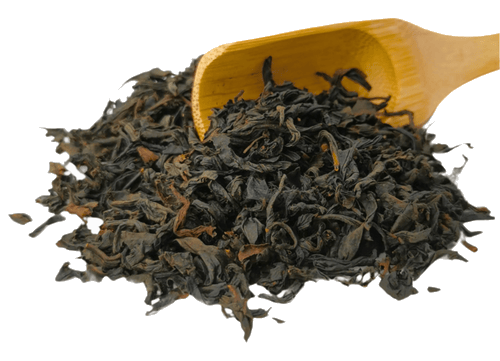
Camellia Sinensis: The Single Plant Behind Every Cup of Tea

Black tea, green tea, white tea, oolong: four drinks that look and taste completely different, yet they all come from the same plant. That plant is Camellia sinensis, a glossy-leafed evergreen shrub native to the borderlands between southwestern China, northern Myanmar and northeastern India. The difference between your breakfast cuppa and a delicate white tea is not the bush it grew on but what happened to the leaves after picking.
The tea in this guide: Quanzhou Milk Oolong from £5.35 Shop it →
Understanding this one fact changes how you think about tea. It explains why some teas are grassy and some are malty, why a single estate can produce half a dozen styles, and why the word 'tea' properly applies only to drinks made from this one species. Herbal infusions like chamomile and peppermint are tisanes, not teas, because they never touched a Camellia sinensis leaf.
At a glance
- Camellia sinensis is the botanical name for the tea plant; all true teas come from it
- Two main varieties: sinensis (Chinese, smaller leaf, more cold-hardy) and assamica (Indian, larger leaf, prefers warmth)
- Processing, not plant variety, determines whether leaves become white, green, oolong or black tea
- The plant can live for over a century and reaches peak productivity at 30 to 50 years
- China, India and Kenya are the three largest tea-producing countries
What is Camellia sinensis?
Camellia sinensis is an evergreen shrub in the family Theaceae. Left unpruned it can grow to 20 metres tall, though commercial tea bushes are kept trimmed to about a metre for easy picking. The leaves are leathery and slightly serrated, measuring anywhere from 4 to 22 centimetres depending on variety and growing conditions. Small white flowers appear in autumn and early winter, each with seven or eight petals and a boss of yellow stamens. The species name sinensis is Latin for 'from China', and the genus Camellia honours the Moravian botanist Georg Kamel, who never actually saw a tea plant but did plenty of good botanical work in the Philippines.
According to Wikipedia's entry on the species, tea bushes reach peak productivity at 30 to 50 years old and may remain productive for over a century. A well-tended bush is not a short-term crop; it is a long partnership between plant and farmer.
The two main Camellia sinensis varieties
Most tea comes from two botanical varieties, and knowing the difference helps when you are reading about single-origin teas or wondering why Assam tastes so different from Dragonwell.
Camellia sinensis var. sinensis
The Chinese variety has smaller leaves, typically 5 to 8 centimetres long, and is more tolerant of cold. NC State Extension reports it is hardy into USDA Zone 6, which means it can survive winters down to around minus 23 °C. This variety dominates production in China, Japan and Taiwan and is the usual choice for green teas and lighter oolongs.
Camellia sinensis var. assamica
The Assam variety from northern India has larger leaves, sometimes up to 20 centimetres, and prefers warmer, wetter climates. It is hardy only to Zone 7 and south. The bigger leaves and faster growth make it ideal for the robust black teas of Assam, Sri Lanka and East Africa. If you enjoy a malty, full-bodied breakfast tea, you are almost certainly drinking assamica.

How is tea made from the same plant?
The magic is in the processing. Fresh tea leaves contain enzymes that begin to oxidise as soon as the cell walls are broken, much like an apple browning after you bite it. Controlling that oxidation is how tea makers steer a single harvest towards white, green, oolong or black.
| Tea type | Oxidation | Key steps | Flavour profile |
|---|---|---|---|
| White | Minimal (0 to 5%) | Wither, dry | Delicate, sweet, hay-like |
| Green | None (heat-killed enzymes) | Wither, pan-fire or steam, roll, dry | Grassy, vegetal, fresh |
| Oolong | Partial (10 to 80%) | Wither, bruise, partial oxidise, fire, roll | Floral to toasty depending on oxidation |
| Black | Full (85 to 100%) | Wither, roll, full oxidise, fire | Malty, bold, sometimes brisk |
White tea
The youngest buds and leaves are picked and simply withered and dried, with little handling. Because oxidation barely happens, white tea keeps a pale colour and a gentle, sometimes honeyed character.
Green tea
Heat is applied early to deactivate the oxidising enzymes. In China this is usually done in a hot wok (pan-firing); in Japan the leaves are steamed. The result is a tea that stays green in leaf and liquor, with fresh, vegetal flavours. Our Chinese green tea guide and Japanese green tea guide explain the differences in more detail.
Oolong tea
Somewhere between green and black, oolong is partially oxidised. The leaves are bruised to start oxidation, then fired to stop it at the desired point. A lightly oxidised oolong like our Quanzhou Milk Oolong tastes floral and creamy; a heavily oxidised one moves towards stone fruit and toast.

Oolong Tea
Creamy oolong with floral notes and a gentle caramel sweetness. A lovely one to linger over.
Have a lookBlack tea
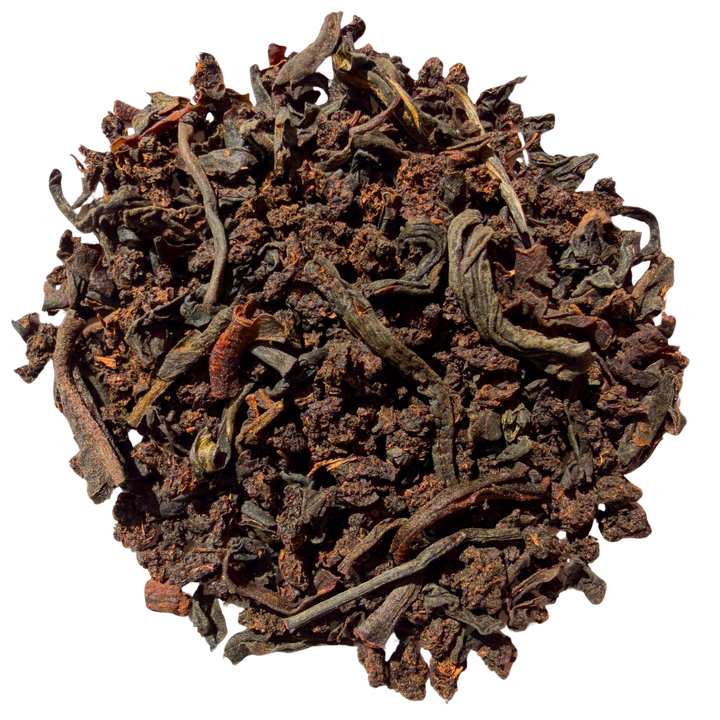
Full oxidation gives black tea its dark leaf, amber-to-mahogany liquor and robust flavour. After withering, the leaves are rolled to break the cell walls, left to oxidise until deeply coloured, then fired to halt the process and dry the leaf. This is the tea that built British teatime: according to Kew Gardens, Britain drinks 62 billion cups of tea per year, and most of those are black. Our black tea guide goes deeper into grades, origins and brewing.
Where does Camellia sinensis grow?
Tea thrives in tropical and subtropical climates with at least 127 centimetres of annual rainfall and acidic soil. The plant can be grown commercially from the equator all the way up to 59°N on Shapinsay in the Orkney Islands, making that one of the most northerly tea gardens on Earth.
China remains the largest producer. Kew reports that in 2018 China produced 2.5 million metric tonnes of tea, 42.6 per cent of the world total. India and Kenya follow, with significant production also in Sri Lanka, Japan, Vietnam, Indonesia and beyond. More than three million tonnes are grown worldwide each year, and the global tea market is worth about £40 billion.
Altitude matters for quality. High-grown teas from elevations up to 2,200 metres tend to develop more complex flavours because cooler temperatures slow leaf growth and concentrate aromatic compounds. If you see 'high-grown' on a Ceylon or Darjeeling label, that is what it means.
A brief history of the tea plant
Tea has been used in China for over 4,000 years, first as a medicine and later as a daily drink. The species was formally described by Linnaeus in 1753 under the name Thea sinensis; Robert Sweet merged the genera Thea and Camellia in 1818, and the plant became Camellia sinensis as we know it today.
The British introduction of Chinese small-leaf tea to India in 1836, and the establishment of the first Indian tea estate in Assam in 1837, changed global tea production forever. The discovery of the native assamica variety growing wild in Assam's jungles gave Indian tea its own character, and within decades Assam and Darjeeling were household names in Britain.
Japanese tea culture dates back to at least the ninth century, when Buddhist monks brought tea seeds from China. The meticulous steaming and shading techniques developed over the following centuries gave Japan its distinctive style, from everyday Sencha to ceremonial Matcha.

Letterbox gift
Five strong loose leaf breakfast teas that all take milk, from a smooth English Breakfast to a smoky Huddersfield blend.
Have a lookCommon myths about tea types
Myth: different teas come from different plants
This is the big one. White, green, oolong and black teas all come from Camellia sinensis. Processing makes the difference, not species. (Herbal 'teas' like rooibos and chamomile are a different matter entirely; they are tisanes from other plants.)
Myth: green tea has less caffeine than black
Not necessarily. Caffeine content depends on the plant variety, the part of the plant used, how the tea was processed and how you brew it. Fresh tea leaves contain about four per cent caffeine by dry weight. A delicate white tea brewed lightly may have less caffeine in your cup than a long-steeped green, but there is no universal rule that green means low caffeine.
Myth: Orange Pekoe is orange-flavoured
Orange Pekoe is a grade term for black tea leaf size, not a flavour. The 'orange' probably refers to the Dutch House of Orange, which was involved in early tea trading, or to the coppery colour of the leaf tips. It has nothing to do with citrus fruit.
What does the research say?
Tea has been studied extensively, but the evidence for specific health benefits is often weaker than headlines suggest. Wikipedia notes that there is no high-quality clinical evidence that drinking tea affects human health in the ways sometimes claimed. Tea is a pleasant drink with caffeine and various plant compounds, not a medicine. If you have health questions, speak to your GP or pharmacist rather than relying on what you read about antioxidants.
How to brew different types of tea
Because processing affects both flavour and leaf structure, each tea type has its own ideal brewing conditions. The table below gives starting points; adjust to your taste.
| Tea type | Water temperature | Steep time | Leaf per cup |
|---|---|---|---|
| White | 75 to 80 °C | 3 to 5 minutes | 1 to 2 teaspoons |
| Green | 70 to 80 °C | 2 to 3 minutes | 1 teaspoon |
| Oolong | 85 to 95 °C | 3 to 5 minutes | 1 teaspoon |
| Black | 95 to 100 °C | 3 to 5 minutes | 1 teaspoon |
- Start with fresh, cold water and bring it to the right temperature. A kettle with variable temperature settings helps, but you can also let boiling water cool for a minute or two for greens and whites.
- Warm your cup or pot with a splash of hot water, then tip it out.
- Add your loose leaf and pour the water over it.
- Time the steep and strain fully when done. Leaving the leaves sitting in the liquor will make the next cup bitter.
Our brew guides cover individual teas in more detail if you want to fine-tune your method.
What to try next
If you want to taste the difference processing makes, start with a few contrasting teas from our range. English Breakfast is a fully oxidised, malty black blend that takes milk well; compare it to our green teas for a completely different character from the same species. Quanzhou Milk Oolong sits between the two, creamy and floral, showing what partial oxidation can do.
For a guided comparison, the Breakfast Tea Tasting Box puts five strong loose-leaf blacks side by side, while the Green Tea Tasting Box covers the green spectrum from grassy Sencha to smoky Gunpowder. Both fit through the letterbox if you are sending a gift. Still unsure? The Tea Finder asks a few questions and points you somewhere sensible.

Letterbox gift
Five loose leaf green teas from Japan and China, from grassy Sencha to jasmine, Dragonwell and rolled gunpowder.
Have a lookwe pack orders by hand in Huddersfield, with free UK delivery on orders over £35. You are also welcome to call into the shop in Byram Arcade, Huddersfield, and taste before you buy. The kettle is always on.
Frequently asked questions
Can I grow a Camellia sinensis plant in the UK?
Yes, with care. The Chinese variety (sinensis) is hardy to around minus 23 °C, which covers most of the UK. It needs acidic soil, good drainage and shelter from harsh winds. A sunny or part-shaded spot works best. You can harvest your own leaves once the plant is established, though it takes a few years to get meaningful quantities.
Is Camellia sinensis the same as camellia oil?
Not quite. Camellia oil usually comes from Camellia oleifera or Camellia japonica, though tea-seed oil can be pressed from Camellia sinensis seeds and used for cooking. The leaves are what make tea.
What is Camellia sinensis tea?
All true tea is Camellia sinensis tea. The term simply means the drink is made from the leaves of the tea plant rather than from herbs, fruits or other plants. If your cup is black, green, white or oolong, it started as Camellia sinensis.
Where can I buy Camellia sinensis plants or seeds?
Specialist nurseries sell both plants and seeds. In the UK, look for hardy cultivars suited to cooler climates. Seeds can take up to 12 months to develop fully on the plant, so buying a young plant is often easier for beginners. We sell the finished tea, not the plants, but our full range is ready to brew.
Does all tea contain caffeine?
All tea from Camellia sinensis contains caffeine, typically 20 to 70 mg per cup depending on type, leaf grade and brewing. Herbal tisanes like chamomile and rooibos are naturally caffeine-free because they come from different plants. Our caffeine-free collection has plenty of options for evenings.
Sources: Wikipedia · NC State Extension · Kew Gardens · Plants of the World Online