Caffeine in Pregnancy: NHS Limits, Tea Tips and Herbal Cautions

You have just seen two lines on a test, and suddenly every cup of tea feels like a decision. How much caffeine is actually safe? Can you still have your morning brew? What about herbal teas? The good news is that tea is still very much on the table. The NHS recommends limiting caffeine to 200mg per day during pregnancy, and a single cup of tea contains far less than that. But the details matter, and some herbal teas need more thought than others.
The tea in this guide: Caffeine-Free Tasting Box from £15.95 Shop it →
This guide covers exactly how much caffeine is in different teas, how to count your daily total, which herbals are worth checking with your midwife first, and how to keep enjoying a proper brew without the worry.
At a glance
- NHS limit: 200mg caffeine per day during pregnancy
- One cup of tea contains roughly 75mg caffeine (less than coffee)
- Caffeine crosses the placenta and takes longer to clear during pregnancy
- Count all sources: tea, coffee, cola, chocolate, energy drinks
- Herbal teas: research is limited, so check with your midwife first
- True herbal infusions (no tea leaves) are naturally caffeine-free
Why does caffeine matter in pregnancy?
Caffeine crosses the placenta freely, reaching your baby through the umbilical cord. The developing fetus lacks the enzymes needed to break caffeine down, so it stays in their system longer than yours. According to research published in PMC, caffeine's half-life increases from around 2.5 to 4.5 hours in non-pregnant adults to approximately 15 hours by late pregnancy. That means a cup you drink at breakfast might still be circulating come teatime.
Higher caffeine intakes have been linked in some studies to increased risks of miscarriage, low birth weight and preterm birth. The evidence is not entirely settled. A University of Utah Health review notes that two recent studies reached conflicting conclusions: one found no correlation between miscarriage and any amount of caffeine, while the other found a positive correlation above 200mg daily. The American College of Obstetricians and Gynecologists states that moderate caffeine consumption does not appear to be a major contributing factor in miscarriage or preterm birth.
Given the uncertainty, the precautionary approach is to stay within 200mg. That is what the NHS, EFSA and most major health bodies recommend.
How much caffeine is in tea?
Tea contains less caffeine than coffee, which is reassuring if you are a tea drinker. The NHS puts a cup of tea at around 75mg, compared with 100mg for instant coffee and 137mg for filter coffee. Here is a quick comparison of common drinks:
| Drink | Serving | Caffeine (approx) |
|---|---|---|
| Filter coffee | 200ml | 90 to 137mg |
| Instant coffee | One cup | 100mg |
| Black tea | 250ml | 55 to 75mg |
| Green tea | One cup | 30 to 50mg |
| Espresso | 60ml | 80mg |
| Cola | 330ml can | 40mg |
| Energy drink | 250ml can | 80mg |
| Dark chocolate | 50g | Under 25mg |
These are averages. Actual amounts vary with leaf type, brewing time and water temperature. A strong mash steeped for five minutes will have more caffeine than a quick dunk. For a fuller breakdown, see our guide to how much caffeine is in tea.

How much tea can you drink pregnant?
With the 200mg limit in mind, you could have two to three cups of black tea and stay comfortably under. The European Food Information Council puts it at roughly three and a half cups of black tea (at 55mg each) to reach 200mg. If you also have a cola or a square of dark chocolate, factor those in.
Green tea is lower in caffeine than black, typically 30 to 50mg per cup. Matcha can be higher because you consume the whole leaf, so check the amount you are using. Our green tea caffeine guide has the details.
The key is counting your total across the day, not just tea. Caffeine appears in places you might not expect: chocolate, some painkillers, pre-workout powders, certain cold remedies and even some flavoured waters. Read labels and add it up.

Letterbox gift
Five caffeine-free herbal teas for evenings, after dinner or all day: mint, chamomile, fruit and ginger.
Have a lookHerbal teas in pregnancy: what the NHS says
Herbal infusions made without tea leaves (Camellia sinensis) are naturally caffeine-free. That includes chamomile, peppermint, ginger, lemon balm, hibiscus and fruit blends. But caffeine-free does not automatically mean safe in pregnancy. The NHS notes that research on herbal teas is limited, and it advises speaking to your midwife or GP before drinking them regularly.
Why the caution? Some herbs have traditional uses that could affect pregnancy. The evidence is often thin in either direction: we do not always know they are harmful, but we cannot be confident they are safe in large amounts either.
Raspberry leaf tea
Raspberry leaf is the one people ask about most. It is traditionally associated with late pregnancy and labour preparation. A 2021 systematic review looked at the available studies and concluded that both safety and effectiveness were not established. A 2022 observational study found no identified safety signal among women who used it, but could not prove it caused better outcomes. If you are curious, our raspberry leaf tea article covers the taste and evidence in more detail.
Other herbals to discuss with your midwife
Liquorice root can affect blood pressure and potassium levels. High doses of peppermint have been queried in some sources. Hibiscus has been traditionally avoided in some cultures during early pregnancy, though evidence is limited. If you are unsure about any herbal ingredient, a quick word with your midwife takes the guesswork out of it.
Counting caffeine: a practical approach
Rather than worrying over every sip, try a simple daily tally. Write down what you have: one cup of tea, a small coffee, a piece of chocolate. Most people find they are comfortably under 200mg without much effort once they start paying attention.
- Note your usual drinks and check their caffeine content.
- Add up your typical daily total.
- If you are over 200mg, swap one coffee for tea or try a decaf or herbal.
- Remember that serving sizes vary: a large takeaway coffee may be two or three 'cups' worth.
If you were drinking several cups of strong coffee before you knew you were pregnant, do not panic. The University of Utah Health expert quoted in their guidance advises that early exposure, before you knew, is unlikely to cause harm given that miscarriage risk is highest in the first trimester regardless of caffeine. The important thing is to reduce once you know.

Herbal Tea
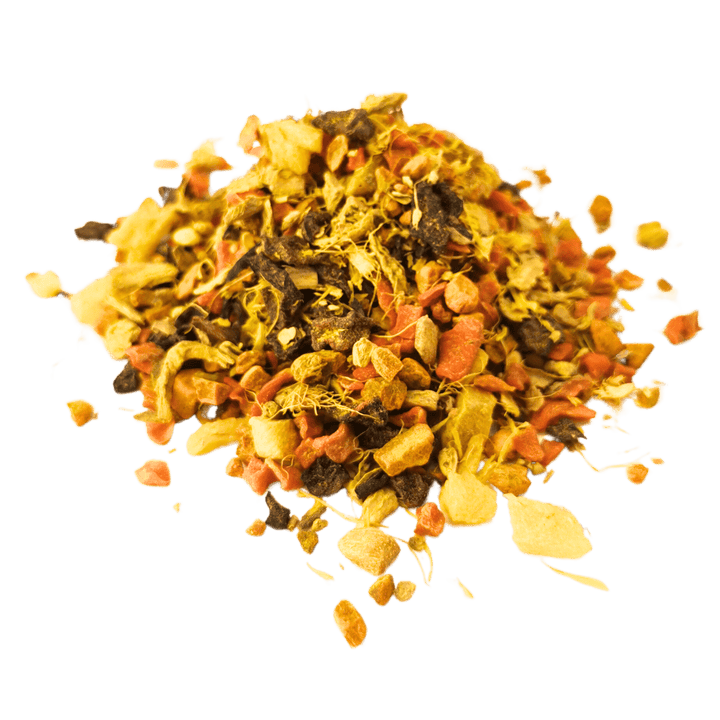
Bright lemon and warming ginger. A straightforward, zingy cup for whenever you fancy it.
Have a lookCaffeine-free options that still feel like a proper brew
If you want to cut back without feeling deprived, caffeine-free teas can fill the gap. A warming cup of Lemon & Ginger Tea has a satisfying zingy bite. Organic Chamomile Tea is soft and floral, good for evenings. Fruit Full brews a bright, fruity cup that works hot or iced.
Rooibos is another good option: it is naturally caffeine-free, takes milk well, and has a warm, slightly sweet flavour. Our Earl Grey Rooibos gives you the bergamot hit of an Earl Grey without any caffeine.
Decaffeinated teas still contain a small amount of caffeine, typically 2 to 5mg per cup, but that is negligible within the 200mg budget. See our decaf tea caffeine guide for more.
Common mistakes when managing caffeine in pregnancy
One frequent slip is forgetting hidden sources. A 50g bar of dark chocolate contains up to 25mg of caffeine. Some over-the-counter headache tablets contain 30 to 65mg per dose. Energy drinks vary wildly: some 16-ounce cans exceed 300mg, according to University of Utah Health.
Another mistake is assuming all herbal teas are interchangeable. 'Herbal' is a broad category. Mint and chamomile are quite different from herbs with stronger traditional reputations. Always check the ingredients list and, if in doubt, ask your midwife.
Finally, do not quit caffeine abruptly if you have been a heavy coffee drinker. Withdrawal headaches can be unpleasant. Taper down gradually over a week or two.
What to try next
If you want to explore caffeine-free teas properly, the Caffeine-Free Tasting Box includes five herbal blends in letterbox-friendly packaging, so you can find your favourites without committing to full packs.
For a gentle everyday cup, Organic Lemon Balm Tea has a soft citrus scent and brews up pale and soothing. Organic Chamomile Tea is a classic for a reason. And if you fancy something fruitier, Raspberry Lemon Verbena tastes properly of raspberries, unlike raspberry leaf, and is entirely caffeine-free.
Not sure where to start? Our Tea Finder asks a few quick questions and suggests teas to match.

Herbal Tea
Whole chamomile flowers brew a golden cup with soft floral and apple-like notes.
Have a lookwe pack orders by hand in Huddersfield, and UK delivery is free on orders over £35. You can also call into the shop in Byram Arcade, Huddersfield, if you would like to see the teas in person or have a chat about what might suit.
Frequently asked questions
How much caffeine is safe in pregnancy?
The NHS recommends no more than 200mg of caffeine per day during pregnancy. That includes all sources: tea, coffee, cola, chocolate, energy drinks and some medications. Staying within this limit is considered safe for most people, though individual tolerance varies. If you have concerns, speak to your midwife.
How many cups of tea can I have while pregnant?
A cup of black tea contains around 75mg of caffeine. You could have two to three cups and remain comfortably under 200mg, depending on what else you drink that day. Green tea is lower, at 30 to 50mg. Always count your full daily intake, including coffee, cola and chocolate.
Are herbal teas safe in pregnancy?
Herbal teas made without tea leaves are caffeine-free, but research on their safety in pregnancy is limited. The NHS advises checking with your midwife before drinking them regularly. Some herbs, like raspberry leaf, have traditional associations with pregnancy but lack strong evidence for safety or effectiveness.
Does caffeine affect the baby?
Caffeine crosses the placenta, and the fetus cannot metabolise it as adults do. High intakes have been linked in some studies to increased risks of low birth weight and miscarriage, though findings are not conclusive. The precautionary advice is to stay within 200mg daily.
Can I drink decaf tea while pregnant?
Yes. Decaffeinated tea typically contains 2 to 5mg of caffeine per cup, which is negligible within the 200mg daily limit. It is a good option if you want the taste of tea without adding much to your caffeine total.
Should I avoid raspberry leaf tea in pregnancy?
The evidence on raspberry leaf tea is limited. A 2021 systematic review found that neither safety nor effectiveness was established. If you are interested in trying it, speak to your midwife first. It is traditionally associated with late pregnancy rather than early or mid-pregnancy.
Sources: NHS · PMC · EUFIC · University of Utah Health · Cleveland Clinic